Bill Moyers’ death and finding divine inspiration in sharing ideas with Joseph Campbell

I just heard that Bill Moyers died. He was 91 years old and lived a meaningful life. RIP.

Moyer was a consummate media professional. He was an insightful interviewer and a profoundly insightful human.

I love Moyers’ interviews with Joseph Campbell called “The Power of Myth.” The two collaborated in the PBS TV series released in 1988, exploring what enduring myths tell us about our lives. There were six episodes: “The Hero’s Adventure,” “The Message of the Myth,” “The First Storytellers,” “Sacrifice and Bliss,” “Love and the Goddess,” and “Masks of Eternity.” According to PBS, “The Power of Myth” was one of the most popular TV series in the history of public television, and it continues to inspire new audiences today. Campbell, sadly, died a year before it was aired.

Bill Moyers interviewing Joseph Campbell for the acclaimed PBS series “The Power of Myth.”

The insights from those interviews had an enormous impact on my own life, as I saw how important myth is to the human experience, in the past and the present. Myth in fact defines my lifelong identity as a bastard and adoptee. The series was also one of the most impactful moments for me in the world of engaging ideas.

From his interviews with author Campbell, Moyers elicited truths that speak to me today in many profound ways. This includes my own recent and wonderful adventures finding my biological kin in Finland, a land of my ancestors and also great myths.

Campbell shared with Moyers: “If you do follow your bliss, you put yourself on a kind of track that has been there all the while, waiting for you, and the life you ought to be living is the one you’re living somehow, and when you can see it you begin to deal with people who are in your field of your bliss, and they open doors to you.”

A year of living mythologically

Another year of my life gets ready to end. The clock will start anew to begin the exercise of measuring life’s passing by years. That means it is time to reflect on how I spent it, as my planet circled the sun and I counted away irretrievable minutes, hours, and days of being alive in the universe.

I felt a mythical pull to Finland last year, and found myself there twice in six months, completing a journey that started decades earlier.

Physically, I feel a bit older. That is a given.

However, the cumulative issues I have experienced and still feel in my back have sharpened my understanding of my mortality. I have been humbled, even as I respect every aspect about caring for myself. It is now more clear that my days of very good health could be over. I may now be entering a phase of manageable but slow decay. I’m still overall in great health. I run. I bike. I swim. I rollerski. I surf far less frequently, and cross-country ski even less often. But I can feel the reality of what “the slow glide out” now means. My best years, in terms of physical health, were in my 40s.

My mental health, however, has remarkably improved during the past five years, as I continue to appreciate what a purposeful mindset of “finding meaning” has brought to my daily life. The hardest challenges I have navigated the last two decades strengthened my ability to withstand the strongest storms. Maybe I have just accepted who I am, at last, and the wisdom of wiser predecessors who have offered ideas of living well. So despite many challenges, my outlook is very calm.

Awaiting the inevitable loss of family

I continue to plan for loss and death. Human myths have been doing this for all of us since we first collected our shared stories and passed them down orally. So this is nothing new, and because it’s not new, it should not be feared or avoided.

I have three family members who face very severe health challenges. Two are my biological kin and one is my adoptive sibling. The stress can gnaw at any moment, out of the blue. Yet I can do nothing to change what will inevitably come. That could be any day.

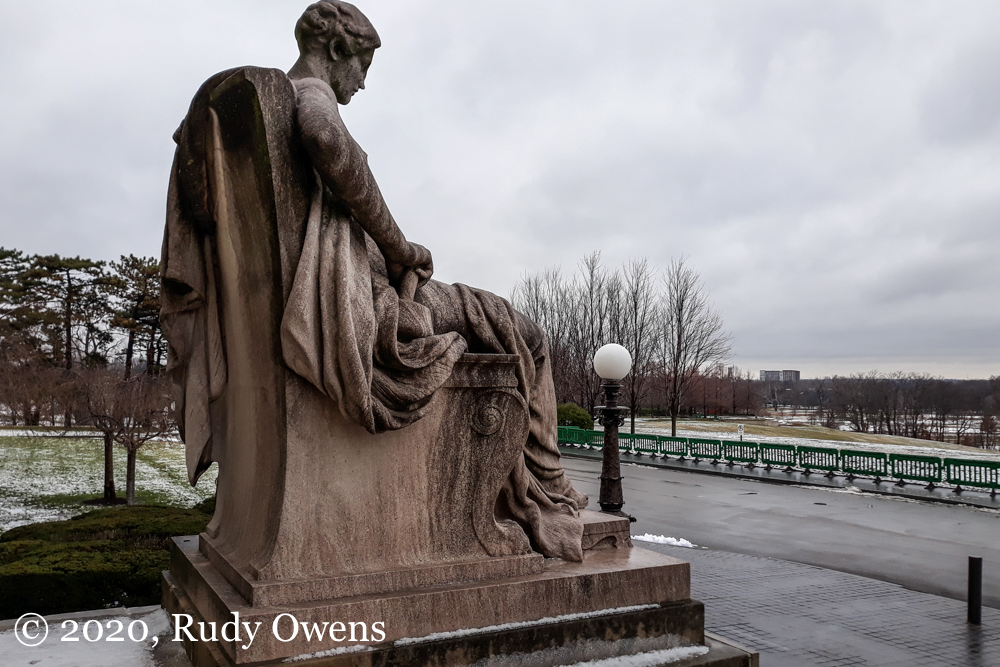
I took this shot in 2015 at the Detroit Institute of the Arts with one of my ill family members, who is nearing the end of their journey.

I fortunately have found my safe harbors in spaces that always serve me well: exercise, good food, a sense of gratitude for my own good fortune, being mindful of what is within my power to address, and deep knowledge of what I cannot change.

Feeling at peace with death is one of the oldest roles of myths for humanity, and I have found my place with its company this year even more. As Joseph Campbell, author of the Hero with a Thousand Faces, describes, death and death imagery are the very beginning of mythology. Campbell let all of us know that there is comfort knowing that what we all experience has been charted for millennia in myth: “So there’s a sense of death as not death somehow, that death is required for new fresh life.” 

In fact, it was the cumulative stresses surrounding the health and wellness of my surviving family that finally propelled me to visit one of my ancestral home countries of my biological mother, Finland. I felt what I can only call a mythical pull to go there.

Hearing the call of Finland

My planning started on an important day celebrating Finland’s great myth, called the Kalevala. On February 28, 2023, on Kalevala Day, I vowed to visit the Nordic nation that summer. What’s more, I would also seek out my biological family I could trace only as far back as my maternal grandmother and grandfather, who emigrated to the Upper Peninsula of Michigan in the early 1900s. There were no contacts between my Finnish-American biological family and their distal relatives in Finland since the 1950s.

Famous Finnish painter Akseli Gallen-Kallela’s study called “Kullervo Herding his Wild Flocks” (1917) is held in the collection of the Ateneum art museum in Helsinki, Finland.

I announced my idea publicly, to make it known I was taking a mythical journey: “And my new journey into my ancestral past has begun,” I wrote. “Where it ends now, I know not. Once the ship leaves its harbor of safety for parts unknown, the mind, heart, and soul breath in the fresh sea air that only is found by discovery. Finland.”

Everything about this idea was mythical. I could feel the tug, the way I did when I set out to find my birth mother and my biological families in the mid-1980s, completing the task in April 1989 in Ann Arbor, Michigan.

In fact, understanding myth and my adoption story gave me what I consider to be a tactical advantage compared to other adoptees who start their journeys for self-awareness far later in life. I was in a totally different place because I already had deep knowledge of myth’s meaning to the human experience because I read countless books on myths as a young person and learned the stories of the Bible in church every Sunday.

I knew intuitively why my impossible task had meaning and that I would succeed, like the “hero” celebrated in myths and tales across the time and all cultures. My memoir and study of the U.S. adoption experience explores interplay of myth and adoption in detail, where I describe why my experience closely resembled the “hero’s story.”

In this instance, I immediately recognized the myth dynamic in wanting to go back to a family origin location, in Finland.

That recognition propelled me forward with the power that can only be understood as mythical and by all the dynamic rules of a mythical story. It was familiar territory, and it completely energized me. I knew I was on a journey, which made it easier for me to throw myself completely headlong into this project. The myth played out almost effortlessly, with joy instead of sorrow.

I successfully found my long-lost Finnish relatives, thanks to blind good fortune of finding a benefactor named Satu, a professor who I contacted by email in the early summer 2023. (Even Satu’s role felt mythical, like the kindly stranger who intervenes to propel the hero forward on their journey to the unknown.)

In my long story about meeting my biological family, I describe how we first met by video calls and email and finally in person in Kurikka and Tampere, Finland, in September, 2023. Even before I met them, we knew that the meeting would be special for all of us.

I described in my story how one of my aunts told me how I resembled her adult kids. “I find same features on my sons’ and your faces,” she wrote to me. I also noted: “Later I learned that others in the family, including two daughters, said the same thing, completely separate from each other. When I compared a photo to the youngest son in the family with myself, and shared it with friends, everyone I sent them to were mostly stunned; some swore we could be brothers. All my friends mostly shared that the power of genetic similarities were both astonishing and cool.”

Embracing my Finnish mythical muse: Kullervo

I stumbled on the bronze statue of the famous mythical antihero Kullervo and his loyal friend and dog, Musti, my first morning in Helsinki, probably by fate.

On my first morning in Helsinki in September 2023, I went for a run. It was cloudy and rainy. I got lost. Almost by design, I regained my bearings near Toolonlahti, a bay in central Helsinki. I stopped my run the moment I saw a bronze sculpture of the Finnish antihero, Kullervo. The statue shows the famous mythical character, and his dog Musti, the moment before he kills himself with his own sword.  It stands peacefully in an outdoor rose garden in Kaupunginpuutarha park in Helsinki, but feels tense with foreboding. This was no accident. It was myth at play. I immediately shared the photos with my Finnish relatives, who told me it was Kullervo.

Kullervo is perhaps the most beloved character from the Kalevala by the Finnish people, despite a mostly short section in the epic myth relative to other heroes in it. Jean Sibelius wrote an entire musical score with a chorus telling his doomed and tragic story. As an infant, he was enslaved and orphaned, only to be tormented by the clan that destroyed his family. Despite abuses, he learns he has magic power, befriends a dog Musti, sleeps with his sister unknowingly (who kills herself), murders the man and clan that enslaved him, and finally kills himself in anguish.

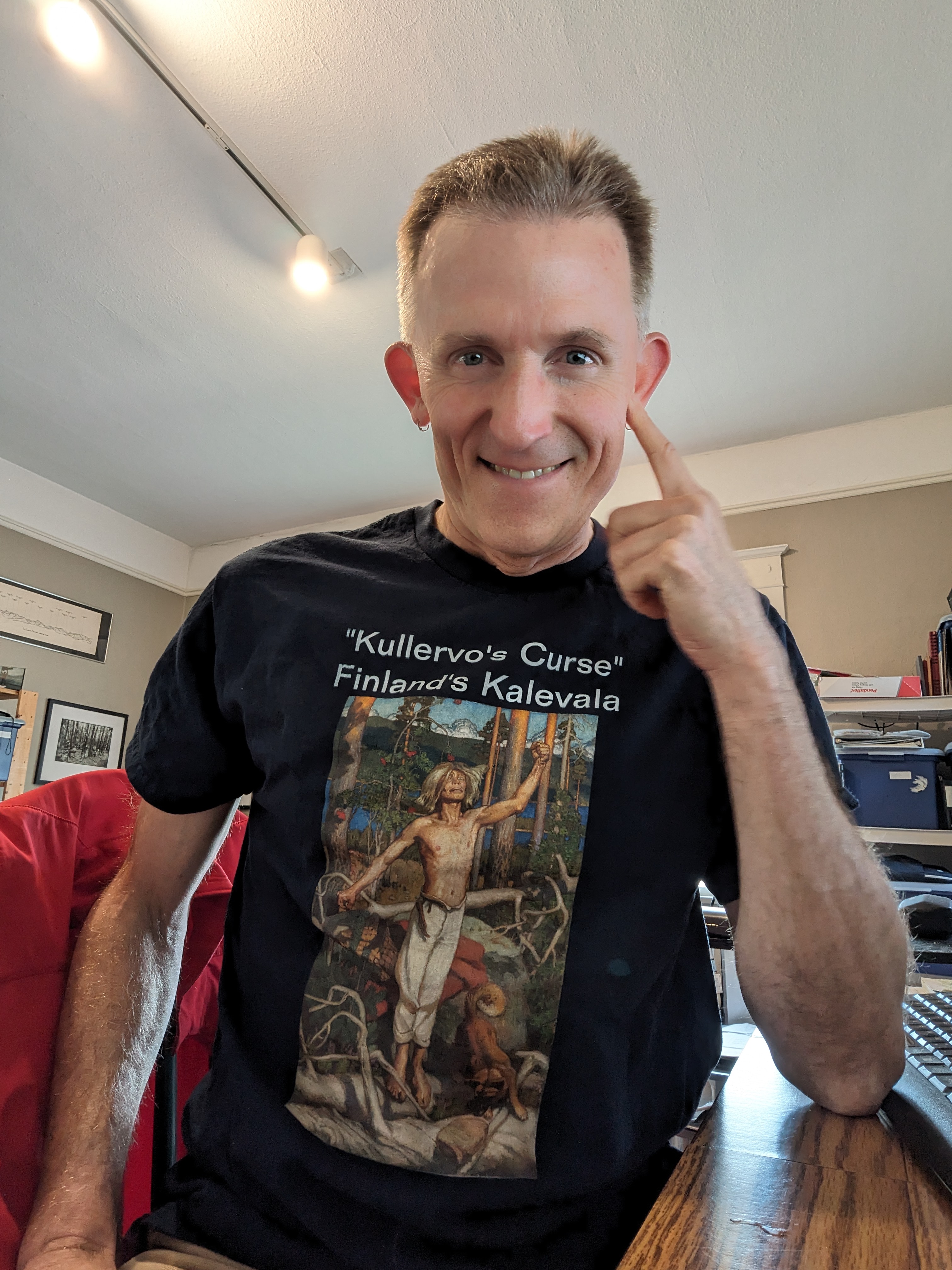
This is my favorite painting by the great Finnish artist Akseli Gallen-Kallela called “Kullervo’s Curse,” which I know proudly wear around town.

I made my T-shirt honoring Kullervo based on the painting by the great Finnish artist Akseli Gallen-Kallela, when I returned from Finland in February 2024. 

My latest trip to Finland in February 2024, visiting family again in Tampere and Kurikka, completed the mythic trip I had started in late September 2023. It offered fresh insights into a nation and its national identity and stories. The Kalevala, the national story, is part of this story the Finns tell themselves. It also gave me wonderful insights into my ethnic Finnish roots.

When I returned, I looked back at the year of impossible events. I did what I knew I would always do. I had visited my ancestral villages of my blood relatives. I found my relatives, with whom I shared a physical resemblance and a strong kin connection. I felt connected to my identity that was long hidden from me by laws in Michigan. All told, in one year,  I have written nearly 20 stories about my long journey back to my roots.

Without trying to write another book, I laid the foundations for one that arrived almost organically. I had no intention of writing any of these stories when the strange siren call to take the journey started. Yet it just happened, the way a myth naturally unfolds. My friend saw my new collection of essays and called me the “Finland Fanatic.”

What a perfect name for a book. What a perfect description of a mythical character, pulled by the power of the quest. My journey so far has been a happy one. Death of my family is still stalking my path forward. We shall see where it goes this coming year.

Genghis Khan, the revolutionary reformer

When I say the words “revolutionary reformer,” I bet the words Genghis Khan do not come to mind. He was both—a radical and a change agent unlike few others ever.

Before winning his honorific name of Genghis Khan, Borjigin Temüjin (1162–1227) rose from obscurity to mythical status, also becoming one of the most misunderstood figures of world history.

He was an unimportant son of an outcast family. His family was abandoned by its clan to die on the Mongol steppes. For a time, the young Temüjin, before his rise to power, was even a slave. He never forgot this humiliation.

Genghis Khan was the greatest conqueror in human history and a radical promoter of egalitarian reforms.

Through harsh life experiences in what is now Mongolia, he honed his abilities to unite disparate groups and people of different religious traditions and end archaic practices that stymied egalitarianism and the rights of those oppressed.

Genghis Khan drew his leadership ranks from those who proved themselves in battle. He was able to identify and promote capable subordinate leaders using a promotion system based strictly on merit. This proved dramatic on the field of battle.

These methods also challenged the orders and religions of the era, including Christianity and Islam in the West and Chinese traditions of Taoism and Confucianism in the East. In creating warriors loyal to his cause, he persuaded them to abandon their religious traditions and pledge allegiance to his vision of a united kingdom.

Unlike other cultures and rulers of his day, Genghis Khan also promoted religious tolerance studied and learned Islam, Buddhism, Taoism, and Christianity. He was remarkably tolerant to the local cultures in the administration of his cities. He provided order in exchange, of course, for taxes.

Above all, he and his armies were unrivaled innovators in the art of warfare. He became the world’s single greatest military conqueror, building a land empire two and a half times larger in its territory than the Roman Empire at its zenith. At the height of their power, the Mongols controlled an area which stretched from central Europe to the Pacific Ocean.

Historian Jack Weatherford, in his work “Genghis Khan and the Making of the Modern World,” summarizes Khan’s amazing feats this way: “In twenty-five years, the Mongol army subjugated more lands and people than the Romans had conquered in four hundred years. Genghis Khan together with his sones and grandsons, conquered the most densely populated civilizations of the thirteenth century. Whether measured by the number of people defeated, the sum of the countries annexed, or by the total area occupied, Genghis Khan conquered more than twice as much as any many in history.”

In the many lands they controlled, the Mongols provided security for travelers and they promoted trade. They reduced taxes and encouraged travel and commerce. This so-called “Pax Mongolica” allowed for the caravan routes of central Asia to flourish. Persian businessmen would visit lands in China regularly, and a diplomatic envoy from the Mongols could visit Europe and take communion with the pope in Rome.

In addition to the creation of cross-continental trade, the Mongols created an efficient and modern postal system. The Yam postal system, similar to the more modern Pony Express, relied on horses and provided the Mongols a rapid communications system, which they also extended to merchants. The merchant Marco Polo in fact used the Yam system to support his travels.

Few have changed world history like Genghis Khan.

He was, when needed, remarkably violent, conquering what is now modern-day Beijing in 1215, as he subdued the kingdoms of what is now modern-day China. The Mongol armies in 1241 decimated Czech, Polish and German knights in Poland in 1241.

In Europe, which fell as spectacularly as the earlier Chinese kingdoms did just decades earlier, the writers of the era branded the Mongol armies as an almost supernatural evil.

Describing the Mongol army that conquered Europe, also known as “Tatars,” after Genghis Khan’s death, a chronicler named Matthew Paris in 1241 wrote “they swarmed out and, like locusts, overwhelmed the face of the Earth. They devastated the lands of the East with dreadful destruction, laying waste with fire and carnage. Traveling through the lands of the Saracens, they leveled cities, cut down forests, tore down fortresses, ripped up vineyards, destroyed agricultural fields, and massacred city dwellers and rural folk.”

Mongol forces won everywhere because they employed superior tactics, weaponry, and speed.

They also were brutal when they needed to crush their foes and send a message to their rivals. In 1258, nearly three decades after Genghis Khan’s death, they besieged, sacked, and burned the great Caliphate of Baghdad in a feat not replicated until the American and British invasion of the city in 2003.

To those defeated by the Mongol’s lightning-fast cavalry and steppe-raised soldiers, organized along egalitarian principles and commanded by the most proven leaders, the Mongol army was the representation of the devil itself. They brought the planet’s mightiest and non-egalitarian systems to their knees unlike any military and political force before or since.

Yet Genghis Khan and his successors were astonishingly modern and enlightened.

John Mullin, writing on the innovations of Genghis Khan for the Federal Reserve Bank of Richmond in 2021, notes: “The Mongol empire was full of juxtaposition. In their military conquests, the Mongols countered resistance with ruthless violence. Yet after establishing control, their rule over conquered territories could be more nuanced. In the ‘Yasa’ legal code that Genghis [Khan] promulgated to complement customary Mongol law, the death penalty was ubiquitous. Acts of robbery and treason were punished with severity—but the Yuan legal code that the Mongols established in China had only half the number of capital crimes as the Song dynasty code that it supplanted, and the death penalty appears to have been used only sparingly on civilians.”

It is also important to remember Genghis Khan’s first acts as a leader. After taking power in 1206 of a united Mongol people, he wiped out practices that had cruelly subjected nearly all women to property status, brutally harmed bastard-born kids (illegitimate kids), and had ordinary people turned into slaves. He ended all of these oppressive systems. He had experienced and witnessed all of these cruelties during his life and rise to leadership. He never forgot what he had learned from the harshest of life lessons.

Today, it is no surprise those who accused Genghis Khan of barbarism were those who lost to him—the Chinese, most of the Muslim kingdoms of the Mideast/Near East, the West, and what is now Russia and Ukraine. Those defeated also were the ones who wrote the recorded history following their staggering defeats. They chose most lurid and exaggerated prose.

Yet, those who wrote the historic record, ultimately, stayed stuck in ways that Mongols were not. The social and religious systems that outlived the Mongol empire kept alive archaic and non-egalitarian systems that continued to the modern era and even today, especially the treatment of women. On the plains of Mongolia, nearly 1,000 years earlier, Genghis Khan had at least temporarily freed a generation of people from their societal prisons.

When serendipity is not just an accident

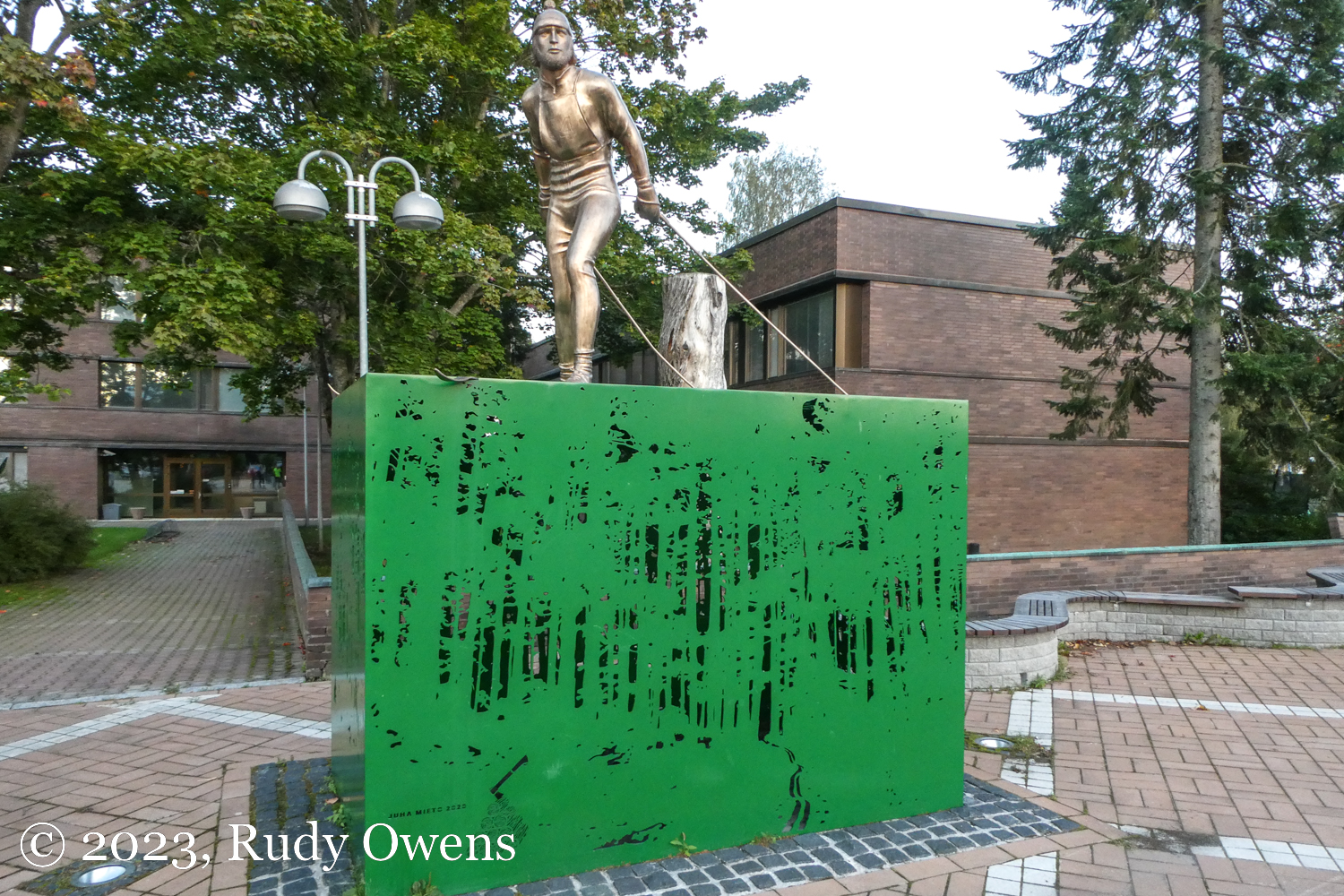
Olympic gold medalist and Finnish ski legend Juha Mieto is celebrated in his home city of Kurikka with this status in the city center.

In September 2023, I visited the 20,000-person community of Kurikka, Finland. Kurikka is the kind of place that will never go into any Finnish guidebook, but it’s where I had a lot of great moments in Finland for my first-ever visit to the Nordic nation.

At the center of the city I found this statue of a very famous Finnish skier, Juha Mieto. It turns out a completely unknown Finnish woman who connected me to my distant relatives in Finland this summer also has a connection to Kurikka and Mieto too, and I had no way of knowing that at the time I saw this statue.

Several months before I was standing in the Kurikka city center, I had been in touch with my “email friend” in Finland asking her for help. Our interaction was an entirely serendipitous human connection that tipped the scales of fate for me and had brought me to this very spot.

Today I learned she is a blood relative of this very famous Finnish national skier. The famous Mieto grabbed a gold medal a 1976 Winter Olympics in Lake Placid, New York, and also a silver medal, in the 1980 Winter Olympics in Innsbruck, Austria, finishing one one-hundredth of a second behind his Swedish rival, Thomas Wassberg.  

Kurikka is also the home city of Finnish relatives I found through my benefactor’s help.

When I visited one of my Finnish relatives in Kurikka in September 2023, I first saw this statue. I photographed it because it was distinct, but I didn’t fully appreciate who I was photographing at the time—a Finnish sports legend. I mentioned this visit in my story about my trip and seeing this statue. I shared the story with my benefactor as a late “thank you” gift to show how important her help was to me. And that’s when she mentioned her personal connection to Kurikka and the man turned into a bronze ski statue.

Talk about funny coincidences. Life is full of them. I have always found that the more you do things to go where your instincts are telling you to go, the more these things will happen. Perhaps good luck, my connection to friendly stranger, and maybe something more made all of this happen.

The famous Swiss psychiatrist Carl Jung created the term synchronicity to explain relationships between events that could not be explained by simple cause and effect logic.

Jung suggested that unique and synchronistic events had meaningful connections rooted in perceptions. He explained it this way: “I found where ‘coincidences’ which were connected so meaningfully that their ‘chance’ concurrence would represent a degree of improbability that would have to be expressed by an astronomical figure.”

I have long thought that synchronicity can be harnessed, especially when I felt it working in wonderous ways for me. I fortunately could tap into that for my trip to Finland.

I would not say that I’m “extraordinary.” I’m just me. And I felt synchronicity the entire time I was planning my trip and then having one of the most rewarding times of my life.

I also have a bit of advice. Trust the siren when you hear it. It calls for a reason.

‘Can I sit next to you?’

I love random meetings when I travel. Most of the time these moments prove far more memorable and meaningful than the trip one sets out upon, even when one is traveling for a purpose.

In my case, my trip to St. Louis, Missouri, from Sept. 28-30, 2022, involved seeing a very sick family member. It was a heavy trip, and I had a lot to do. At that moment, thoughts of life and death weighed on my mind, so I was in a reflective mood. Perhaps I was willing to share stories with a stranger.

This short cross-country jaunt was also my first out-of-state trip from Portland, Oregon, in more than 15 months. I had booked a cheap flight, which meant I would leave at an early hour.

Because I always prefer to arrive early, I parked my car at the airport extended car park parking lot around 1:30 a.m. and quickly got the shuttle bus without much waiting time. That meant I walked into the nearly empty Portland International Airport for my 5 a.m. flight far before I expected.

It was still the dead of night, when nearly no one was in the facility. Because of that hour, Transportation Security Administration (TSA) staff had not opened the check-through area for the gate I would use. That meant I had an hour to wait and perhaps read my books I had brought for the flights.

I sat in the nearly empty front lobby by the empty check-in area, until the full staff would arrive. Few other travelers were around, and a handful of security personnel walked the quiet space. A few weary travelers had crashed in the lobby area, sleeping on the floor, perhaps waiting for another early morning flight too.

An older woman, who I learned was 81, approached my seating area with four seats. We both were wearing masks. She asked, “Can I sit next to you.”

“Of course,” I replied.

That was the beginning of a conversation that meandered for an hour. I never got her name. I should have asked.

The retired nurse told me she was a widow. Her husband died more than a decade earlier, she said. She now lived alone in an apartment in downtown Portland, which she liked. She told me about her life, like her recent trip to the Alps this past summer to hike with a group. She told me she needed to go on that trip, before she could do trips like this in the future. She loved it, she said.

She then talked about her coming travels. She was estranged from her family, back in Kansas. But now she was traveling to Topeka, Kansas, for an indefinite time. She was going to care for a slightly younger sister dying of cancer. She did not know how long she would be there.

I learned that her oldest daughter, who lived in Portland, was also dying of stage four breast cancer. I did not probe with questions. I could sense it was not going well and would end badly. The pending deaths in her family made her increasingly aware that her days also were numbered, she mused.

Though she said she had left her family decades earlier, it was now time to connect with kin who would be passing. I concurred. I told her it was very caring for her to be so generous to her sister. She nodded, in agreement.

I told her I was seeing my ailing family member, who was not well and living in a nursing home. I told her briefly about my mom, who had died in early 2020 from Alzheimer’s after a seven-year battle. Mostly, though, I was the listener.

Near 3 a.m., we noticed the TSA team had arrived and the security checkpoint was open. We both walked over. That was the last time we spoke. I saw her get a seat ahead of me on the plane. She got off the connecting flight in Denver before me, and I never saw her again.

The encounter, with a stranger I will likely never see again, reminded me why it is good to listen to people and let them share their burdens. We all need to listen when we can and just be kind.

Soon, the masks come off

Masks are coming off soon, when previously many jurisdictions had required them in many indoor settings to prevent the spread of COVID-19. Many want this. Many who also know about the term “endemicity” would also like to believe we have “immunity” and can get back to “normal.”

In Portland, Oregon’s Sellwood neighborhood, the masks are coming off already, indoors and outdoors, at most eating establishments.

Hey, as a person who yearns for social contact like millions of others, I would like to go back to that now-crowded, maskless wine bar in Sellwood near my home too. Personally, I won’t do that any time soon.

The reason is, the underlying SARS-CoV-2 virus and its mutations will remain prevalent and potentially a real public health concern, based on what current science tell us. But I’m not saying this. Professor Aris Katzourakis, of the Department of Zoology, at Oxford University in the United Kingdom, made this point in the Jan. 24, 2022 issue of Nature.

Rudy Owens, wearing two masks, on a flight in June 2021 from Seattle to St. Louis.

In his essay, “COVID-19: endemic doesn’t mean harmless,” published just before the Omicron surge began to fall in many countries, Katzourakis wrote: “There is a widespread, rosy misconception that viruses evolve over time to become more benign. This is not the case: there is no predestined evolutionary outcome for a virus to become more benign, especially ones, such as SARS-CoV-2, in which most transmission happens before the virus causes severe disease.”

Katzourakis, and other public health and scientific experts, are not rooting for one outcome or the other. They are just using science to provide an informed opinion, hopefully to keep people healthy. And if some people keep wearing masks, that is fine with me. I will likely be one of them. That is a decision we all will still be able to make, for reasons that make good scientific and health sense.

Global health icon Dr. Paul Farmer touched a generation of public health practitioners

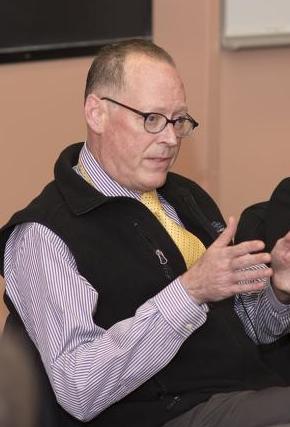
Dr. Paul Farmer speaks at the University of Washington School of Public Health in 2018. Photo is courtesy of the University of Washington; story here.

World-renown global health advocate, Dr. Paul Farmer, died in his sleep in Rwanda, leading to an outpouring of both sadness and praise from many health and public health practitioners in the United States and around the world. At the time of his sudden death, Farmer was working in the central African nation at the medical school he co-founded with the Rwanda’s former minister of health, Dr. Agnes Binagwaho.

Farmer, a medical doctor and anthropologist with advanced degrees from Harvard, co-founded of the Boston-based Partners in Health (PIH). The group confirmed his death on Twitter today, Feb. 21, 2022. ABC News reported PIH had confirmed Farmer died from an acute cardiac event that happened during his sleep.

Despite his prestigious graduate pedigree and also having attended Duke University as an undergraduate, he eschewed the path of traditional power and influence that his elite training afforded him. He had his eyes set on the world, where many lacked access to basic health care. According to Duke University, Farmer sought to “strengthen public health systems in order to provide quality health care in some of the world’s most vulnerable communities.” By the time of his untimely death, he had established a wide following after having spent decades of his life working on addressing global health inequities, in Haiti, Africa, Eastern Europe, and Latin America. 

It is fair to say Farmer influenced nearly a generation of health and public health practitioners in the United States who have an interest in global health and health inequities. Those singing his praises today range from policy hawks like Samantha Power, to Hollywood celebrities, to former President Bill Clinton, as well as scores of public-health minded doctors who shared comments on Twitter, expressing sadness at the news of Farmer’s passing.

Farmer left a mark with his peers and colleagues globally who shared his passion to fix the same root issues driving and underlying global health inequities. The day after Farmer’s death is filled with diversity of persons who work in those fields sharing personal comments explaining why Farmer mattered in this collective effort. One former colleague, Dr. Sriram Shamasunder, met Farmer as a university student and was inspired to join in the work Farmer was doing. “He conveyed with his words, the irresistibility of social medicine, where health workers aim to address the root causes of disease in its social and economic context,” wrote Shamasunder in an essay published by National Public Radio just after Farmer’s demise. “This work is where necessity, urgency, and joy become bound together.”

Nearly every graduate student I met at the University of Washington School of Public Health (UW SPH) when I got my degree there (2010-‘12, as an older student) shared tales describing that their interest in working in international health was influenced by Farmer’s thinking and writing. He also visited my alma matter to speak about his work. That praise felt very close to hagiography, which can also hide any famous person’s flaws and blind spots. Those who know better of making saints from mere mortals can easily describe this type of myth-making as “white saviorism.” That is real too, regardless of Farmer’s accomplishments.

Tracy Kidder’s famous book about him, Mountains Beyond Mountains: The Quest of Dr. Paul Farmer, a Man Who Would Cure the World,  is the one book that came up in many conversations among UW SPH grad students. Here are some works by Farmer that provide some insights to his influential thinking, which are not uniquely his and also are shared by many doing similar work. I have not read it, but clearly the book has what can best be called a “dedicated following.” One cannot deny that Farmer was tireless in communicating the change he worked on, in the mud and in the field.

A good profile of him can be found in a New Yorker piece from 2000 that is circulating among those in global health who are lamenting this loss. The myth-making portrait by Kidder in her book about Farmer is based on a Haitian proverb: the Haitian proverb “Beyond mountains there are mountains”—as you solve one problem, another problem presents itself, and you go on and try to solve that too. That is a good metaphor to living life, ready to engage and never losing your purpose why you do what you do.

A Chance Meeting with Ike

Every one of us has a mother, and that can bring together strangers. (Sculpture in front of the St. Louis Art Museum, taken three weeks before my mother died in early February 2020.)

In mid-February, I flew across the country from Portland to St. Louis. My trip came suddenly, but not as a surprise. After more than seven years of battling Alzheimer’s my mother finally passed away.

My plan was to write a eulogy on the long flight I would have from Seattle to St. Louis, the second leg of my journey. My tale was meant to focus on young woman, who was raised in a scrappy New Jersey town just outside of New York City.

That’s what I thought at least.

I ended up writing two stories. One I published after I returned. The other I put aside. It was a story I never intended to have, but had to be told. I finally am telling it now, at the end of May 2020, in the middle of a pandemic and protests occurring nationally in the United State against racial injustice and much, much more.

Perhaps by fate, I think my mom decided to play a funny trick on me on the way for me say goodbye. The experience allowed me to recall her wisdom and share it with a stranger.

On that trip, a stranger crossed my path. However, it was up to me to do something with this opportunity and make sense of it. My mom’s passing gave me a window.

Wakanda PatchOn the escalator coming out of the Airport shuttle tram at SeaTac, Seattle’s international airport, I spotted a large African-American man in a red and black checkered shirt. He must have weighed 225 pounds. He stood about 6’2” and had a massive chest and arms for linebacker.

I didn’t really think about him until I spotted two items pinned to his backpack.

One said, “Wakanda is not a shithole country.” The other was a medallion with the Latin words “Memento Mori,” or remember that death comes to all. During the period of the Roman Empire, the phrase would be whispered in a mighty Roman emperor’s ears by a slave as he entered Rome. It reminded a mighty emperor of his mortality and that he, the mightiest person in the world, faced the same ultimate fate as slave behind him.

When I read the Memento Mori medallion, I decided I had to introduce myself. I recently had found myself drawn to Stoic ideas, from ancient Greece and Rome, which are embodied in the words carved on that medallion.

I said, “Hi. I’m Rudy.” He replied simply, “Ike.”

I asked about his backpack decorations. We laughed about Wakanda.

I told him I recognized the Stoic medallion, and he said, yes, it’s sold by Ryan Holiday. Not by coincidence, we both followed and liked Holiday’s blog called The Daily Stoic. Both of us obviously found something in these ideas that connected with us.

I could hear a West African accent in his voice and asked about his background.

Soon I learned Ike originally hailed from Nigeria, the son of political refugee parents. He told me his mother arrived in Boston with just the shirt on her back and four kids while his father rotted in a jail back home.

I then discovered we were on the same flight. He was on a business trip from Seattle to St. Louis.

I told him about my family, being raised in a family of three with a single mom in St. Louis. I said I was flying to St. Louis to attend the funeral of my mother.

Ike commented how important funerals were in Nigeria for the Igbo, Yoruba, and Hausa-Fulani ethnic groups. Ike called them festive occasions where the life of a person was remembered as a joyful thing.

Rudy and Ike

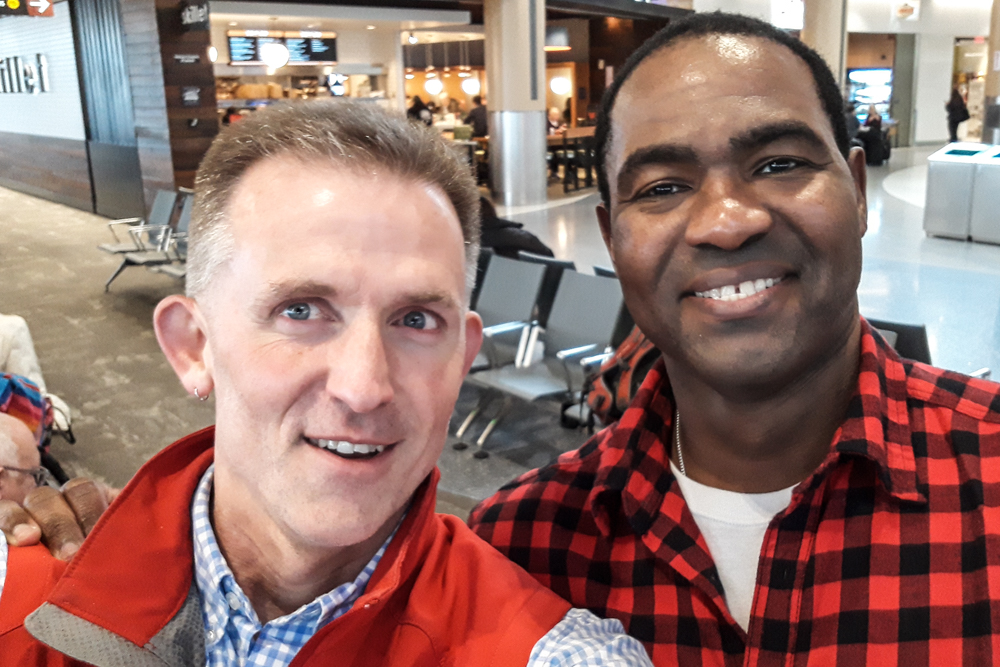
Rudy and Ike, connecting over mothers, death, funerals, and remembrance during a chance meeting at SeaTac in mid-February 2020. It is sad knowing we can’t enjoy the friendly embrace of strangers anymore for a long time amid the pandemic.

He said as a child, he wasn’t afraid of death because funerals were always so fun. Only later did he learn of the sadness that also accompanies the loss of a loved one. But first he learned that death was not a thing to fear and that it was a part of life.

Somehow we began to talk about how our mothers raised us and what life skills they taught us. Ike said his mom, and dad, always taught him he had to fight, because nothing in life came without some sort of struggle.

He said they never spoiled him or pampered him or over-parented him. If he was hurt, without requiring a hospital visit, he was expected to overcome his circumstance, because he if wasn’t gravely injured, he would be OK. He said it was the right thing to teach him, and he later understood the importance of this teaching. It helped to make him successful.

I said my mom was the same way. She understood good luck and bad luck. Like everyone, she had her share of both, and maybe in stronger doses that she deserved at times. I said, she could handle a strong wind and not snap. She would bend back. I said she had raised me not to be blown down during storms, even if I wasn’t aware of this when it was happening. Like her, I had to learn on my own to let storms pass and then come back up, stronger. Maybe I was more successful at this than she bargained for.

I also talked about my mom’s battle with Alzheimer’s and how it had given me a chance to learn about things that frighten us all—our mortality and death. By the end of this journey, watching this illness take my mom, I had grown. I had become less afraid of the end that awaits us all (“Memento Mori”). I simply did what I could do for my mom, mostly in a way that worked.

I told him that in the end, my mom always had an ability to see goodness. She could find something good amid something terrible, including her illness. Though she despised it, and would rightly say, “I hate this. I can’t stand this.” She also said one line all the time, right up to the end. “I have the nicest husband in the whole world, “ she would tell me, again, and again, and again, and again. I must have heard this hundreds of times in the past seven years.

It was one of the last things she told me on the phone, the last time we had a conversation during the Thanksgiving 2019 holiday. I remember replying to her the way I always did, with utmost sincerity: “Yeah mom, you do. He’s a great husband.”

I reality, my mom had said this for all 37 years of her marriage. She was speaking a truth about what the second half of her life was like with her best friend and husband.

“I got so lucky,” she might add. “Yes, mom,” I’d reply. “You got real lucky indeed.”

At that moment, in telling Ike my mom’s story, I started to feel my eyes water up and looked away. Here I was, crying to a man I had never met, telling him about the passing of my mother. He gave me a hug. “It’s OK, man. It’s part of the journey of life.”

Ike and I took a selfie and I gave him my card. I don’t know if I will see him again. He lives in Seattle with his wife. He’s not even sure how much time he has, having just had a heart attack on Jan. 18. He told me it was almost a blessing, because it reminded him of how precious life is and how important his wife and health are.

I think my mom would have loved to meet Ike. She could have easily found herself talking to him, like I saw her do countless times before whenever we travelled, or went to the Missouri Botanical Gardens, or the St. Louis Art Museum, or on a holiday. She was always warm and welcoming with strangers, of any race or background—always eager to hear about their lives and talk about their families and especially their kids.

In some ways, I felt my mom somehow played a serendipitous role that crossed my path with Ike’s, and therefore my mom’s story with his mom’s story, and the story all of us have with our mothers and the lessons they teach us, so we can pass them on to others, the way all people do, in the USA, Nigeria, or any other place.

Yes, maybe there was a reason I would be in an airport tram on that very day, at that very hour, at that very second, with an imposing looking man next to me, who just happened to have a reminder that captured the wisdom of a long journey my mom just completed. In some ways I felt that was her reaching from beyond through a stranger letting me it would be OK.

Remember to always get up and welcome a stranger into your life, I think she’d say. It was something her long and abiding Christian faith had given her until the very end.

Train Station Lessons: Don’t Be the One Left in the Rain

Train stations are magical places. They are portals where we literally jump off to new destinations. They allow people with different lives and destinies to intersect. They are big. They are public. They are filled with promise, confusion, and noise. They can also be places of tragedy and sadness.

I have had many memorable train station moments in my life, in India, Singapore, Malaysia, Egypt, Thailand, the USA, Canada, Japan, and throughout Europe. I have almost been robbed, lost my money, found friends, and often sat around for hours waiting to escape a few terrible places and even countries.

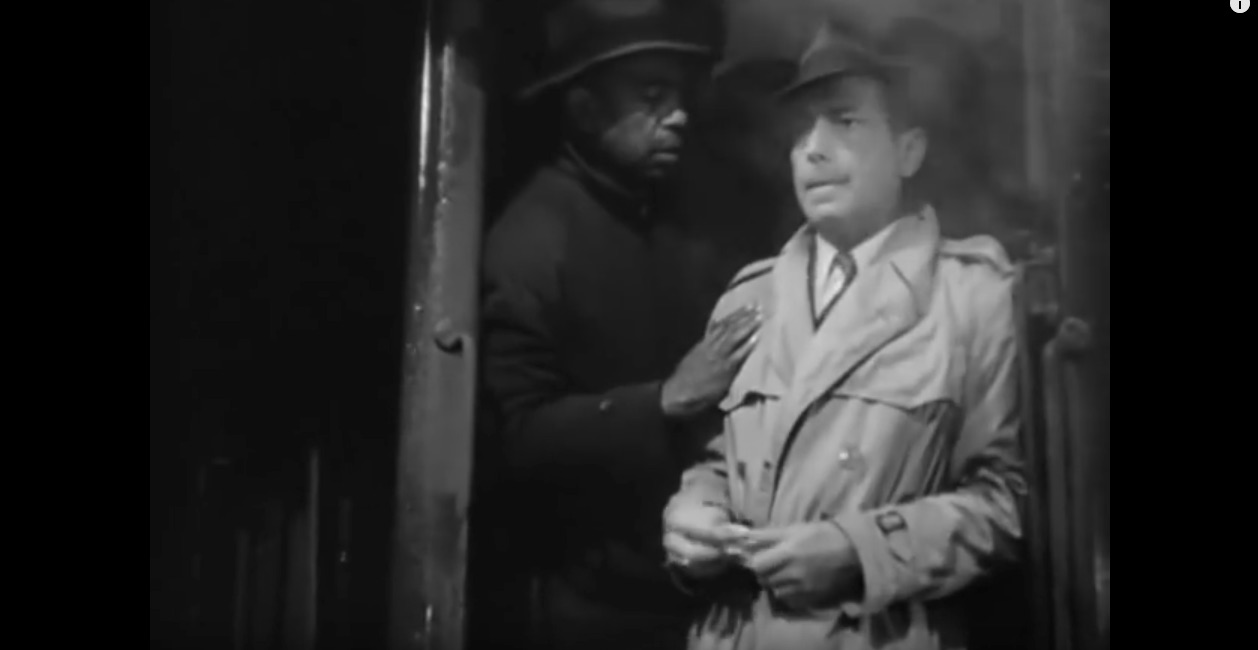
Sam and Rick leave Paris without Ilsa, who just moments earlier had broken Rick’s heart with her farewell letter. And, yes, it has to be raining for such a scene.

When I think of trains, I always think of the great train scene, set in Paris on a rainy June 1940 evening, as two protagonists get ready to flee the advancing Nazis. One is Humphrey Bogart’s Rick Blaine, and the other is his best friend Sam, played by Dooley Wilson. The film is the Warner Bros. 1942 classic Casablanca.

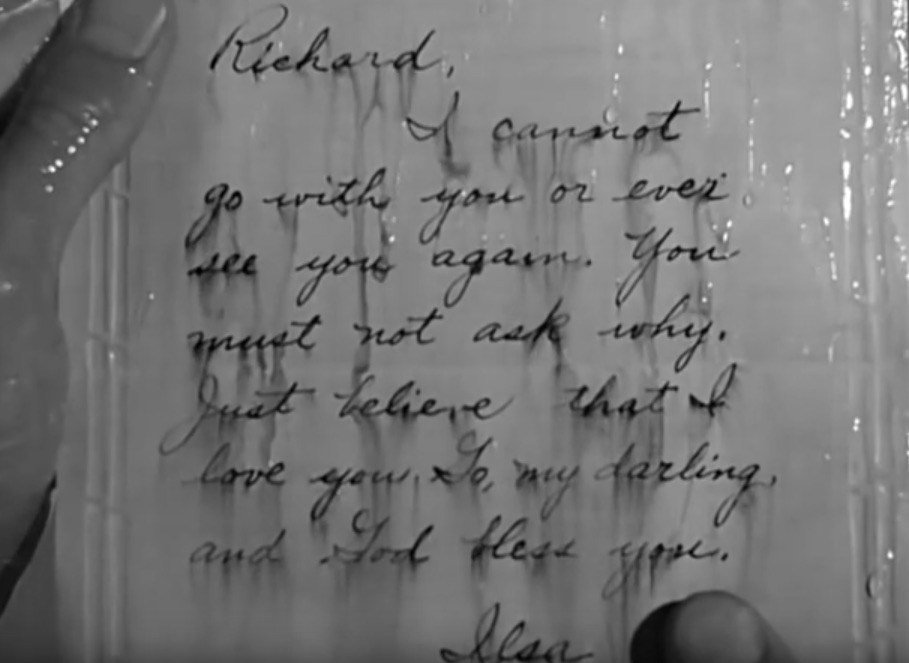
Come on, you know the short scene. Sam shares the note from Rick’s lover, Ilsa, who is not seen in this sequence, but played by Ingrid Bergman. In her letter, she bids Rick what she thinks is her final farewell.

Rick is devastated and watches the words melt away on the sheet in the downpour and his heart breaks apart right at that very moment. The scene ends with Rick tossing the toxic rejection missive aside, as he and Sam steam away, fleeing for what we know will be North Africa and eventually the film’s namesake, Casablanca.

Ilsa’s goodbye letter to Rick in the 1942 Warner Bros. film Casablanca.

I thought about that memorable scene yesterday, when I found myself at Union Station in Portland.

It was raining. It also was colder than expected. I had dashed down to give a gift to a friend who was leaving town with a lot on her mind. The whole scene brought back a memory from about two years earlier, when another woman I knew had come to Portland, in the midst of a personal crisis, and I had dropped her at the station on a very rainy late fall day. I had listened to her story as well, and a few tears.

I will leave out other scenes from my first Union Station episode, but it was a terrible day for the person I was with. My job, whether I wanted it or not, was to help her out and then to be forgotten. I was disposable in some ways. The event yesterday was not quite on that scale, but it had eerie echoes from the one before.

I laughed at myself walking away from Union Station after I bid my friend farewell. So was I just the sap, getting caught in the rain, like Bogie, whose love interest left him for another man without saying goodbye in person? In both cases I was not the love interest, but I was barely a secondary character in the film unfolding for these two leads in their complicated lives.

Clearly there are elements of an archetypal modern story at play when man and woman cross fates in railway stations: The man, feeling sappy and sorry for himself. The woman, crying over another man. The station as the stage, where the drama unfolds. And of course the beating rain, soaking the characters to their skin.

On some days, you have to be Bogie’s Blaine, and stop thinking about yourself. That is OK. I have no regrets. It is fine to play the part of a tragic but complex character.

But having lived this scene, I advise any future Ricks who are left behind, avoid the habit of being the one who leaves the station alone, drenched by rain and feeling nothing but regret. There are much better ways to end your stories. And don’t wait until the bad guys like the Nazis are practically knocking at the city gates. Leave town a lot earlier.

Note: Use of images from the film Casablanca are solely for the purposes of comment and criticism.

Twenty-Four Terrible Little Hours in Paris

I am re-publishing a story I first published on my website in January 2007. Amid the stories emerging lately about harsh treatment of U.S. citizens and non-citizens entering the United States, I was reminded that any citizen anywhere can be singled out for racist and frightening treatment.

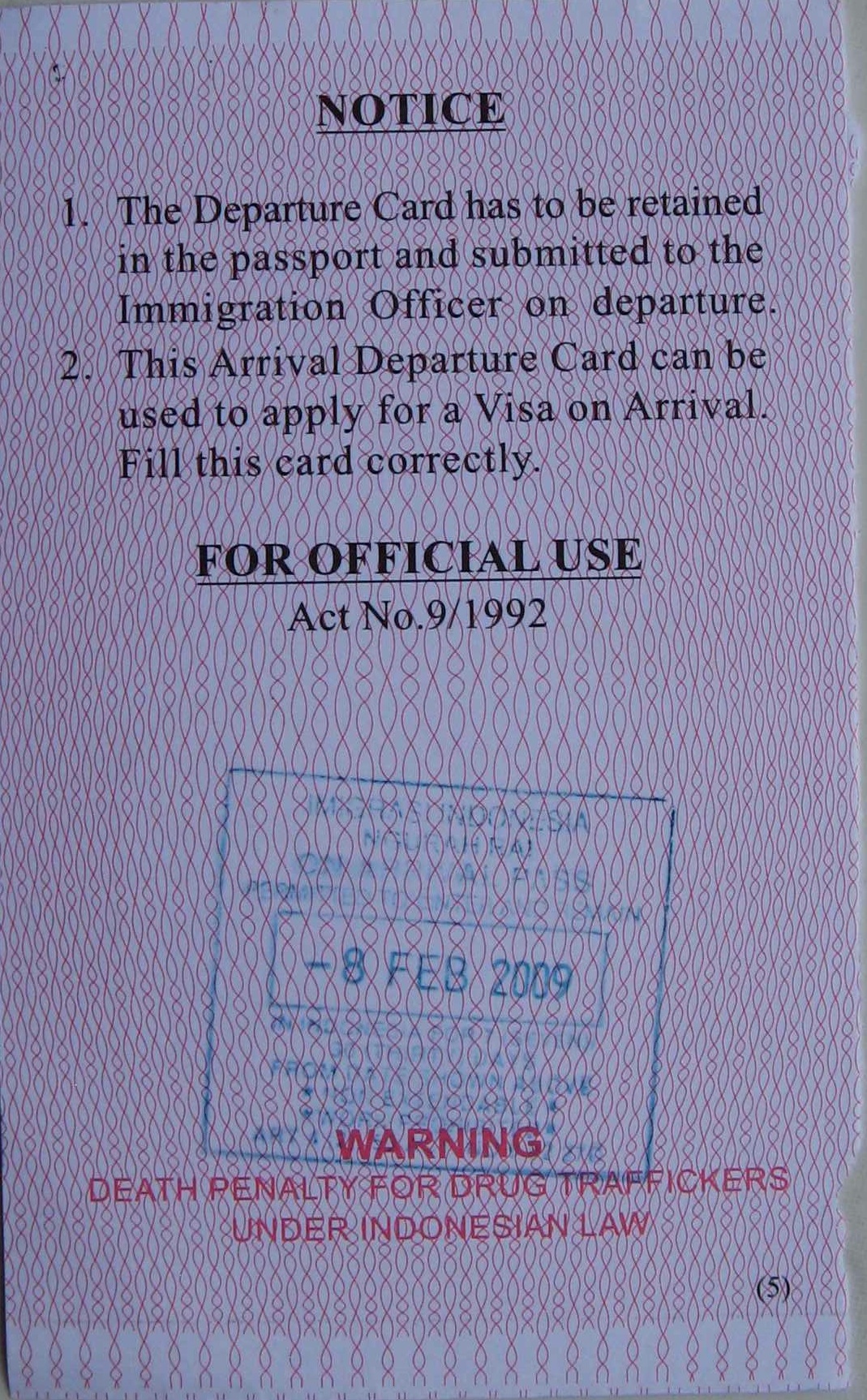
I have been profiled and ransacked entering Canada and the United States several times. Both sides used drug sniffing dogs, suspecting I had to be a drug smuggler. I had a nasty shakedown in Uganda I will never forget. Japanese customs agents did a chemical test on dirt in my luggage, smiling and suggesting it was dope. If it tested false positive (and that would have been a false positive, since I don’t do any drugs), I could have done prison time. Indonesia warns visitors they face the death penalty if they are caught smuggling drugs. I took this warning very seriously and avoided even making eye contact with Bali’s many street dope dealers in the Kuta Beach area. There were rumors many were police informers.

Indonesia makes clear to all visitors if they smuggle drugs, they likely will be killed by federal law.

Indonesia makes clear to all visitors if they smuggle drugs, they likely will be killed by federal law.

Here is my experience just before I boarded an Air France flight back to the United States in November 2006, coming from Italy and heading to my home in Anchorage, Alaska. What happened is an accurate record of the events and my efforts to seek an apology from those who treated me as a likely criminal.

When you travel and enter into a no-man’s land at the border, you have no power. No law protects you. You are ultimately at the whim of a state power and the people wearing uniforms. Men like the fictional and corrupt Captain Louis Renault in Casablanca are ready to seize those moments and exert power,  for pleasure and profit. Anyone who has traveled knows this. This is universal, not just an issue of one country or one culture.

© 2007, Rudy Owens. All rights reserved.

I am still trying to decide what is worse, French security guards or Disneyland Resort Paris. Both conjure up frightening images. Both overlapped painfully for me when my Air France flight from Rome arrived late at Charles de Gaulle International Airport on Nov. 7, 2006. What followed were some of the worst 24 hours of my life, rivaling my feverish malarial delirium in Africa and the tearing of my anterior cruciate ligament on my left knee for the second time.

When I finally boarded yet another late Air France plane to leave “Old Europe” on Nov. 8, 2006, I had just endured the must humiliating and degrading security shakedown of my life.

Claude Rains as the corrupt Captain Louis Renault in Casablanca. Remember, round up the usual suspects.

Anyone who has gone through this experience knows the feeling that comes when the uniformed power figure mocks the powerless. But the archetypal redneck American sheriff has nothing on the archetypal Frenchman in uniform, captured so brilliantly by Claude Rains as the corrupt French police chief, Capt. Louis Renault, in “Casablanca.” And, like so many ugly archetypes, often a dark, dirty, worm-infested truth lies at its core.

In less than one day, the Republic of France, Air France, and the personnel of Charles de Gaulle International Airport, in Paris, had temporarily turned me into an ardent supporter of the “Boycott France” movement. Though my initial sense of outrage has now passed, the residual sense of fear has not. It is a feeling that I think will always linger when I leave the country, when before I had only known curious excitement.

In truth, I could have forgiven France and Air France for my missed connection at Charles de Gaulle on Nov. 7, 2006, when this all began. I could even have forgiven the accommodations Air France gave me, if I just were allowed to leave France like any other transiting passenger the next day. But no, it was not going to be that easy.

After landing 90 minutes late from Rome, four hours of my life zipped away at Air France’s help desk, where personnel in smart navy blue uniforms speaking smart Parisian French rebooked me on a flight back to the United States the next day and told me I would spend the night at Hotel Cheyenne, courtesy of Air France.

I had no time to ask where this oddly and American-named accommodation was found. I thought, this could be OK; at least I could see a little of Paris, eat some French food, and walk around. I was told, hurry up, the bus was leaving – told in French, of course.

There were about 20 of us international traveling misfits from many countries who were collected on an unmarked bus at 3 p.m. and driven an hour away from de Gaulle, not to the City of Lights, but to Disney’s European bastard child, Disneyland Resort Paris, a.k.a, EuroDisney.

The bus unloaded us at Hotel Cheyenne, a complex adjacent to EuroDisney in the middle of absolutely nowhere. This sprawling corporate complex in the farm fields near WWI battlefields was designed to prey upon European and Japanese affections for American cultural kitsch.

As for Hotel Cheyenne, it was an entirely fake wild Western village, with poorly constructed, two-story wooden hotels named after real and imaginary icons of the old West: Sitting Bull, Wyatt Earp, and Billy the Kid. It resembled a French civic planner’s vision of a Hollywood Western movie set.

A fake western village in Disney Paris, the prelude to my nasty encounter a day later with Air France private security officials.

A fake western village in EuroDisney in Paris, the prelude to my nasty encounter a day later with Air France private security officials.

The check-in was a chaotic. Our bus arrived minutes after another busload of Japanese tourists. Unlike us stranded Air France passengers, these tourists were actually paying for this experience, rather than enduring it.

I was assigned a room in the Wyatt Earp building, handed meal coupons, and told an Air France shuttle bus would arrive in the morning to take us to the airport.

My room had a faulty heater and smelled of rancid cigarette smoke. I was told by the hotel’s staff I could not change rooms. They were booked full. Full? Who would actually pay to stay here? As it turns out, thousands and thousands of Europeans and Asian tourists do just that.

I walked around the hotel-cum-tourist village. There were fake corrals, fake wells, fake streets, a fake bank, and signs in English to make visitors feel as if they were in Tombstone, Arizona, or a corporation’s vision of what imaginary Tombstone may have looked like. The more I saw, the more I could not believe what was happening. Trapped in a faux Western village, in EuroDisney, miles from any real French town, or even a grocery store, or boulangerie, or anything remotely French.

To kill time, I took a 6 mile run. I did a quick spin first through EuroDisney. It resembled a 1970s-era Six Flags-type theme park in the American Midwest. Fast food restaurants and stores peddled Disney merchandize to mostly European visitors. Large block hotels ringed the amusement area, surrounding a lagoon. I then ran out along a canal to an open space by the road that punched through a farm field to a distant highway. A fog had fallen with darkness. As I headed back to the Wyatt Earp, I followed the grand boulevard, laid out like the entrance to Versailles. Except here the distant palace was that of the Magic Kingdom, shimmering in the mist like a bad dream.

Later that night, the hotel finally posted information that our morning bus would arrive at 7:30 a.m. Because half of the 20 passengers, such as myself, had early morning flights, we would need to book cabs. To our collective shock, we discovered cab fare to the airport was more than 100 Euros, or about $125. We also were told we would have to pick up the tab. This was yet another insult to injury heaped upon us by Air France. I thought conditions could not get worse, but the next day they got much, much worse.

I shared dinner in the fake Western hotel restaurant with Carlo, an Italian designer who, like me, had arrived late on the flight from Rome and missed a connection. Young waiters and cooks and cashiers tended to a crowd of more than 400 visitors. Staff wore cowboy shirts, red handkerchiefs around the necks, blue jeans, and boots. They also spoke French. Most were second-generation Arab and African immigrants. They were super friendly, and I enjoyed our small talk. Mainly, dinner in the fake Western cafeteria had an air of surrealism

Over salad and French wine, I told Carlo our situation was reminiscent of the 1960s TV show called “The Prisoner.” That drama concerned a retired British secret agent sent to a mysterious island prison with a cast of crazy characters, from which he could never escape. Carlo and I laughed repeatedly at our fate and the ridiculousness of our accommodations.

A Long Day Begins, Starting Very Badly at Charles de Gaulle Airport

At 6 a.m. on Nov. 8, 2006, a taxi van arrived. Two Italian citizens who spoke Arabic, the Italian designer, myself, and a fluent-English-speaking Albanian women heading for New York piled into the van before anyone else could commandeer it. We negotiated a fare of 125 Euros. Our driver told us that a French train strike had made Paris’ highways even more congested than normal and that we were wise to be taking our trip now, before rush hour. We arrived at Charles de Gaulle at 7 a.m., in a dark fog. I bid farewell to my Italian colleague, cashed in my remaining Euros at a criminally unfair rate at the airport’s official currency exchange, and made it through customs and security clearance unscathed.

At this time, Charles de Gaulle was undergoing a major overhaul. This repair followed the collapse of part of a new tube-like terminal building that killed four people on May 23, 2004. Because of the airport’s colossal and embarrassing engineering mishap, the airport authority had implemented a complex means of moving passengers to their gates for international flights. Passengers bypassed the terminal walkway and took a bus across the airport to a final waiting area. Here, other passengers from international flights around the world were unloaded, waiting for connections to North America. I was among hundreds on Nov. 8, 2006, waiting to board Air France Flight 084 from Paris to San Francisco, at gate E86.

Charles de Gaulle Airport (creative commons license from Flickr).

Charles de Gaulle Airport (creative commons license from Flickr).

Finally, after nearly 24 hours, I could leave this country. After being called by the agents, I and the hundreds of other passengers lined up by the door, from which we would pass through yet another layer of security and walk across the tarmac board the plane. (I later learned these guards in unmarked black uniforms with no insignia nor name badges were private security personnel hired by Air France.)

While standing in line, a young man dressed in a black coat, with no name badge, and sporting a goatee tapped me on the shoulder and indicated I was being pulled aside for secondary screening. He apparently was a security guard, but it was not clear for whom he worked at the time. He never told me who he was, who he worked for, or why I was being questioned.

I sighed, and he took offense. I immediately apologized in my imperfect French, saying, “Excuses-moi, monsieur.” He was extremely offended I made the greatest of all French language errors by using the informal “tu” rather than formal “vous” conjugation. He stopped, pointed at me with his forefinger, and replied, “No, monsieur, excusez-moi,” correcting my conjugation. I knew I was in for trouble.

What followed proved to be the most degrading treatment I have received from any security or quasi-security personnel anywhere in the world. It was more rude than the insulting interview in 1989 by a U.S. immigration official at St. Louis International Airport who likely thought I was a drug smuggler when I returned from nine months overseas; more hostile than the failed shakedown by crooked police officers at the bus station in Kampala, Uganda; more threatening than the hostile lecture I received from a Rwandan military officer after I had tried to take a picture of a tattered Rwandan flag atop a border outpost; and even more demeaning than the over-the-top interrogation, bomb check, triple questioning, and double bag-checking that I received from Israeli security personnel at Ben Gurion International Airport in Israel. This topped them all.

Later I also learned that my 30-minute interrogation occurred just days before a court appearance by former Charles de Gaulle security personnel, most Muslim and of Arab ancestry, who were challenging the airport’s management, known as Aéroports de Paris (ADP). ADP officials had laid off 72 of these workers in 2005. The guard who questioned me was, by all appearances, of Arab ancestry.

I do not know if he was influenced by this touchy labor dispute or if he was taking out his personal, religious, or nationalist beliefs on me. Nor do I know if he was Muslim and perhaps upset by U.S. policies in the Mideast and Afghanistan. Nor do I know if he, as a French citizen, may not have liked U.S. citizens. Nor do I truly know if he had just broken up with his girlfriend, or was a nice guy having a bad day. How could I truly know what was happening in his mind.

I do know that his actions that morning had little to do with any true effort to screen against legitimate security threats or possible criminals. From where I stood, it appeared as if this young guard was carrying out a personal vendetta against a French-speaking – poor French speaking – U.S. citizen just trying to get home. He did a great job in the old human art of humiliation.

That my shakedown had clear racial undertones did not surprise me, given the sharp racism I had repeatedly experienced at a university in France from nonwhite, mostly Arab French residents in 1985. The racial riots that rocked France in November 2005, reportedly in response to France’s deep seated institutional racism against nonwhites, revealed little had changed in France in two decades – racism and resentment were still alive and well in France, among all its residents.

The race riots in France in 2005 that shook the country.

The race riots in France in 2005 that shook the country.

During the questioning and inspection of my belongings and person, I never raised my voice. Not once did I not do what he asked. Not once did I not answer a question, in French. Based on what followed, I have to assume the guard harbored a serious grudge, or just enjoyed the power that comes with a uniform. I treated the guard professionally, calling him “monsieur” and saying “bien sur” when he asked me to empty the contents of my wallet, money pouch, back pack, and suitcase.

When I could not understand some of his French, he threatened me that I would not get on my flight. I took his threat seriously. What’s more, I was not about lose another day of my life waiting for this flight, trapped again at EuroDisney. I apologized that Air France had made me miss my flight the day before and that I was tired and missing work. He merely said, “Calmez vous, monsieur, calmez vous.”

The interrogation proceeded much as if a slave owner would treat a slave, with orders barked for me to obey him like I was a dog. Out came my clothes from my suitcase on the table. Back in they went. My passport was checked twice. Two AAA batteries were confiscated for unknown reasons. He searched, and searched, and searched, but alas, he found no contraband. My medicinal shampoo did raise his eyebrows and curiosity though.

On several occasions, two female security guards gave me eye contact and revealed expressions of shock and disbelief. Numerous French passengers stared at me with similar looks of extreme concern. They did not gaze long as they scuttled out to the plane.

At the end of the screening, the guard also checked every part of my body with a pat down, including twice passing his hands intentionally on my genitalia, which was in view of both other passengers and other security personnel. Never in the United States or in any country I have visited on five continents have security personnel performed such an overt and sexually offensive act on my body in public. I personally believe the guard did this to me intentionally, to humiliate me and demonstrate his temporary and total power over my entire body, in public.

This is an old trick by the powerful over the powerless. It usually gives those in power a thrill, a sense of pleasure, and an adrenaline-type boost, according to social scientists who study such phenomena.

No one stepped in to stop the half-hour-long, fascist-like shakedown. In the end, the guard threatened me yet again, telling me to “calmez vous” once more. I smiled politely back. Before I was allowed to leave, he wrote down my name and passport number and promised me that he would write a report about me. I thanked him and wished him a good day.

Based on my observations, no other passenger allowed on this plane received this degree of screening. Clearly no French citizen received the screening I did – I know, as I was there watching all of the screenings right until I was allowed to leave. I was among the last passengers to board the plane.

I felt that my interests would best be served if I did not ask for this man’s name. So I left without registering a complaint. As I walked on the plane, I turned to the woman walking out with me. We both had endured secondary screenings.

She smiled when I said to her, “That was the most degrading treatment I have ever experienced from a security official. I can’t wait to get the hell out of this country.”

Later, on the flight, I asked the same woman if I had been acting inappropriately. Did I say anything wrong or do anything wrong. The woman, a British citizen and music composer, said, no, you were very respectful. She said it was probably a mistake that I spoke in French. She told me she acted as if she did not speak French, to avoid such problems, though she was fluent in the language. I asked her if I could get her name and contact information. She happily shared those details with me, saying it was important to speak up when security officials behave like the guard who interrogated me.

Later on the same flight, I also got the name of another witness, a public health specialist who worked in Morocco, but was a U.S. citizen. She also received secondary screening, which overlapped during my interrogation. Again, I asked her if I had been out of line, said anything wrong, or did anything inappropriate. She said, no, not to her knowledge. She thought that my faux-pax having “tu toi’d” the guard likely pissed him off. But she added the guard also used lines like “calmez vous, monsieur” with another passenger, a man who didn’t speak French, who couldn’t understand a word of what the guard was saying. It turns out that this other male passenger and myself were the only two men checked by the guard who treated me as if I were a potential drug dealer or international terrorist.

Seeking Restitution–Little Would Come

A few days after returning home, I vowed to do something about the experience I had just endured. In an era of real international terrorism, real terrorism paranoia by national governments, and numerous incidents of security personnel running roughshod over the rights of law-abiding, innocent travelers, I felt I could not let this incident just slip away. Many of my friends and family laughingly encouraged me to let it go. This laughter upset me and encouraged me even more.

I wrote detailed letters explaining my experience to writers and editors at Le Figaro, the New York Times, the Washington Post, the New Yorker, and the Christian Science Monitor. No one at these publications ever contacted me or acknowledged receiving my notes.

Had I been Arab or African-American or Latino and treated in this manner by a U.S. Department of Homeland Security personnel, would the media have cared? I do not know. Perhaps, if I had been handcuffed and escorted off a plane in the United States, it may have been a news story. But because I am white, and this happened in Paris, and I did get on the plane, perhaps my story is just too pedestrian for the interest of busy international news organizations.

I wrote a complaint letter to the Ombudsman for ADP. I explained to the ADP that I had written to the above-mentioned media and to my three members of Congress from Alaska, Sen. Ted Stevens, Sen. Lisa Murkowski, and Rep. Don Young. I explained what had happened to me, described why it was offensive, and demanded an apology. I also copied the French Embassy in Washington, D.C., to attract ADP’s attention. It did.

I received an email within days from Mr. Robert Espérou, the Ombudsmen from ADP. I was informed that I would receive a formal reply, after a preliminary investigation, by ADP. I received that reply on Nov. 29, 2006, from René Brun, Managing Director, Charles de Gaulle Airport.

In his email to me, Mr. Brun wrote, “The check you speak of took place in the boarding lounge and was carried out by a contractor hired by the airline, in accordance with current rules.”

But, no apology was offered in this email. Mr. Brun did offer an explanation, and said that the matter was referred to Air France, as the man in question was not an airport employee. In short, what happened to me was not “his department,” which was the oldest and most reliable bureaucratic explanation ever used.

Mr. Brun’s email also said: “Despite the strict security rules that are mandatory in our country, we share with our airline partners the concern for respecting every person, without discrimination, whatever their origins or nationality. Although every precaution is taken regarding the agents in charge of security operations, unacceptable attitudes still emerge on occasion. I can assure you that we have set up every possible kind of safeguard to avoid this kind of incident.”

In my immediate reply to Mr. Brun, I noted that while I appreciated his response, I thought the email was a whitewash of the harassing and degrading treatment I experienced: “I found it interesting that the private security’s actions were described to be ‘in accordance with current rules.’ Also of note was the statement that ‘we have set up every possible kind of safeguard to avoid this kind of incident.’ Based on my experience, that pledge clearly needs to be realized through better training, better management of third-party security officials, and appropriate discipline when rights of innocent persons are violated.

“I am certain that a private guard instigating a hostile interview because a visitor such as myself speaks imperfect French, threatening visitors such as myself that I would not board an aircraft, and implementing a sexually degrading and humiliating search that including feeling my genitalia twice in public is hardly a professional standard or an example that you are meeting your standards. If these methods are acceptable under your rules, then it confirms my worst fears both about your facility as well as the security mentality filtering top down through French officialdom that is demonstrated against innocent visitors to your country.

“A sad result of your incident is that I, as an American, will never visit your country again, even though I studied there as a college student. A sad result is that I will encourage persons (who earn about $100,000 to $200,000 annually, and who represent the tourist profile you want come to France) to never visit your country because of the security protocols, overt racism, and sexually humiliating interrogations perpetrated by security officials at ports of exit and entry. There are so many other more friendly and inviting countries to visit on your continent. I know. I have visited many of them.”

A second email note to me from Mr. Brun arrived on Dec. 14, 2006. The email said, “I am deeply sorry for the annoyance you experienced at Paris – Charles de Gaulle.”

I felt obliged to inform Mr. Brun later in December that I had also been in communication with Rep. Young’s office twice. I thanked Mr. Brun for his reply and attention.

As it turns out, Rep. Young is one of a group of Republican lawmakers who has repeatedly voiced concern over the original U.S. Patriot Act, though he did not officially register a vote on the legislation in October 2001, in the heat of the post-9/11 lawmaking. He has been critical of the law’s provisions, such as library record snooping.

“I think the Patriot Act was not really thought out,” Young told the AP in 2003. “I’m very concerned that, in our desire for security and our enthusiasm for pursuing supposedly terrorists, that sometimes we might be on the verge of giving up the freedoms which we’re trying to protect.” Young went on to buck his party and vote to limit the scope of the Patriot Act when it came up for renewal, costing him a chairmanship on the Homeland Security Committee in the process. Rep. Young also has been given secondary screenings by U.S. Department of Homeland Security personnel, according to press reports, because his name is apparently on a watch list of suspected travelers.

So, perhaps his office felt strongly enough about my six-page documented letter concerning the incident to take action. I was informed by a Dec. 14, 2006 letter from Rep. Young’s office that he had sent a letter to the French Embassy in Washington, D.C., asking for a review and explanation.

Then, on Jan. 6, 2007, Rep. Young’s office sent me another letter, bringing closure to this little story of one traveler’s encounters with a sanctioned security posture that, as Bogie’s Rick Blaine of “Casablanca” might have noted, “don’t amount to a hill of beans in this crazy world.” The note from Rep. Young’s office shared with me included a copy of the letter sent to him by France’s Ambassador to the United States, Jean-David Levitte, on Dec. 28, 2006. Rep. Young, correctly in my assessment, said, “I realize Ambassador Levitte’s response does not offer much in the way of relief of your experience. I hope a call from the Ambassador’s office will alert the proper officials with Air France to review their screening procedures.”

This is the so-called apology signed by the French Ambassador to Rep. Don Young (R-Alaska), my then representative in the U.S. House of Representatives. It was better than nothing at all.

The note sent to Rep. Young from Ambassador Levitte, which followed my official protests to my member of Congress, was a spare document, less than 100 words and three paragraphs in length. However, it conveyed proper contrition appropriate for diplomatic correspondences for the sender and receiver, including an apology. Ambassador Levitte’s letter referred to my screening as “degrading treatment,” and he noted, “I am deeply sorry about this incident and will let Air France know of the complaint so that it can take steps to prevent such incidents from happening again.”

Ultimately, I do not know if any of my actions will change any policy or prevent private or national guards in France or elsewhere from pulling aside persons, threatening them, feeling them up, and treating them like criminals when they transit through airports. I for one refuse to accept such behavior quietly.

Passivity on a large scale by ordinary citizens is precisely the behavior that feeds the security mindset that can push any country down a fascist slope. I have seen more than 25 old Nazi concentration and death camps in Europe. That is not a state of mind or state of order I ever want to see take shape again, not in my country, not in any country.