VOYCE conference flyer for event in metro St. Louis on July 10, 2025 on upholding patient rights when they receive medical care.
I’m ecstatic a nursing home ombudsman shared this conference flyer with me today. We’ve been communicating now for over six years, and during that time, we’ve had lows, then understanding, and also some wins. She said the topic and issues for this upcoming conference being hosted by VOYCE came up, in part, as a result of our many conversations about gaps in care for nursing home residents needing medical care. There’s been a lot of water under this bridge.
VOYCE is a long-term care ombudsman organization based in metro St. Louis, where I have a family member in a federally subsidized nursing home. Its mission is “to educate and empower individuals and their families for quality living across the continuum of long-term care.” They’ve always been responsive to me, and for that, I’m grateful.
And given all that is going on with the absolute political and economic chaos in my country, I could not have received a better message today.
Sometimes what you do as an advocate counts. This is true for me. I hope it’s also true for people who work for groups like VOYCE, who get too little credit and thanks.
In life, you rarely get the luck or privilege of knowing when your advocacy pays off, but that is not why you do it. You do it because it is the right thing to do, even if you lose, over, and over, and over, and over again. If it’s right, and you are firm and do not back down, you have found an unshakable power. Tapping into that takes time, and lots of trial and error. But it’s real.
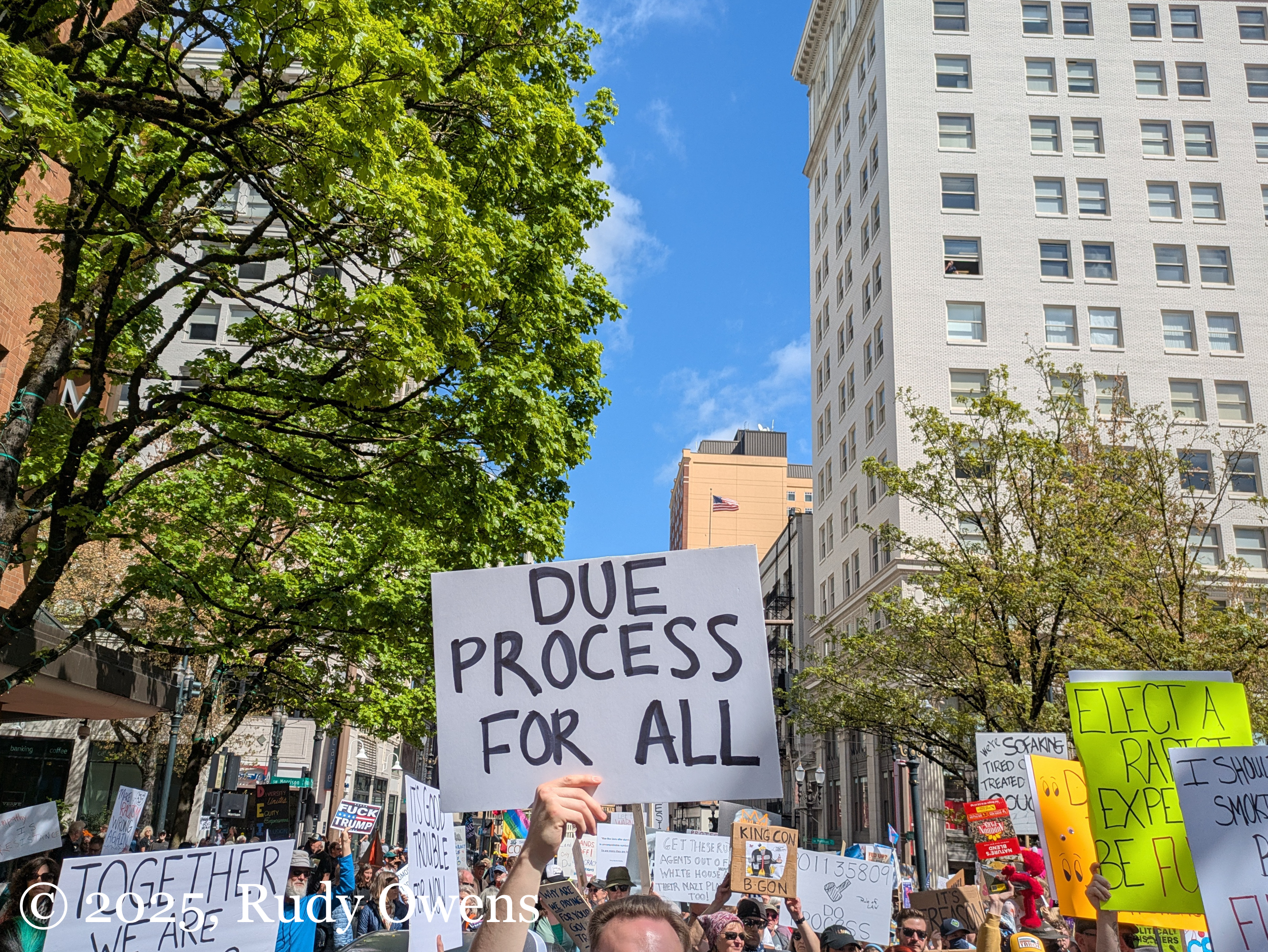
On April 19, 2025, hundreds and hundreds of thousands of Americans in all states protested against the loss of rights enshrined in the U.S. Constitution and the actions of the current Trump administration.
The weekend marked the 250th anniversary of the first shots fired in the American Revolution against the British Empire and a tyrannical monarch, King George III. In Massachusetts, the first battle of the American Revolution on April 19, 1775, known as the Battle of Lexington and Concord, is celebrated over a three-day weekend with the state holiday called Patriots’ Day, recognized on the third Monday in April in the commonwealth.
Today, in U.S. history books, the start of the American Revolutionary War (1775-1783) is known famously, at least to those who learned American history in school, as the famous “shot heard ’round the world.” The skirmishes by colonial militia against the imperial army of the British Empire persuaded many Americans to take up arms in the eventual conflict.
The issues that led to the first conflict of the American Revolution—the right to self-determination, liberty, democracy, the rule of law, a life free from the power of kings—helped to forge a nation 13 years later, in 1788.
That year, the American colonies adopted the U.S. Constitution. While revolutionary, it was also terribly marred and flawed by enshrining chattel slavery that held millions of African Americans in bondage until the end of the bloody Civil War in 1865. It was our country’s greatest sin. Ultimately, it would take over two centuries to guarantee the document’s original promise for all persons.
This framework for a nation, set forth in the Constitution, called for a system of checks and balances by three branches of government: the executive, legislative, and judicial branches. It begins with these famous words: “We the People of the United States, in Order to form a more perfect Union, establish Justice, insure domestic Tranquility, provide for the common defense, promote the general Welfare, and secure the Blessings of Liberty to ourselves and our Posterity, do ordain and establish this Constitution for the United States of America.”
On April 19, 2025, this sacred American text had special meaning for hundreds and hundreds of thousands of Americans across United States, who sought to renew their relation to our country’s charter and find living and breathing meaning of what the Constitution guarantees to all persons in our country, by the force of law.
Boston University historian Heather Cox Richardson, publisher of the newsletter “Letters from an American,” has a wonderful essay on these events two and a half centuries earlier and how we can make sense of these events in our country today. I hope you either read or listen.
University of Toronto professor Timothy Snyder (used for editorial comment purposes)
This week, I had a chance to create a new relationship with someone who I didn’t really know.
I did that because I saw someone who did something different—they spoke out, and they did that where it was not expected and was not comfortable. It was something that created a quiet stir, in my opinion.
After that happened I quickly contacted that person and, I hope, created the start of a mutually respectful connection, one built on trust and shared values.
This was necessary because I needed this person to know that they had done something that matters: they stood out and broke the spell of silence. This matters, according to experts on authoritarianism.
One of the most important voices to help people understand how authoritarianism works and how to confront it is University of Toronto historian of authoritarianism, Timothy Snyder. He is best known as the author of Bloodlands, a detailed and magisterial history of genocides, campaigns of starvation and mass murder, and conflicts in eastern and central Europe in the first half of the 20th century, bookmarked between the two horrific wars. I read about a third of it four years ago, and I did not have the stamina to complete it, but I was impressed by the scholarship.


 The Path to Wisdom