‘World at War’ documentary series has never been more relevant

My first real exposure to the horror of World War II came through the historic 26-hour documentary series called “World at War,” released in 1973 and 1974 by producer Jeremy Isaacs in the United Kingdom. I watched all of it on my local PBS affiliate in St. Louis as a grade schooler. I was profoundly shaken by what I saw and learned. I never forgot the series and the lessons from these horrific events that still echo today.

Now, more than 50 years later, I decided to revisit the first episode, “A New Germany (1933-39).” To my astonishment, it still crackles with intensity, and for me, it is more relevant than ever. I encourage everyone to watch it, especially now.

For those who haven’t heard about this series, I found a very good description: “One of the titans of documentary television, ‘The World at War’ is a work of astounding ambition, even by today’s standards. Broadcast between October 1973 and May 1974, this 26-part series attempts to encompass the full scope of the Second World War, a conflict fought on multiple fronts across multiple continents, on land and on sea and in the air. There have been many documentaries made in the subject in the decades since…but most have stuck to one aspect or country within the wider conflict. ‘The World at War’ had the audacity to attempt to tell the whole story—and even after nearly fifty years, the results are incredible.”

The first of the 26 episodes includes chilling archival footage of Germany’s immediate prewar years, with the voice of series narrator Laurence Olivier. It succinctly shows how a far-right radical and World War I veteran, Adolf Hitler, was able to seize power in the unstable but still democratic Weimar Republic through a mixture of hate, propaganda, street violence, and political deals with politicians who thought they could control Hitler. Within 100 days, after coming to power through peaceful means, democracy was snuffed out by the National Socialist German Workers’ Party (the Nazi Party), and Germany turned on the continent and beyond, pursuing a path of violent conflict, war, and unspeakable genocide.

After watching this episode, one must ask, How and why did a modern nation, the home of Goethe and Bach, universities and science, turn toward brutal authoritarianism rooted in hateful racial ideology that culminated in the mass murder of millions? How did the German people allow their country to be swept up by fascism that led to their country’s destruction and tens of millions of victims, including the attempted extermination of all European Jews and Sinti-Romani people. Will these mistakes happen again in our times, and what forms will they take?

What frightens me is that those living today, including those who are our supposed protectors and champions of democratic values and civil society, will fail to read the threat when it arrives. Unfortunately, the past can be terrifying. Many of us can simply be prone to willful ignorance because we don’t wish to acknowledge history and that societies can easily repeat our past collective failures. Sadly, when we finally realize some threats, it may be too late.

When unexpected mishaps get you out of your routine

It is actually great to have even small things go wrong. It breaks up routine. It forces you to use your skills of tolerance and control.

I stumbled on this sign during the COVID-19 pandemic and it has along resonated with me.

Today, on a warm sunny day, I headed to swim at the community center. It was rush hour. It took me 30 minutes to get there. Then, when I arrived, I learned the pool was closed for lifeguard training. I’ve never had that happen. So back home I drove, and got stuck in the late evening traffic jam from the hills of Portland to my home. It was slow, and it’s a drag on nice nights.

I used to sit in this traffic jam daily for nearly two years, when I drove 100 miles a day (there and back) to Salem, usually in the car more than three hours total a day. It was brutal on me. It was also a very hard time when my mom was near death and I was running on fumes. At that moment tonight, I felt blessed. I was now working at home, I am pretty good with my job, and my mom’s suffering has long passed. Her journey had ended, and that was good.

I needed this reminder to be thankful of how far things have come from those days of little sleep and a lot of stress. Here’s a little thing I spotted near my home a few years ago. It rings true for me.

A winter’s day to say farewell to the living

Exactly two weeks from tomorrow, it will have been four years since I last saw my mom alive. She was on her final days of her life’s journey. We spent some of that time together, quietly, in her room at a care facility, and in the facility’s dining room, where I fed her and was able to witness a lovely church service, where a woman sang hymns and played piano and made many smile. I smiled a bit too. My mom died less than two weeks later, just before the pandemic descended on the world, and there wasn’t time to stop and process things for a long time. But after Alzheimer’s disease, there wasn’t a lot left to hold on to, when the person you had known already and slowly had disappeared as their brain was collapsing. This weekend, I may take down the photos I have had taped to my living room walls since that time. It could be the moment to let this finally go.

Half a century later, I realize why

Last week I heard a cover of “Bridge Over Troubled Water,” the classic Simon & Garfunkel folk song from the same-named album released in 1970. It was on regular rotation in my home when it came out. I was only 5 years old at the time. It was wildly popular, and the song and album each won Grammy Awards for best of categories that year.

There’s a reason this song resonated globally at a troubling time. The year of its release was troubling, globally, as the Vietnam War and other tensions boiled. According to Rolling Stone: “It not only lorded over the U.S. charts but went Top 10 in South Africa, Malaysia, Lebanon, Denmark, Switzerland, and other countries. Everyone from Aretha Franklin and country banjo legend Earl Scruggs to cabaret star Peggy Lee covered it. Columbia claimed that the Bridge Over Troubled Water LP sold nearly 2 million copies in three weeks.”

My mom was playing this song in particular on our record player over, and over, and over, and over, again in 1970. Then, as I was listening to this cover more than 50 years later, it hit me. She was desperately trying to leave a horrifically abusive marriage, and it was her way of finding peace. She was able to leave three years later, but by the skin of her teeth. We had nothing (her, me, my sister). There were funner times I can assure you. Funny how one can suddenly realize small things with the power of music.

I feel now, also, we are in such times and feel troubled waters in so many places. Maybe music will be the one thing that can bring peace to many. Music may be the universal medicine to life’s problems.

And so a year passes

A year has passed since my mom died from Alzheimer’s disease. It’s an illness that will crush and humble most mere mortals, and even the brave and the strong.

I had been awaiting for this day, contemplating its meaning as it got closer and then arrived.

The markers of time the past year have been unlike anything I can remember.

Collectively we have lived through a global pandemic, which was just taking off right after I flew home. The United States’ imperfect democracy nearly collapsed under the continued assault by Donald Trump and his fascist enablers. Wildfires engulfed my state, and I worked through that for weeks as part of the state’s response. Now I find myself working on the state’s pandemic response, never slowing down.

I am relieved my mother is no longer suffering, nor her husband (my stepfather).

I feel like I have changed too. Luckily my solace has been the music of Johann Sebastian Bach.

At the ceremony of life for my late mom, on Feb. 11, 2020, the church choir and musicians performed Bach’s Jesu, Joy of Man’s Desiring (from Cantata 147).

It was if Bach was speaking to my heart across time and space and said: Peace had come. Her journey had ended. All would be fine. I listened again to this piece over the weekend, and it brought great comfort. Bach’s music has let me say farewell.

Reminiscing on my violent, alcoholic father

It has been more than 35 years since my adoptive father died of health complications that followed years of destructive behavior and a losing battle with alcoholism.

Though he has long been buried in a cemetery plot in the Cleveland suburb of Rocky River, Ohio, next to his father and mother, his impact on my life and my family lived on long after he passed away.

Even today, I frequently am forced to confront my long-buried memories of this often violent yet aextremely intelligent man who was an ordained Lutheran minister.

A shot taken with my adoptive father and sister in our home.

For the last seven years, when my adoptive mom was on her long and difficult journey with Alzheimer’s disease, my adoptive father’s memory frequently came up in our conversations. When I visited her in her home in University City, Missouri, flying out from my home cities of Seattle and then Portland, we spent endless hours talking about the past and her memories that grew dimmer over time. She could recall snippets of her past life and share them with me. She frequently repeated ideas or hazy recollections. She repeated two things more than any other during these seven years.

First, she told me, I have the greatest husband in the whole world. She was referencing her current husband and full-time caregiver, my stepfather, who cared for right up until her final day. Second, she told me, my first husband used to beat me. That was a reference to my adoptive father and her first husband, from the summer of 1958 through their divorce in the summer of 1973. During that time they lived in Detroit, moved briefly to Boston in late 1965 and 1966, and then moved to the metro St. Louis area, where my mom lived out the rest of her life.

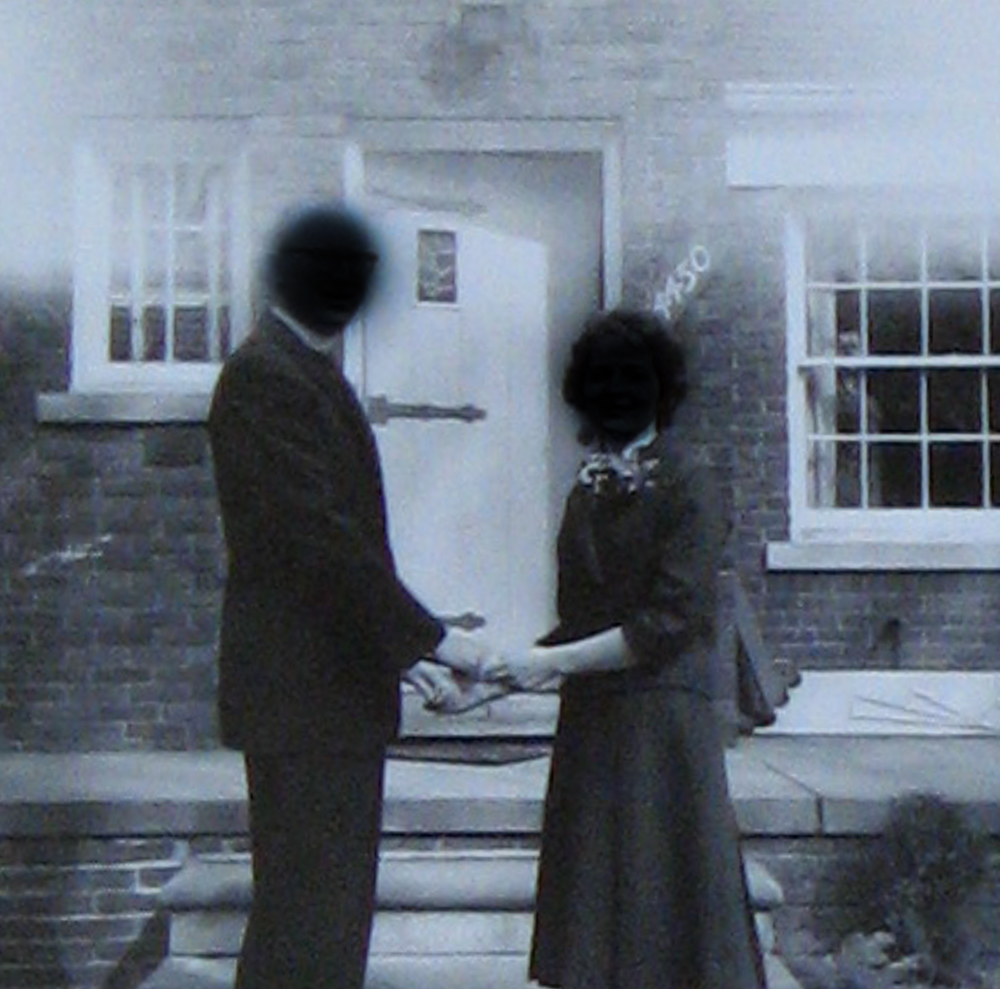
My adoptive parents in front of their west Detroit home, likely in the late 1950s or early 1960s.

When my mom’s memory was sharper in the early years of her Alzheimer’s, she repeated constantly how often my adoptive father would hit her. She said the doctors told her the violence could have contributed to her awful and prolonged brain-wasting disease. I can still remember those incidents as if they happened hours ago. I too can never forget them.

I would always reply during these countless recollections that, yes, mom, your husband—my stepfather—was the best husband in the world. I would say nothing about her comments on her years of domestic abuse at the hands of my adoptive father—her former husband. These conversations continued until the second-to-last time I saw her alive, in September 2019.

In the end, my adoptive mom had two distinct memories, one of violence and one of love, which she likely had little control over because of her deteriorated state from Alzheimer’s.

Making Sense of my Adoptive Father

Though my life with my adoptive father in a nuclear family lasted eight years, I spent another five more visiting him, first in the St. Louis area and then in the Huntington, West Virginia and Chesapeake, Ohio metro area, where he resettled after the divorce.

Those trips with my adoptive sister to stay with him several times a year, as part of the divorce custodial settlement, were as bad if not worse than the times when we lived as a family under one roof.

I tried to reconstruct those years from memory starting about five years ago, as I began to write my memoir as an adoptee. I remember the day I wrote out the first outline to my memoir on a hot July day on a river beach. I then started with a chapter exploring my childhood and younger years with my adoptive father.

I wrote that chapter first. It proved to the hardest one to do because I had to dredge up memories that were neatly buried.

I also needed to revisit the places of my childhood and youth, in Huntington and Chesapeake, letting me remember things I had forgotten, perhaps as a way to carry on with life. I took a road trip there in September 2015.
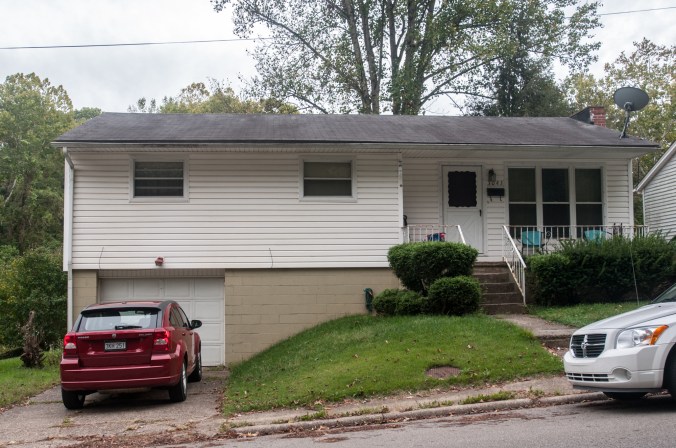
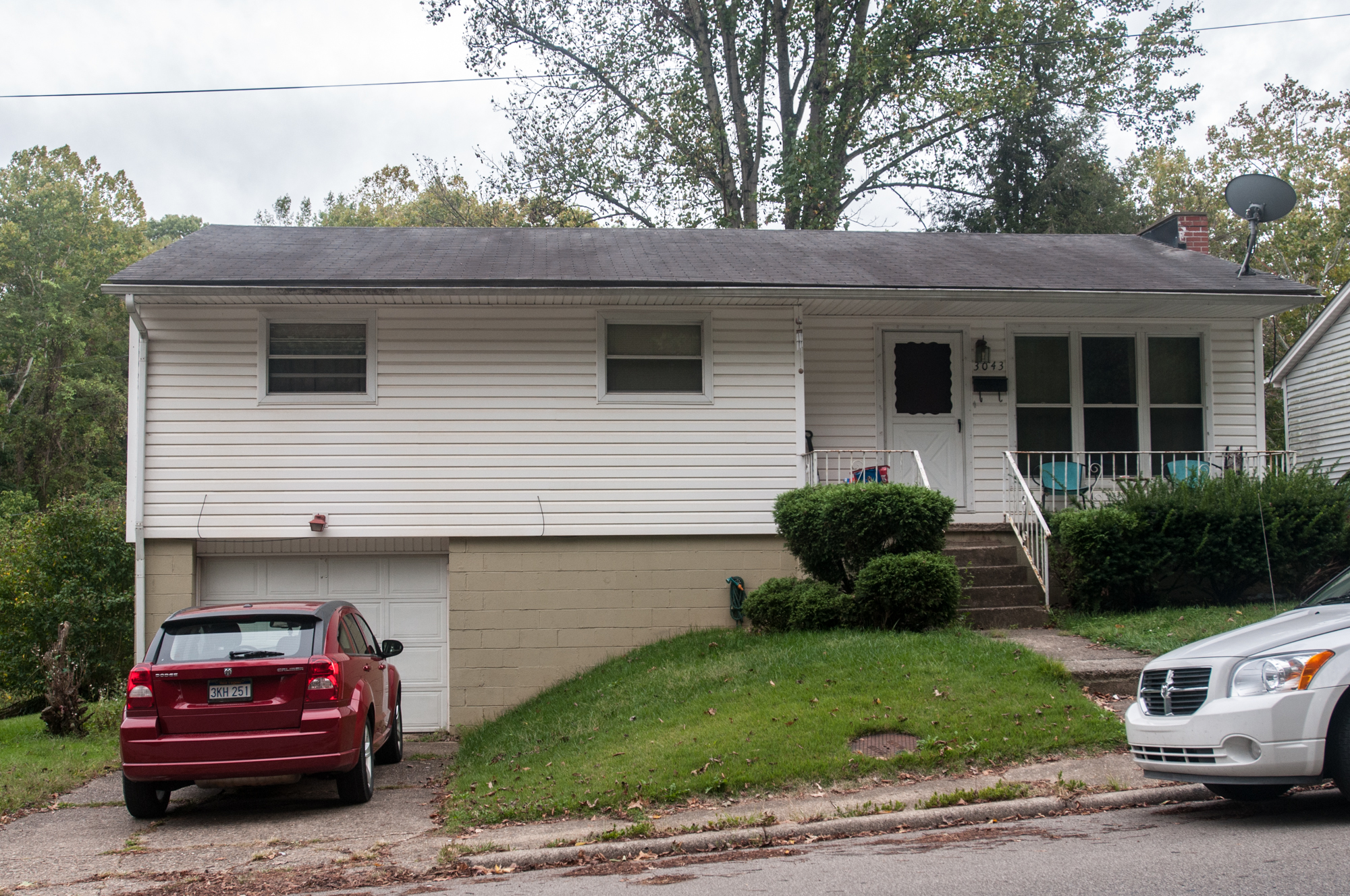
My adoptive father lived for several years in this house, owned by the next door Lutheran church, where her served as a minister in the 1970s.

I published an essay on that trip on one of my blogs. I wrote about my childhood trips to see him: “I had no choice in the matter. I had to go there. I had to visit my father. It was bad to awful, and sometimes downright terrible. But when you are young, you are flexible and stronger than you think. You actually can do impossible things, and still come out at the end of the tunnel with a smile. I did. Despite the odds, I really did.”

When I finished the revised text to my memoir in late 2017, I left my first chapter on my adoptive father out. That decision came easily. I decided it was too personal about a relation that shaped my life. No one else would understand that journey but me. By that time in my life, into my fifth decade, I also realized I had become more like the generations who preceded me, who were reserved, not someone who wanted to “tell all.”

I also had come to a deeper realization about living life and finding meaning. I was able to see my unpleasant times with my adoptive father through a completely different perspective, shaped by my life and the knowledge I had gained from life.

Rudy Owens’ memoir on his experience as an adoptee and on the U.S. adoption system.

I described my later life’s wisdom in the introduction to my book, which I published in May 2018: “My adoptive father, a Lutheran minister, was abusive and an alcoholic. He had a serious drinking problem before I was even placed in his and my adoptive family’s middle-class, two-story brick home in metro Detroit. He treated my adoptive mother, my adoptive sister, and me very poorly. At times, when he was drunk, he could have killed my sister and me on more than a dozen occasions—when he would drive us in a total stupor. My adoptive family’s struggles were not pleasant, but they are also things no one could have predicted, and their meaning and purpose may still not even be clear to me. However, the way I confronted these challenges was uniquely my own, and I own how I addressed my reality and the conditions of my life. No one else is responsible for that.”

The Impact of Living through Domestic Violence Never Goes Away

As I continue to reflect on my life, I remain honest that the impacts of my adoptive father’s actions never fully disappeared. I see that most clearly when I read and learn about how domestic violence impacted others in their youth and their eventual journeys in life.

Patrick Stewart in his role as Captain Jean-Luc Picard on the Star Trek: The Next Generation TV series and film franchise.

I only recently learned that the fine British actor Patrick Stewart, known to the world as Captain Jean-Luc Picard of the Star Trek: The Next Generation TV series, also grew up in a home marred by domestic violence. I had always felt something raw when watching Stewart’s performances, as Picard, as Ebenezer Scrooge in his version of A Christmas Carol, and his lesser and earlier roles in films like Excalibur. He always had bursts of rage that felt like a smothering volcano, but controlled just barely.

By accident this month, I found his essay published in November 2009, in The Guardian (Patrick Stewart: the legacy of domestic violence). In it, he laid bare what he and his mother experienced at the rough hands of his World War II hero and domestic-abuser father. He wrote in the bluntest of terms how his father badly beat his mother, especially when he was drunk. He described the terror of living under the shadow of a violent person, who put their lives at risk.

“Violence is a choice a man makes and he alone is responsible for it,” Stewart wrote. “No one came to help. No adult stepped in and took charge. I needed someone else to take over and tell me everything was going to be all right and that it wasn’t my fault. I wanted the anger to go away and, while it stayed, I felt responsible. The sense of guilt and loneliness provoked by domestic violence is tainting—and lasting.”

Everything Stewart described echoed eerily what I had written in 2016, without ever reading Stewart’s essay, penned six years earlier.

In the section of my book I deleted, I wrote: “In those frequent drunken conditions, the ordinary looking man could transform into frightening malevolence, and you never quite knew how he would erupt. The well-worn expression walking on eggshells is actually a perfect match for what my mom, sister, and I faced for years around him.”

I also described the ravaging effects of alcohol, which I internalize to this day, as a survival mechanism. “In those intoxicated moments, my father’s ordinary appearance would be transformed by alcohol. His speech would slur. His left eye would slant behind his glasses. It was the mark an alcoholic I learned to spot instantaneously in others the rest of my life—one of the weird outcomes of growing up around someone with this affliction. To this day I can spot a problem drinkers with Spiderman-like quickness, usually in the first five seconds of meeting them. And my self-defense response kicks into a state of hyper readiness, just in case.”

On some days, like ones I have had this month, I revisit my life’s decisions that still leave sorrow, including my decisions to live a life that eschewed anything resembling domestic normality and middle-class happiness. I still associate these with my adoptive family and father.

Like all of us, we have to confront ourselves and decisions. There are days it is hard, when I might see families that appear “normal,” and I can observe a father who acts compassionately around others without toxic masculinity or the effects of alcohol. On those off days, these apparently normal activities allow me to play “what if” games in my mind.

In the end, I let those thoughts go, because I own this path and my thoughts entirely.

In the chapter I cut from my memoir, I concluded with a meditation on restorative justice. I described how embracing forgiveness means letting go of the power the offense and the offender over a person. It means no longer letting the offender and their actions control you anymore. Without this act of healing, the wound can fester and can control one’s actions indefinitely.

Like Stewart, I cannot entirely let go of the memories of a violent man who failed as a father. But I have found a path to becoming a better person and the person I wanted to be. I never followed in my adoptive father’s footsteps. For that I take credit. I accomplished more than I knew I ever would.

Saying goodbye and finding meaning

The writer Robert Green, author of many books on human behavior, shared these words that make me think of Mom. Green wrote: “But despite what you may think, good luck is more dangerous than bad luck. Bad luck teaches valuable lessons in patience, timing, and the need to be prepared for the worst; good luck deludes you … making you think your brilliance will carry you through. Your fortune will inevitably turn, and when it does you will be completely unprepared.”

Mom at the Seattle Wooden Boat Festival, July 2004.

Like all of us, Mom had good and bad luck. Unlike many, she always learned from her misfortune and knew exactly when she finally found the tide turning. And she also knew good luck simply didn’t happen. She worked hard for it.

Mom was a child of the Depression and the daughter of an immigrant, who was fortunate to leave Germany before a much worse misfortune befell her homeland. Those immigrant lessons were passed down to Mom from her mother.

Being a child of that era, it shaped Mom and her generation. She spent her early years in a working class community of New Jersey—something that I think taught her about working hard and knowing that others around you could be less fortunate. She never forgot this her whole life.

Mom also grew up in the shadow of a great city, the epicenter of culture, and finance. The Big Apple’s glow could be a draw to anyone, particularly a woman like my mom who had an abundance of great looks. Those looks, however, never went to her head.

Mom attended Bronxville in NY (Concordia College, Bronxville, today) to pursue professional studies that the sexist workplace of the 1950s offered single women of lesser means. She made lifelong friends there. One became the godmother of one of her children (me). They were called the “Triple Threat.”

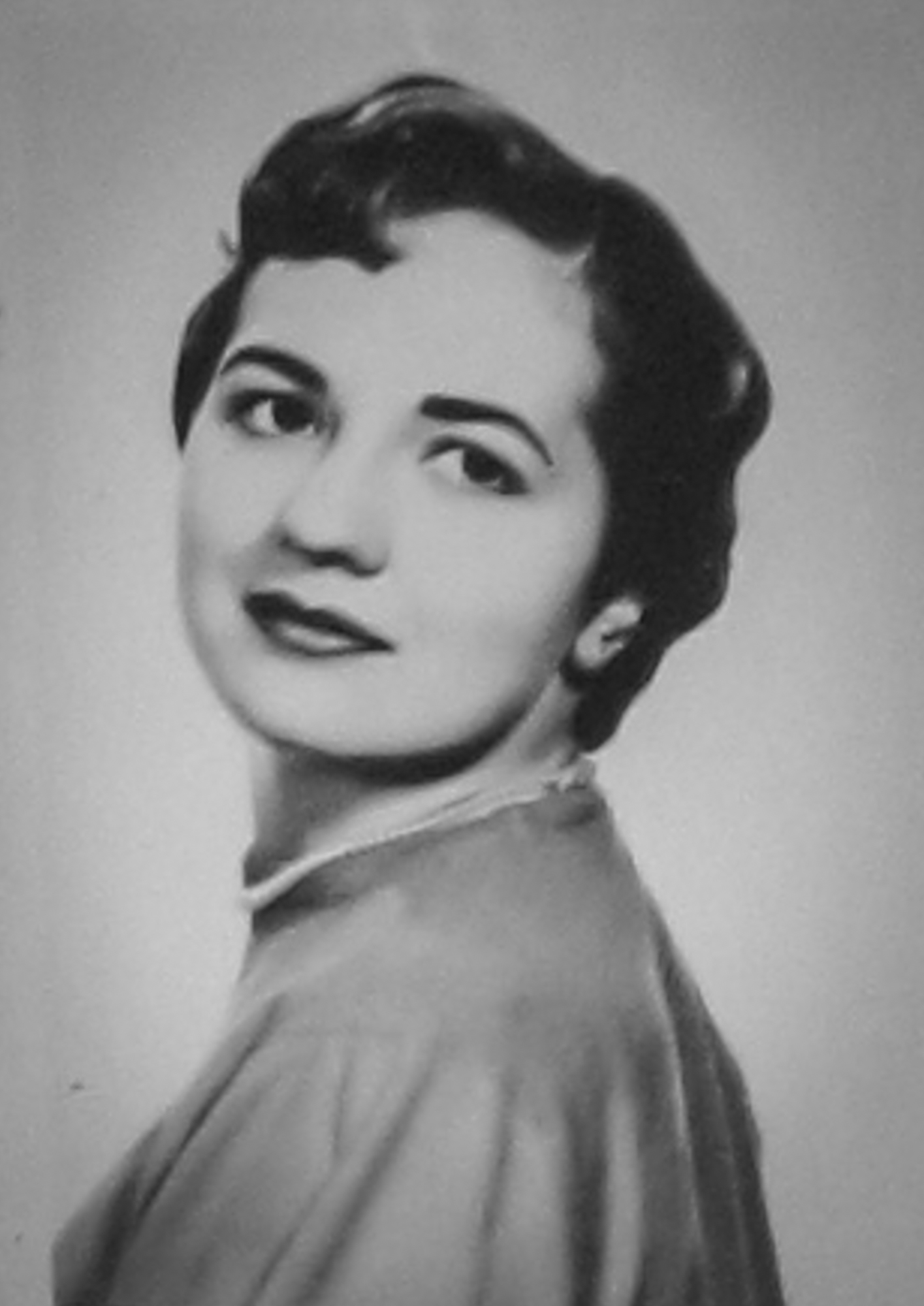
Mom, when she would turn heads during her college years in New York.

I don’t know the full story how Mom moved from greater New York to soggy Saginaw, MI in the mid-1950s. My guess is she needed work. When she had to work, she would always “crack on.” I learned this from her early on.

In 1958, she met her first husband. They moved to Detroit. They adopted my sister and I and raised a family. They moved to Boston for a spell in late 1965 and then to Clayton, Missouri, in late 1966. The pair divorced in 1973 and she re-entered the workforce as a teacher, eventually in the St. Louis Public School System and the University City Public Schools system.

She was a lifelong teacher, completing her career in University City Public Schools as a reading specialist. She devoted her professional life to the wellbeing of young people, many of whom were lower income, minority, and had higher needs.

Despite Mom’s great looks, she was remarkably grounded in the world around her, in people, her church, her community, and her family.

She was profoundly spiritual. She didn’t need to tell the world about her faith. It resided in her. She was devoted in the fullest Christian sense to her Christian identity and the congregations she belonged to. She dragged me and my sister to church. She knew better than we did why our nearby Lutheran church would be good for us. She was right. Her faith stayed with her to her last days.

Mom always had style. I never saw my mom look shabby. It’s the style the world saw on the show Mad Men, of women of that era. Mom always carried herself this way.

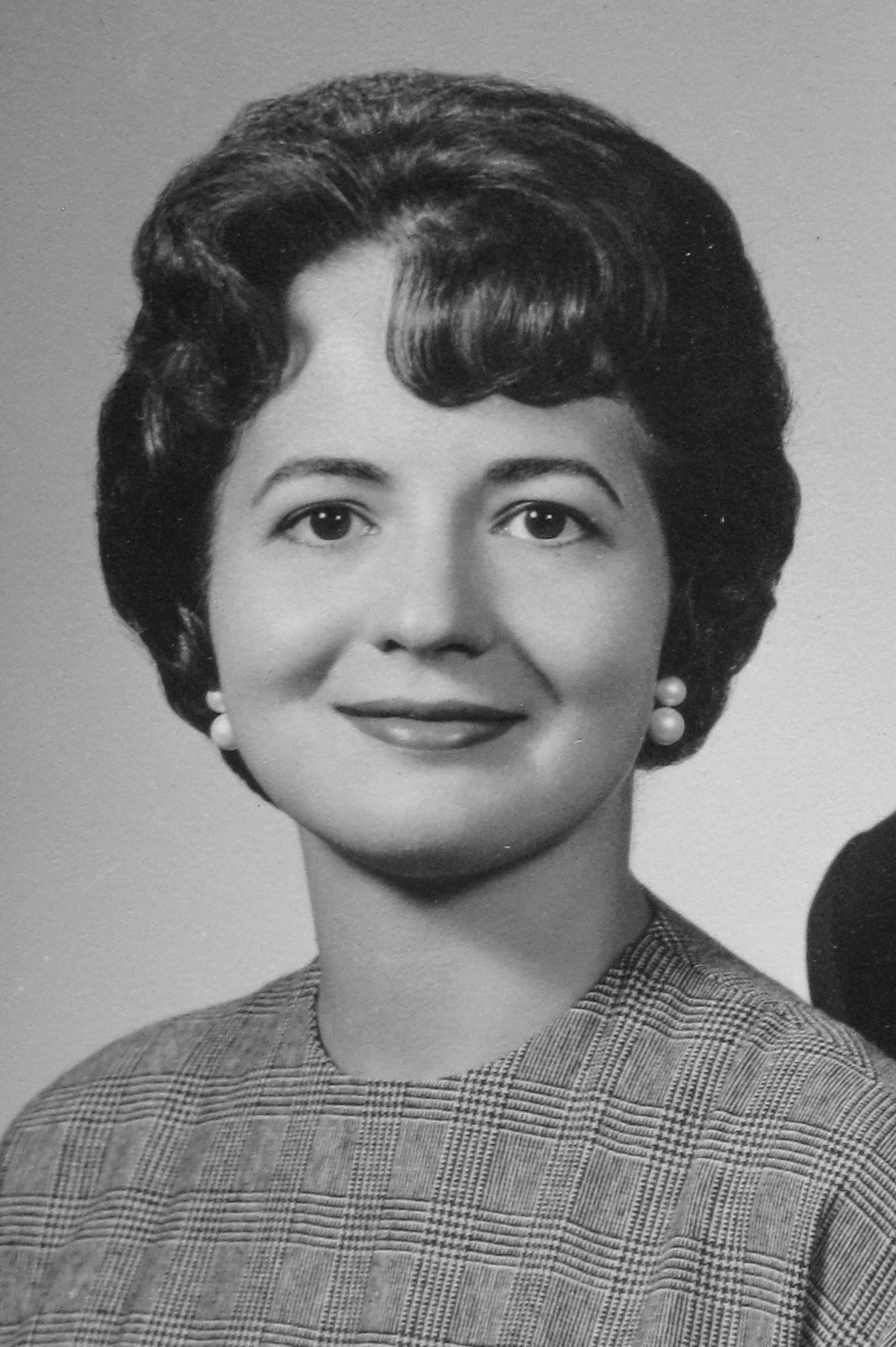
Mom had style, always

Mom also had an artistic side. Her creative outlets included fixing furniture, making beautiful outfits with her hands by sewing. She could throw herself into project and be unmoved by distractions. The house she purchased together with her second husband became an art gallery. They both loved great art and had impeccable taste.

Mom was very smart—like all her family members. She loved crossword puzzles, which she did for decades. I could never keep up with her when she’d work them out on the kitchen table.

Mom managed the impossible: navigating a divorce, reinventing herself, raising two kids, switching jobs, buying a home on a teacher’s salary without any help. And then, with two kids in tow, she found her lifelong soul mate, who she married in 1983.

Mom may have felt she didn’t see the world, but she did.

With her second husband, they travelled nearly everywhere in the United States and Canada. She even travelled nearly 50 miles up a dirt road outside of Cordova, Alaska, in the pouring rain, just to see a glacier and laugh at how beautiful and crazy that was.

Mom and her second husband lived for a short spell in England, where he had a position for a short term. They also travelled to multiple destinations in Europe together: England, Scotland, Ireland, France, Belgium, Italy, Greece (I believe a couple of times).  They always looked like there were glowing in their holiday pictures. Snap, here we are in Paris. Snap, here we are in in Florence. Snap, here we are in in Rhodes. Wait, here’s Thurso, Scotland and Bruges, Belgium.

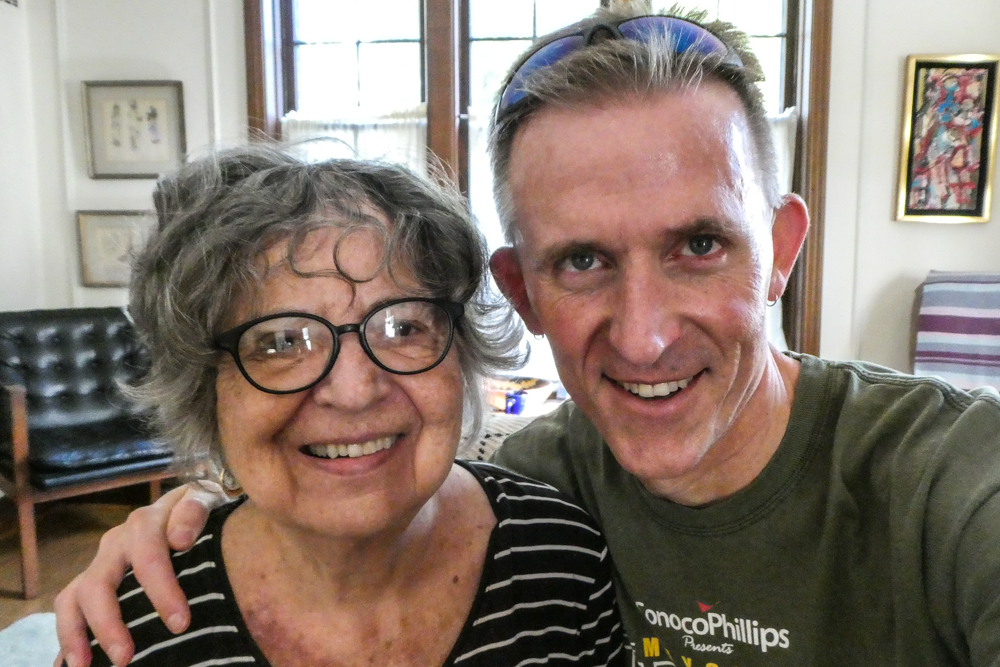
Author, Rudy Owens, and Mom, about four months before she finally succombed to Alzheimer’s disease.

She was a great cook. I loved her Christmas stollen and cookies. She taught me this art. She kept learning new recipes and growing with her expanding love of food outside of her St. Louis world.

Through thick and thin, Mom was devoted to my sister and remained generous to her. Mom was always about doing.

Mom was tough. Her friend from college shared some stories about that with me, and I can see that throughout her long life. I call it grit. It’s the virtue I respect the most in people who matter.

I think all that she confronted in life–stuff that might bend or break others–did not push my mom down.

She could weather storms because she always knew something good was ahead.

Mom during one her several moves in the mid-1960s

Mom was right, of course, and her marriage to her second husband was the highlight of her life.

The thing she said the most to me, for the last seven years of her life, when her illness took hold, was, “I have the best husband in the whole world.” I would always say: “I know mom. He’s a great guy.” She was would always laugh and smile. We had this conversation literally hundreds of times. She last said it to me on Thanksgiving Day, on the phone. I said, “Yup, mom. You are a lucky woman.”

Mom was the best friend and loving wife of her second husband for 37 years. She welcomed his family as her own and devoted herself to their shared relations. In the end, her marriage was the enduring happiness and the good luck that came in her life. She earned it and knew how to live it well, only the way those who know the fickleness of fortuna can.

Mom, I salute your memory. Thanks for making us richer.

Letting go of the living

During the last six years, I have been forced to confront the collapsing health of my family. Not by coincidence, my reflections on these changes and death itself led me to writers like Viktor Frankl and branches of thinking such as Existentialism and the Greek and Roman school of philosophy known as Stoicism.

The Stoic philosophers from ancient Greece and Rome provide a roadmap that remains remarkably relevant today. The most famous ancient stoics—Epictetus, Seneca, Marcus Aurelius—did not focus on abstractions. Rather, they wrote about the most pressing realities of life and issues of what define us and how we live each day.

At this point in my own life’s journey, I found comfort in old ideas that embraced questions about death. As Seneca wrote, “A man cannot live well if he knows not how to die well.” Stoic ideas helped me think about how all of us can prepare ourselves for misfortune and navigate through the worst possible events, in order to confront what inevitably lies ahead.

My journey, with my family, was now one confronting inevitable loss. This chapter of my life story, with my family, will perhaps soon end in the death of the remaining two members of my nuclear family—my mother and sister.

Losing my Mom

My father died in 1985, when I was 20, and I can scarcely remember him as a person. He was an alcoholic and unimportant in my life. I unfortunately lost my mother more than six years ago, but this loss is ongoing.

In 2013, she was diagnosed with early onset Alzheimer’s disease. The illness has been especially cruel to her husband, my stepfather, who saw his intimate partner and best friend of 30 years slowly lose her mental abilities and her ability to function as an independent adult. I have observed her slow decay, mostly during short visits and on phone calls that always got worse with each week, month, and then year.

My mother changed from being someone with a razor-sharp mind and who loved crosswords to a woman who could no longer remember the names or even faces of her neighbors and family.

On this last trip to St. Louis in September 2019, we were alone. I asked her, “Who am I?” She gave me a long look with that blank stare, created by the destruction of her neurons and the accumulation of amyloid plaques in her brain. She replied with my stepfather’s name. I said, “No, mom, it’s your son, Rudy.” She didn’t reply. She then asked me a question she had asked half a dozen times earlier in the last 15 minutes.

I have spent these last six years flying back and forth from Seattle and then Portland to her home in the St. Louis area. My trips were motivated by personal concern for her and her husband caregiver and a sense of duty to help as her son.

I have shed tears. I have felt anguish. I have gnashed my teeth. I have cursed scores of times to myself as I walked alone after work, daylight or dark. I have felt powerless. I have felt my desires for my own dreams bend and be extinguished, just so I could be there for her, albeit from afar.

When I read about my friends’ lives, involving travel or a life where the future is filled with promise, I compare it to my stepdad’s world. His involves non-stop and constant care for my mom.

I have, in the end, simply abandoned thoughts of vacation and time alone that don’t involve flying halfway across the continent, so I can spend time with her. On past trips we have held hands and took walks. We could even squeeze in visits to the St. Louis Art Museum and Missouri Botanical Garden. Even those stopped on my last trip.

On this trip, like the ones before, she asked me questions she had asked dozens of times before: Where do you live? Why do you live n Portland? Why won’t you live here? Do you have a girlfriend?

My mom often chastised me, saying, that’s too far away, you should be closer, even when she has no idea who I am or that she even had a son.

Losing my Sister

During these last six years, and for at least a decade earlier, I have also watched my sister slowly spiral out of control.

She has battled addiction, obesity, mental health issues, a long spell of homelessness, and finally the collapse of her body. Her obesity finally made it nearly impossible for her to walk. After living on the mean streets of St. Louis for months, and then in an unsanitary drug house in a very unsafe St. Louis neighborhood, she rebounded with the help of my mom and stepdad. My sister found a low-paying but stable job with Missouri’s welfare office.

Yet each visit, from 2000 on, turned into a portrait in loss. By the last time I saw her in January 2019, just before she had a heart-attack, she was out of her job, living in squalid conditions alone, and having no contact with anyone or any person except a former drug addict neighbor in a poor south St. Louis suburb.

Each time I came, her apartment looked dirtier and more cluttered and chaotic. I am choosing not to share the details. They are too depressing and also private.

Finally, in July 2019, she called for first responders who discovered her collapsed on her apartment floor, unable to walk. She had deep and open pressure ulcers and was immediately taken the emergency room at Barnes-Jewish Hospital in St. Louis. From there the hospital managers and social workers placed her in skilled nursing facility in the city that accepted Medicaid eligible patients. She moved into the facility that month and has been bedbound and no longer able to walk.

Her new home is a facility for indigent patients, all eligible for Medicaid-paid care. The population is a mix of mostly older African Americans and fewer whites. When I visited in September 2019, more than half appeared bedbound. Patients with mental illnesses wandered the halls, without interference from staff. The front door was coded, and no one but staff could get out without the punch key.

To me, it felt like a madhouse from the Victorian era, with staff unconcerned with the patient wards in their care or visitors from the streets who could walk in the facility without even signing in.

No staff member required me to present my ID or sign in. So I could wander the facility without interference, startled that no one cared who I was. In one of the community rooms, I saw silent, elderly, and sick patients gaze blankly at their television. Others sat in the courtyard, silent and hunched over. Still others in their rooms lay silent, with their televisions blaring reality shows and their faces staring blankly at the blue light. I imagined this was like hundreds of others similar facilities nationwide.

My sister looked like she had aged 10 years. She had lost one of her front top teeth. She had a bad rash and dirty, unkempt hair. She remained unable to walk.

The hardest part of my trip was visiting my sister’s cluttered, dirty apartment that had long gone to hell. Amid the clutter that littered each room, I found evidence of her past life. I located her diaries she had kept from the time she was in her 20s, still with dreams of living a good life, even as it was slowly going sideways from her substance-abuse problems. I found her jewelry she made as a hobby for years, as her mobility began to decline and her world closed in on her.

I spent about two hours finding all of her legal documents and her writings. That was my plan from the start. I put those in a pink plastic tub and filled another with her nicest dresses, pants, and shirts, even though I knew she likely would never wear them again.

We had a falling out when I refused to help her rent a storage locker to put her stuff. She cried, feeling betrayed. I knew from all I had seen she would not leave this place or another. She still believed she could walk again and live on her own with her public assistance.

On my last morning in St. Louis, I visited her room again. Her roommate, who is in her 30s and likely had a mental health disorder, was there. I held my sister’s hand and said I was happy I had come to see her. She looked at me, and said, “I love you.” I responded the way I always had in the past, with a smile.

I then left her room and found one of the young, African-American nurses dressed in purple scrubs. She smiled, punched the code, and the door opened. I walked out into the fresh-smelling fall morning and the sunshine on a beautiful St. Louis day. It was time to catch my flight and leave behind this warehouse for the infirmed.

A tie is not just a tie

Recently, when picking out a tie for a formal event, I was overcome with sadness. So many of the ties are gifts from my mom. She always knew what I might need to look professional, and she kept at that for decades. She was mostly right all of the time. She knew my taste—basic but proper. Now, she can’t even remember a conversation that happened five minutes ago. I wasn’t ready for that. I still feel that well of feeling when I see my ties hanging in my closet. It’s not just a tie. It’s a connection to a relationship that has been disappearing now for years, and that journey is not over.

An Unhappy Birthday, Celebrated Apart

My sister and I, taken in August 2008 at the Missouri Botanical Garden in St. Louis, Missouri

Today is my sister’s birthday. She is celebrating it in a sick bed, in a large hospital in St. Louis. I am 1,800 miles away in Portland. I wish I could be there with her.

It must be scary to be alone in a hospital, not knowing what may happen tomorrow, knowing that your health is bad. Maybe there will be a respite, but things could get far worse. That is a heavy weight to carry for my older sibling.

My sister and I have now shared more than five decades of birthdays. This was the saddest I can remember. We perhaps had six happy years together, until that tumultuous time when my parents divorced and our worlds turned upside down.

After that things never were quite the same. There were good times, yes. But I never saw my sister smile the way she used to when we were young and far more innocent. She still smiled, but it was not a child’s carefree smile of joy. It was a little different. I changed a lot too. I don’t really talk about that stuff.

There were times in my life when she was the only person who had my back, particularly after the divorce. We were alone, in situations I refuse to share as stories with others. They are my secrets. They were terrifying moments, and not in a “make you stronger” way, but in a “wow, this is pretty damn bad” way.  Because we were a team, we pulled through, many times. I can’t ever forget those days. I guard them as treasures.

Those memories have kept me invested in the bond we have shared over the years. It hasn’t been the gentlest of rides. In the end, the journey was not as easy on my sister, I think. A series of decisions led to forks in the road, and then other decisions, and then, finally, a visit to the hospital.

My sister and I, when we laughed and had few worries as kids

I wished her a happy birthday today. I had sent her a card. It probably didn’t arrive before she was admitted. It was a way I expressed love, as much as I can in a card. It was a strange feeling, wishing your sibling the best as they faced uncertainty over the days ahead.

While we were talking, I could still hear her laugh with the hospital staff. Machines and monitors attached to her made noises in the background. Nurses popped in her room to check on her. I asked if she was aware she could contact a hospital chaplain if needed. She said she was. That comforted me. I don’t know if she would do that.

I don’t know what will happen tomorrow, the day after, or the weeks ahead.

I tried to remember our youth, and all I could find were a few pictures of our innocence. That seemed like a different life. We are different now, and we lost our innocence a long time ago.

I realized that I too will one day face the end. I realized that I too may not be ready. I realized that I too need to change while there is still time. This felt like a paltry consolation prize, and nothing compared to my sister’s experience on a cold, February day.