What I learned from a flush valve failure and a broken toilet

Once again I feel happy. My suddenly awful late afternoon turned from angry frustration to a nice opportunity practice my old tricks and learn something new. I have a comedy of errors, my own bad judgement, and a broken crapper to thank for this.

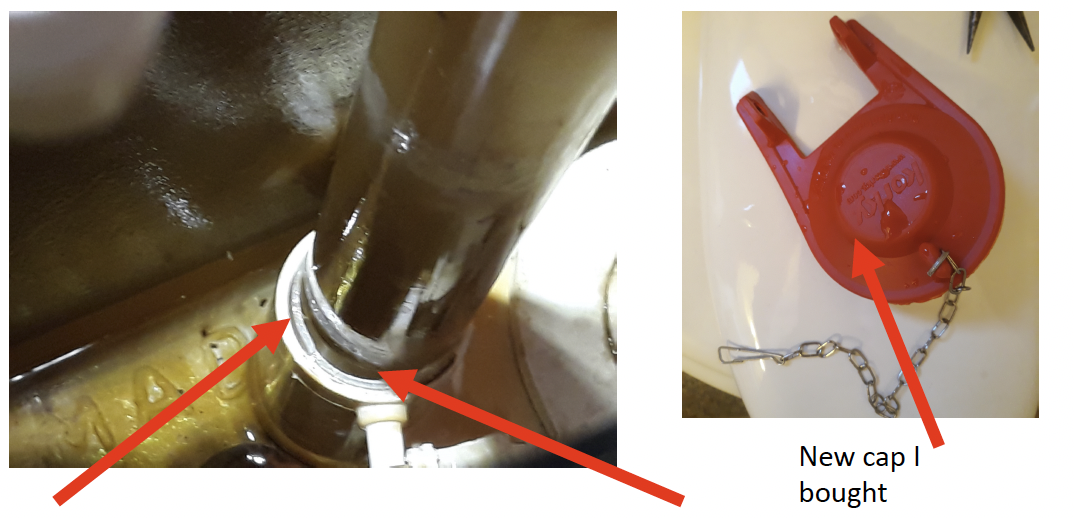
After I I tried to add the new universal toilet flapper, on the right, I broke the flush valve.

Just before I was ready to go for a roller ski after work today, I found my universal toilet flapper had broken. I thought I could simply replace this $7 part and get on with my day. This looked like a simple win.

So I dashed to Ace Hardware, got a generic new flapper, got close to getting it one. Then, in a blink of the eye and maybe too much force, I snapped the part of the toilet called the flush valve.

This part is important. You can’t flush your toilet without it, and it allows the water a path to flow from the toilet tank to the toilet bowl.

Well, after some cussing and kvetching, I gave myself a few moments to think. I told myself that things do break. I also allowed myself the grace to accept the truth that I’m allowed to give myself a break when they do fall apart.

I also know from so many life experiences that a problem is always an opportunity to learn what you didn’t know.

The flush valve is one of the main features of toilets most of us with a flush toilet use every day, and sometimes they break and have to be replaced.

In this case I also recognized my anger on a hot day was tied breaking up my beloved and shackling routine. I know this well.

For me the solution is to do what works. When I hit peak frustration, which I hit fast, I turned to best solutions. For me that is: taking a walk, cursing out loud a number of times, eating a good meal, listening to classical music, and then rationally determining a solution.

After my meal I spent some time having fun learning about a device I use countless times a day, the beloved flush valve. In short, I have now learned that flush valves in toilets frequently break. They should be replaced about very six years, and mine was due for failure.

Looking at my broken valve I can see it was ripe for falling apart. This was decrepit for sure. The problem was actually not my failed repair. It was something meant to happen.

As for the solution, I have several options. I may try to fix it myself, wait for my landlord (and get a lecture), or hire a plumber. These are called choices. I get to pick. I also am pretty happy I learned from cool YouTube videos how to replace a flush valve. It’s not a simple job, but it is a doable thing.

Beware of the ‘Trojan horse,’ particularly when it comes with piles of cash

“The Procession of the Trojan Horse into Troy,” Giovanni Domenico Tiepolo (1727–1804), the National Gallery, London, used under Creative Commons licensing terms

In the world of politics and international intrigue, one of the oldest stratagems is that of the “Trojan horse.” This is the use of a deception or a trick to overcome the defenses and protection of an adversary.

This applies to everything: computer safety, viruses that attack their hosts, predatory behavior from evolutionary adaptation like spiders evolved to appear like ants, and mostly politics. The warning we have today is “beware of Greeks bearing gifts.”

The saying comes from one of the great tales from the Classical Age. It refers to subterfuge used by the ancient Greeks during the Trojan War, led by the trickster warrior Odysseus, as described in the epic Greek poem the Odyssey. The wily Odysseus and his fellow Greek warriors snuck out of the wooden horse at night that had been left as a fake tribute to the Trojans, whose city they could not conquer by force after years of war.

For those not familiar with the great story in epic Greek poems written by Homer, the Iliad and its successor the Odyssey, written in the 7th or 8th century BC, the summary by the British Museum is as good as any: “The Greeks finally win the war by an ingenious piece of deception dreamed up by the hero and king of Ithaca, Odysseus—famous for his cunning. They build a huge wooden horse and leave it outside the gates of Troy, as an offering to the gods, while they pretend to give up battle and sail away. Secretly, though, they have assembled their best warriors inside. The Trojans fall for the trick, bring the horse into the city and celebrate their victory. But when night falls, the hidden Greeks creep out and open the gates to the rest of the army, which has sailed silently back to Troy.”

The deception is the horse. It is dragged in willingly by the fooled Trojans. It is the Trojans who willingly opened the gates of impregnable Troy. In being fooled, they created the tragic events that ended in Troy’s violent and horrible fall.

The danger lies in the victim accepting the false promise and false gift.

I worked in the Washington State Legislature for the House Democratic Caucus for two sessions, and left in late 2000. One legislative issue that arose during my time there was the expansion of gambling. The proverbial Trojan horse used by the so-called “gambling industry” and its cronies were gaming rooms that were part of a wider spread of this “industry” to become the blight we see today widely in most states, eating away at our communities and wrecking countless lives.

Even though I was not a power player, I knew where the enabling legislation was going, and sadly, we are in that dark space now. This happened nationally too—36 states have legalized sports gambling alone as of now.

The lesson, really, is quite simple. Wherever there are piles of cash, with almost no ability to trace its origins, there is corruption. This eventually will eat its host from all sides.

There is no virtue with corruption either. Corruption knows no boundary by party, nationality, country, or by so-called “virtue” of the people who are sucked up in opportunities to gain personally.  Corruption may be one of the great equalizers in the world.

Today, it’s always best to be aware of that proverbial Trojan horse. They come in all shapes and sizes. They are never what they appear to be. Sadly, the horse will usually be accepted with open arms and people fooled. People will cry alarms over the horse, and will be ignored and punished.

Rediscovering Rudolf Vrba, the Hero And Humanitarian

Photos of Auschwitz escapees and authors of the Auschwitz Report, Rudolf Vrba (left) and Alfred Wetzler.

I remember clearly the first time I learned about one of the 20th century’s greatest and yet least-known humanitarians and heroes, Rudolf Vrba.

Vrba is one of a small number of Jewish prisoners to have successfully escaped from the Auschwitz-Birkenau concentration and death camps, located in Oswiecim, Poland, in the spring of 1944, as the camps were speeding up the murder of Jewish civilians still living in areas of Nazi control and influence.

That so few know his story remains a tragedy to us all, because of this event’s sheer improbability and the obvious audacity of what he and his fellow Czechoslovakian prisoner, Alfred Wetzler, accomplished in April 1944. The two successfully undertook an escape and resistance mission, in order to save more than 800,000 Hungarian Jewish citizens from extermination at the Birkenau death camp gas chambers.

They provided a detailed report on Auschwitz-Birkenau to Slovakian Jewish leaders, who helped disseminate it to other Jewish leaders, the Papacy, and the Allies, making it the first reliable document to reach the world and the Allies and to be accepted as credible. The report broke the apathy and indifference to the genocide, already long underway by the Nazis. Yet the report and its news never reached the populace it was intended to save, and more than 400,000 Hungarian Jews would be killed between May and July 1944, when the transportations were halted.

I first saw their photographs hanging in the museum at the site of the Auschwitz camp complex in July 2000. At that time, I was completing a documentary photography project focused on the Nazi death and concentration camps.

Standing in the museum, housed in a former Nazi administrative building, I read with utter amazement a short history of an impossible feat. Two young Slovakian Jewish internees had escaped the greatest hidden facility in the Nazi’s universe of militarized camps across Europe and the nerve center of the Nazi death machinery still operating in 1944.

The entrance to the Birkenau Death Camp, from which Rudolf Vrba and Alfred Wetzler escaped in April 1944.

Vrba published his gripping account of this heroic and true story in his celebrated 1963 memoir, I Escaped from Auschwitz. The book remains in print in over a dozen languages around the world.

Vrba’s own words written on Sept. 7, 1963, in a letter to the British newspaper, the Observer, summarized what he details with scientific precision in his book. “With my friend Fred Wetzler from Slovakia, I managed to escape from Auschwitz on April 7, 1944, and we headed straight for the Zionist leaders. In April 1944, we handed to a high representative of the Zionist movement, Dr. Oskar Neumann, a sixty-page detailed report on the fact that extermination of 1,760,000 Jews had taken place in Auschwitz and that preparations were complete for the annihilation of one million Jewish Hungarians during the very next weeks. Did the Judenrat (or the Judenverrat) in Hungary tell their Jews what was awaiting them? No, they remained silent and for this silence some of their leaders—for instance Dr. [ Rezsö] Kasztner—bartered their own lives and the lives of 1,684 other ‘prominent’ Jews directly from [Adolf] Eichmann. They were not ‘helpless and benumbed hostages’ but clever diplomats who knew what their silence was worth. The 1,684 Jews whom they bought from Eichmann included not only various prominent Zionists, not only relatives of Kasztner, etc., but also such Jews who were able to pay with millions, like the family of Manfred Weiss. At the same time, they silently watched as more than 400,000 Hungarian Jews, unaware of their fate, were tricked into Auschwitz, where thousands of their children were not even gassed but merely thrown into the pyre alive.”

STORY CONTINUED ON MY WEBSITE; GO HERE.

My holiday card tradition on Thanksgiving day

Habits can be extremely rewarding.

One of mine is to write my holiday cards on Thanksgiving day. I have kept this tradition for more years than I can recall. No matter where I have lived or what happened on that day, I always found time to think about those in my life, including family and friends.

The act of writing and remembering reminds me of the bonds of connection I have with people far-flung across this country. Some of these connections help sustain me, good times and bad. Some have little impact in my life.

I went with an Oregon-themed card this year. In past years I have made my own. On each of the cards I create a personal message, written by hand and signed. A regular theme, if I can find one, is to share a positive wish of good fortune for the coming year. It is always preferable to be positive, even when we know some persons may be experiencing hard times, like some of my relations and friendships.

In my case, my card writing involves my circle of friends who seem to remain a part of my life as I age. They can be called my “chosen circle.” They are not family, for me at least. They matter a great deal in my life.

My “family card list” includes my step-family, my adoptive family, and my biological family. Because I am adoptee, and because that status is fraught with complexities about the meaning of “family,” my holiday card tradition has challenged me.

Having had a step-family since I was 18 years old, I can vouch first-hand that these relations are not easy. Step-family bonds are not blood-based or kinship-based.

Everyone in those dynamics knows the minefields, and to deny these tensions is to deny the critical role of genetic kinship in how all species, including humans, care for and help their close genetic relations succeed. This is equally if not truer of adoptive-family relationships.

I explore this in my greater detail in my adoptee memoir and critical exploration of the U.S. adoption system, in my chapter appropriately titled “Blood is thicker than water.”

Author and adoptee Rudy Owens gets ready to mail his 2022 holiday cards to his biological, step-, and adoptive family and friends on Thanksgiving day 2022.

In my book, You Don’t Know How Lucky You Are, I write about the meaning of relationships with non-biologically related step-family and other distal adoptive kin: “There simply is no bond that joins us, much the way I feel about my adoptive cousins, uncles, and aunts. For me, there is no blood that ties us, nor DNA to bind us. We are not true kin, both as I perceive it and as I have experienced this relation for decades now.”

Yet each year, on Thanksgiving I will still write letters of fellowship for the coming Christmas, or winter holidays if you prefer to call it that.

There is very little power I have to create relations where none are hardwired to exist by the determinant laws of biology and genetics. What I do control is my ability to offer a hopeful gesture. Whether that gesture is accepted or rejected, like so much in our lives, is not in our power to manage.

Because I was separated as a newborn baby from my biological family by laws and systems that erased my past and discriminated against me and millions of others by status of birth, I only began my biological family relations in my mid-20s. I explain all of this in my book for any reader seeking to understand what that means for me and other adoptees.

As someone who is now in my mid-50s and getting older, I remain clear-eyed how those relations will remain forever impacted by this system of separating families. And with my surviving biological family members who I do have contact with, again, I am not able to control how they respond. It has never been simple or easy to explain to anyone who is not adopted and separated from their biological family relations.

So with Thanksgiving now behind us, and my holiday cards on their way to my blended, adoptive, and biological family, I will celebrate what some may call our betters selves, to be the person I prefer to be.

Yes, adoption as a system forever made my holidays a mixed up time, but I have, for decades now, not let this define the meaning I give this time of year freely.

Planning for the inevitable is not a fearful thing

My mother’s misfortune of developing Alzheimer’s still shapes my way of navigating the world. She endured the horrible disease for more than seven years, before finally dying, with little left of her cognitive functions.

Roman artwork Memento Mori, in the Naples National Archaeological Museum

To deal with the illness as a family member, I had to readjust my way of navigating the world. I had to deal with stress. I had to deal with family conflict. I had to deal with helping someone who could never be cured.

Most of all I had to practice what philosophers did more than 2,000 ago, meditate on one’s mortality, or memento mori.

Death, as the ultimate end of my mother’s condition, became relentless as a nagging thought. I had to think about it because it was the way her suffering would end. This is simply an honest reflection, because that is what Alzheimer’s was truly like. It was worse for my step-father, who was her dutiful and loving caregiver.

However, practicing memento mori was not a scary thing. It was and remains a pragmatic thing, as all human life ends, and avoiding thoughts about this is folly. All of us will die, regardless of our station in life or our deepest fears about the end.

Because of this knowledge, I continue to tidy up my plans. I have attended to my probate planning instead of putting off the boring but critical details.

I also realize that by living alone, I am at much greater risk of misfortune, mostly because no one will care for me. This is also a byproduct of being adopted, which is a related and complex story.

So I have started making plans for logical “what if” possibilities.

What if I am hit by a bus? What if I have a bike accident that goes tragically wrong if I am struck by a car? What if I get a serious illness that arrives suddenly?

Too many things have happened in my immediate world of family and friends lately to forestall such thinking and planning.

Tonight I took another small but practical step. In my apartment, I hung a very visible sheet of paper on a wall that could be seen and found in the event of an emergency. It is my cheat sheet who to contact if I am not there and there is a need to reach my emergency contacts. It is a small thing, but it was both easy to and logical. I will add this to my wallet too. And why not?

My mom and step-father had a similar list on their refrigerator door for years as she was sliding to her end. I know hundreds of thousands of others may have done the same thing. They are like the paintings Romans made of skulls and skeletons, reminding all of us our end will eventually come.

When a public school teacher retires from a life of service

I cannot remember if it was 21 or 22 years ago, but the timing was right around this time of year, as classes were ending for public schools. What I do remember well is that my mom officially retired from her career as a public school teacher with the University City Public Schools system.

Woman and her adult son
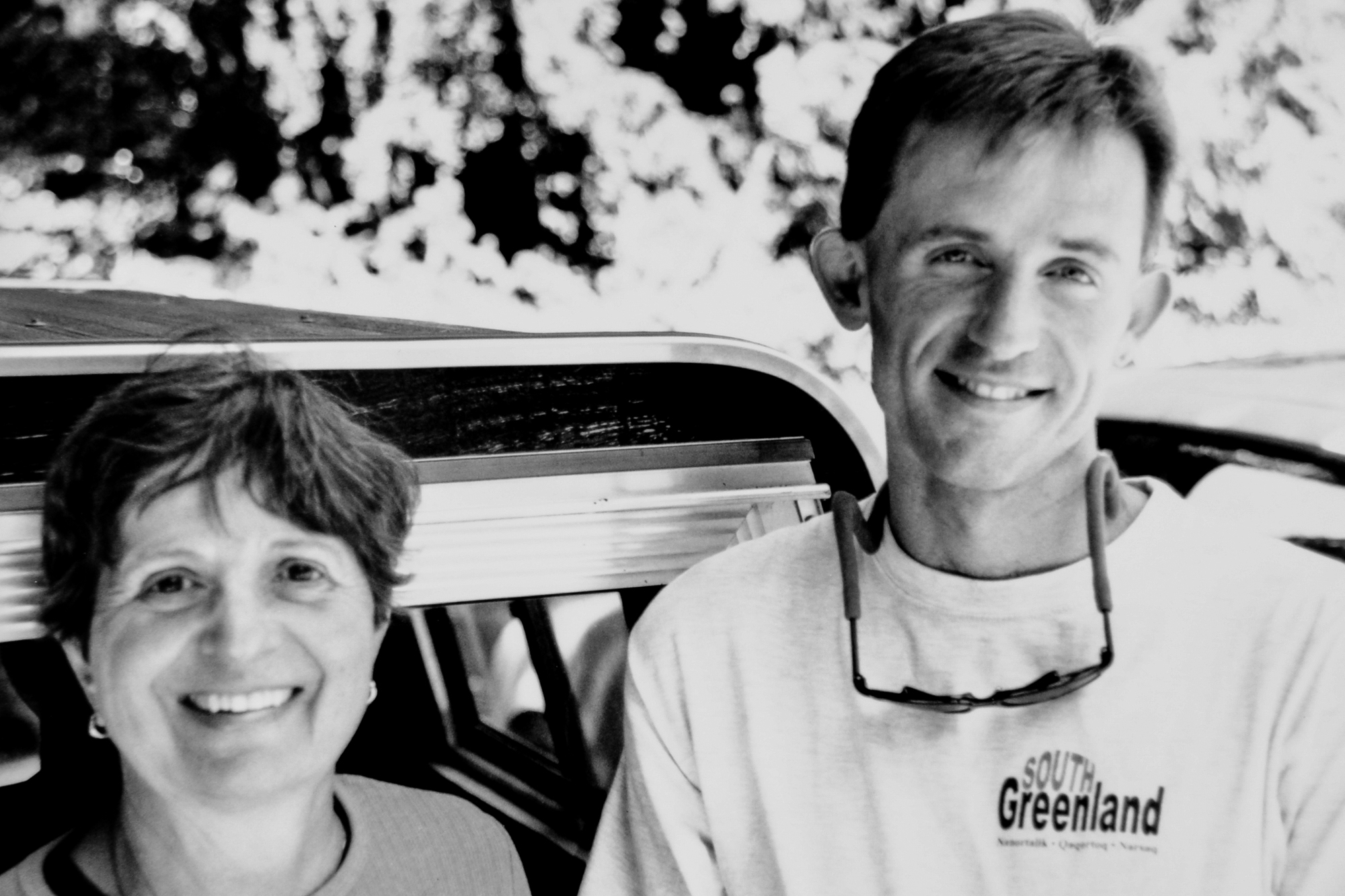
My mother poses with me shortly after her retirement from lifelong service as a public school teacher.

I joined her the day she turned in her paperwork at the district office. I happened to be traveling from my home in Seattle to the St. Louis area. I wanted to be there to congratulate her for her years of service to kids, many from families with many difficulties. She was mostly happy, and the staff were pleasant, but there was no big celebration for her many years with the University City Public Schools. I wish I had been more thoughtful and treated my mom that day. I let her down.

Today, as I think about the stresses facing kids and teachers over the last two years in particular, I recall the way my mom’s career of service ended. I now wish I had pictures of her in the classroom. Unfortunately, this was before the social media era. What I have is a photo is from that era, maybe two years after she left the classroom.

My mom’s post-retirement life went well for a while, until she succumbed to Alzheimer’s disease, and then her life was hell for seven years, until her death in February 2020, just before the world experienced the COVID-19 pandemic.

At her funeral, the minister who led the sermon, and who I helped with some stories about my mom’s life, said these words: “She was one who devoted her life to teaching and encouraging little children. She was also ahead of the disciples, and on the same page with Jesus, as much of her career was teaching and nurturing those of differing communities. As the little bio notes, much, if not most, of her career was engaged in teaching young African American children. Jesus’ own teaching and ministry was inclusive. In fact that was a major point of his teaching — to teach and demonstrate that the community of faith, the community of God did not discriminate. This is a justice issue, but it is also a deeply spiritual issue, and faithful to the one who calls us to follow … . What the children recognized was a relationship, someone who cared for them, wanted them to learn, as she would want her own children to learn, to be cared for.”

It still saddens me that the school district, which I contacted repeatedly, never acknowledged my mom’s passing in their official communications. It was COVID-19 time, but this willful shunning of a public teacher still left me upset how even school districts remembered their own.

With June around the corner, millions of kids and families are getting ready to head into summer. It is an uncertain time too, with school safety foremost on the minds of many, along with so many other economic issues facing the kinds of families my mom served. So, if you can, please remember to thank a teacher before the school year ends, in person, if you know one. They will always remember that kindness.

Remember, mankind is our business

Nearly every year I catch a live or filmed version of A Christmas Carol by Charles Dickens.

With COVID-19 still a threat globally and the Omicron variant still the dominant strain in Oregon and the country, I will forego my normal Christmastime pilgrimage to the theater for a live show. I will miss it, because at these live shows of this timeless story, I am in the company of theatergoers who share in the many profoundly humanistic themes of this masterwork of literature.

There are too many scenes and themes to call out that speak to our common humanity, particularly this time of year, when we are asked to think of others less fortunate.

Patrick Stewart plays Ebenezer Scrooge in my favorite adaptation of A Christmas Carol, from 1999.

One of my favorites scenes is when the ghost of Jacob Marley visits the still hard-nosed and taciturn Ebenezer Scrooge to give him a chance to save his soul, while he is among the living. The ghostly apparition of his former friend and business partner warns of the three spirits who will visit him on Christmas Eve.

Marley’s ghost also reminds Scrooge of our purpose in life, to be of service to others.

“But you were always a good man of business, Jacob,” faltered Scrooge, who now began to apply this to himself.
“Business!” cried the Ghost, wringing its hands again. “Mankind was my business. The common welfare was my business; charity, mercy, forbearance, and benevolence, were, all, my business. The dealings of my trade were but a drop of water in the comprehensive ocean of my business!”

The chills that one feels at a sprit giving us a chance for redemption never grow old for me. For me, this scene is among the best ever written telling us that we do in life, day in and day out, matters. The encouragement, spoken with the grim knowledge of death and the afterworld, reminds us all why our work matters in the here and now.

So with that holiday message, remember the importance of our “real business” in life, particularly this time of year.

The most expensive and fortunate car mishap of my life

A little more than a year ago, I experienced the most expensive car problem of my life. The final bill added up to more than $6,000, including towing charges.

Let’s not forget the several hundred more dollars in car rental fees and being without my car for nearly two weeks when I needed it for my job commuting 100 miles a day to and from my home to work.

The event happened in a blink of an eye, on one of the hottest days of the years, as I was about 15 miles into the return leg of my 50-mile commute back from my job in Salem, Oregon, to my home in Portland.

I never saw it coming. I just happened, though in retrospect, I long knew it would.

Hurtling down the highway at 65 mph in about 95 F heat in the late afternoon, the engine in my slightly aging Subaru Forester literally blew out.

The failure arrived without warning as I saw my dashboard gauges tell me the engine had failed. I quickly checked my surroundings and luckily found myself in a spot without vehicles or reckless semis around me. I coasted calmly to a stop on a safe spot on the Interstate 5 shoulder, next to a farm field and a tree.

In my mind I immediately recognized the unfolding event as a test my character and ability to handle bad luck even before I had put on the parking brake.

How would I choose to respond, I found myself thinking? Would I yell and curse? No. In fact, I immediately realized this was a profoundly fortunate moment.

Amor fati: embacing your fate

I was uninjured, and this happened at a safe place instead of a dangerous one. My car, an inanimate thing, was reparable. I was alive. I realized this could have happened anywhere at many more dangerous locations, and I could have been severely harmed. I smiled.

As for the car, I had no idea what had happened to the engine. The radiator was shot, but I didn’t know how badly the engine block may have been warped. Indeed, the mechanic later told me the block was destroyed, and I faced a decision to scrap the car for parts or install a new engine.

I got a tow after waiting more than an hour from a junkyard tow driver who proved highly knowledgeable about subjects we could freely discuss only as one can with a complete stranger in a strange place. The next day I got my second tow to a shop, where I faced the costly repair decisions.

Within 48 hours I had rented a car for a week, made the decision to replace my engine block, and worked out a plan with my manager to work at home. It was not really as serious as one might have thought it could be.

Ultimately, my life didn’t fall apart despite really bad luck, if you want to call it that.

The experience showed me the joy of not commuting a few days in a row. It confirmed I could not keep doing the job I was doing. In fact, the whole incident confirmed what I knew would happen, that my car would fail doing something that could not be sustained professionally and for my personal health. The job had to go or my health would.

Now, a year later, I have quit that job, I work at home, and I drive the car about once a week. I think it was a clear message from the heavens what to do.

Most importantly, I confirmed a lesson I long knew, as only experience can teach. I again found that bad luck could be the greatest of teachers.

Without bad luck, we can be foolishly tricked into deceiving ourselves that good luck is more desirable. In fact, good luck and the absence of bad luck can easily delude a person into lazy complacency  and being unready for when things change. And they always do. There is always a change in the wind, and those who deal with change have dealt with its fickle nature before. Luckily, I was ready and will not forget the lessons I learned last summer.

Remembering and honoring the great Bill Withers

On March 30,  2020 the world lost one of its wisest voices, singer and songwriter Bill Withers.

Withers passed away from heart complications at the ripe age of 81, having lived a life that allowed his life’s wisdom to reach the entire world through the power of music and the magic of his soulful voice.

His memorable hits remembered by many include “Ain’t No Sunshine,” “I Can’t Write Left-Handed,” “Use Me,” “Hope She’ll Be Happier,” and of course his timeless original “Lean on Me.” That timeless classic gave him the freedom to walk away from the music business and live a different life after 1980, after making nine studio albums in nine short years. His final hit, before he grew disillusioned with the music industry, was “Just the Two of Us.”

For me, the emotional depths Withers can find with the simplest chords on a guitar in “Hope She’ll Be Happier” is a testament to the power of music to touch someone’s soul.

And like so many, I am now turning to “Lean on Me,” from his second album, Still Bill. It provides an anchor as I search for light amid our global COVID-19 pandemic. The day I learned of his death, I played his masterpiece all night. I wrote to a friend, “Still chills. Decades go by, and it’s all I’ve got. I needed this song today more than ever. It carried me back to my humanity.”
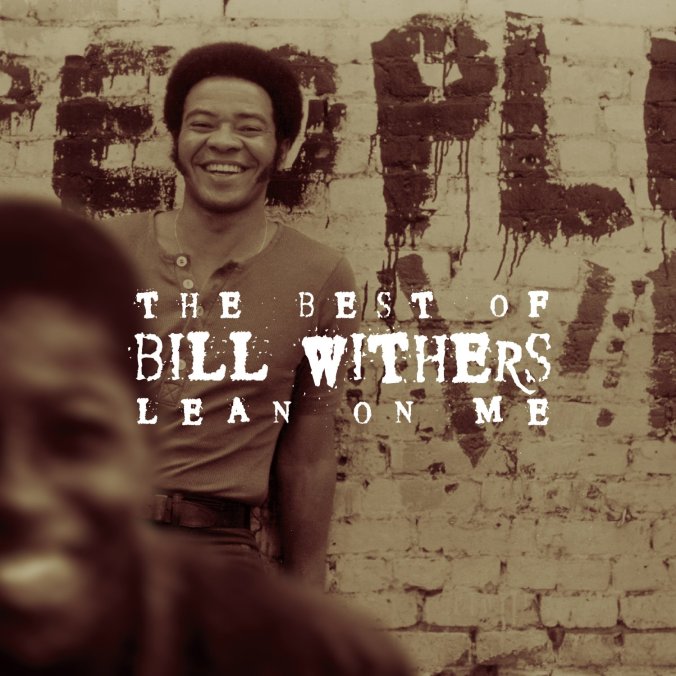
Withers is an American original, shaped by his humble, poor beginnings and the knowledge of lived experience that he channeled into his music that found an audience the world over. “I could have done better, but I did alright,” is how he summed up his musical career, the perfect understatement of a true artist.

Born in 1938, Withers was the youngest of six children. During a 2014 interview, he said his mother actually had 13 kids, and high infant mortality took its toll. His family lived in a coal mining community called Slab Forks, West Virginia, which was literally racially segregated by railroad tracks.

Long after Withers had become successful and stopped performing, he said his early and impoverished years that he had little control over likely exposed him to health issues that caught up with him later. He said as a child, he and his family ate every part of the hog but the holler. That is a classic West Virgnia line.

Despite the inherent racism his family experienced during his formative years, his father became a respected United Mineworkers treasurer while working in the coal mines. His life as a miner, Withers later shared, led to his premature death when Withers turned 13.

Despite these hardships, Withers also saw a type of communal bond that later informed his world view and his songwriting. When interviewed by a West Virginia TV program in 2007 about historic racism in West Virginia, he responded, “When you’re coming out of a coal mine, everyone’s black”.

Withers later lived with his mother and grandmother, the latter became the inspiration for his hit “Grandma’s Hands.”

Withers was determined to leave his poor upbringing in Appalachia and escape the life in the mines that left many men unhealthy in their later years.

He joined the U.S. Navy and learned to become an aviation mechanic. He was discharged and then lived in California, working in factories, including for Ford and Weber Aircraft on assembly lines. Those years as an assembly worker taught him about working together and caring for his fellow worker, he would later tell reporters.
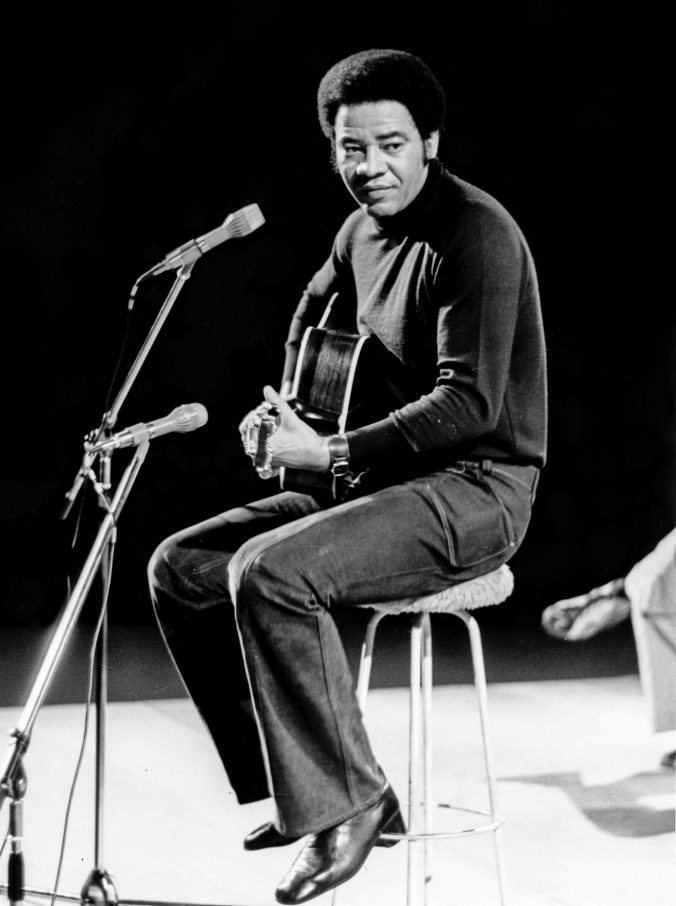
While working he bought a guitar at a pawn shop and taught himself to play, while songwriting. He began to share his tapes and pursue his dream of making it.

In interviews in his later years, after he left the business, he described “Lean on Me” as a product of a small, poor town, where you had to lean on others to get through hard times. He said that song could never have been written by someone from a big city, like London or New York. It’s a song from a smaller place.

When the news broke on Friday of his death, and I dug into his songs, I found there was far more to this man than I ever knew. And the more I knew, the more I realized how profoundly thoughtful he was about life. I realized how much of a Stoic he was, in a classical and advanced sense, and how there are people with whom you share spiritual and philosophical kinship, across time, space, race, and life experience.

One of my favorite lines I heard from his interviews was, ”We all become the composite of the places we’ve been and the people we’ve met.” So true, that.

He talked about the way we speak to others and our decorum come from the basic manners we learned from those who have raised us, regardless of where we’re from or our class. He also spoke about this simple stuff, and what camradarie was like in his home state.

As I mused about his life, I wrote this passage on my Facebook feed, after listening to his wonderful 2014 interview with the radio show Death, Sex, and Money: “If I could go back in time right now, and speak to my 15-year-old and very immature self, I would give myself a recording of this amazing interview with the late Bill Withers about living a meaningful life, how to be a real man as he understood it (without toxic masculine swagger, but with love and compassion), and finding one’s place in the world. This may not be the wisdom others would need, but I probably could have benefited from it. One of the most important male figures in his life was a slightly crippled man named virgil, who was also a hunchback. It was Virgil’s wise words that helped Withers overcome his own disability when he was 30 (a stutter).”

Unlike many singer songwriters, Withers never needed the ego gratification performing on the stage. He described himself as the type of kid who might be in the corner, reading a comic book not the one dancing for attention the moment someone entered the room. You can see that in his performances, where he sits on a stool, closes his eyes, strums his simple chords, and then unleashes the ferocity of his voice that comes from the human soul.


Toward the end of his life, he never lost perspective. You could see that in his 2015 induction to the Rock and Roll Hall of Fame. His stage presence conveyed, “Sure, whatever, folks. There’s more important stuff than this stage spectacle. Have a good time. I’m all good.”

In his interviews, Withers also described the difference between music and the music business. Everyone should do music, he emphasized, because of what music brings to the world. He said, when the big fat lady gets up in church and sings from her soul, that’s music, but ain’t nobody gonna pay her a dime.

Amen, indeed.

I will miss you, Bill Withers. We have lost a poet, artist, and force for humanity. I assure you, your wisdom will help all of us through the dark days of ahead:

Sometimes in our lives we all have pain
We all have sorrow
But if we are wise
We know that there’s always tomorrow

Lean on me, when you’re not strong
And I’ll be your friend
I’ll help you carry on
For it won’t be long
‘Til I’m gonna need
Somebody to lean on

Thank you, Bill Withers, for showing us the way.
Saying goodbye and finding meaning

The writer Robert Green, author of many books on human behavior, shared these words that make me think of Mom. Green wrote: “But despite what you may think, good luck is more dangerous than bad luck. Bad luck teaches valuable lessons in patience, timing, and the need to be prepared for the worst; good luck deludes you … making you think your brilliance will carry you through. Your fortune will inevitably turn, and when it does you will be completely unprepared.”

Mom at the Seattle Wooden Boat Festival, July 2004.

Like all of us, Mom had good and bad luck. Unlike many, she always learned from her misfortune and knew exactly when she finally found the tide turning. And she also knew good luck simply didn’t happen. She worked hard for it.

Mom was a child of the Depression and the daughter of an immigrant, who was fortunate to leave Germany before a much worse misfortune befell her homeland. Those immigrant lessons were passed down to Mom from her mother.

Being a child of that era, it shaped Mom and her generation. She spent her early years in a working class community of New Jersey—something that I think taught her about working hard and knowing that others around you could be less fortunate. She never forgot this her whole life.

Mom also grew up in the shadow of a great city, the epicenter of culture, and finance. The Big Apple’s glow could be a draw to anyone, particularly a woman like my mom who had an abundance of great looks. Those looks, however, never went to her head.

Mom attended Bronxville in NY (Concordia College, Bronxville, today) to pursue professional studies that the sexist workplace of the 1950s offered single women of lesser means. She made lifelong friends there. One became the godmother of one of her children (me). They were called the “Triple Threat.”

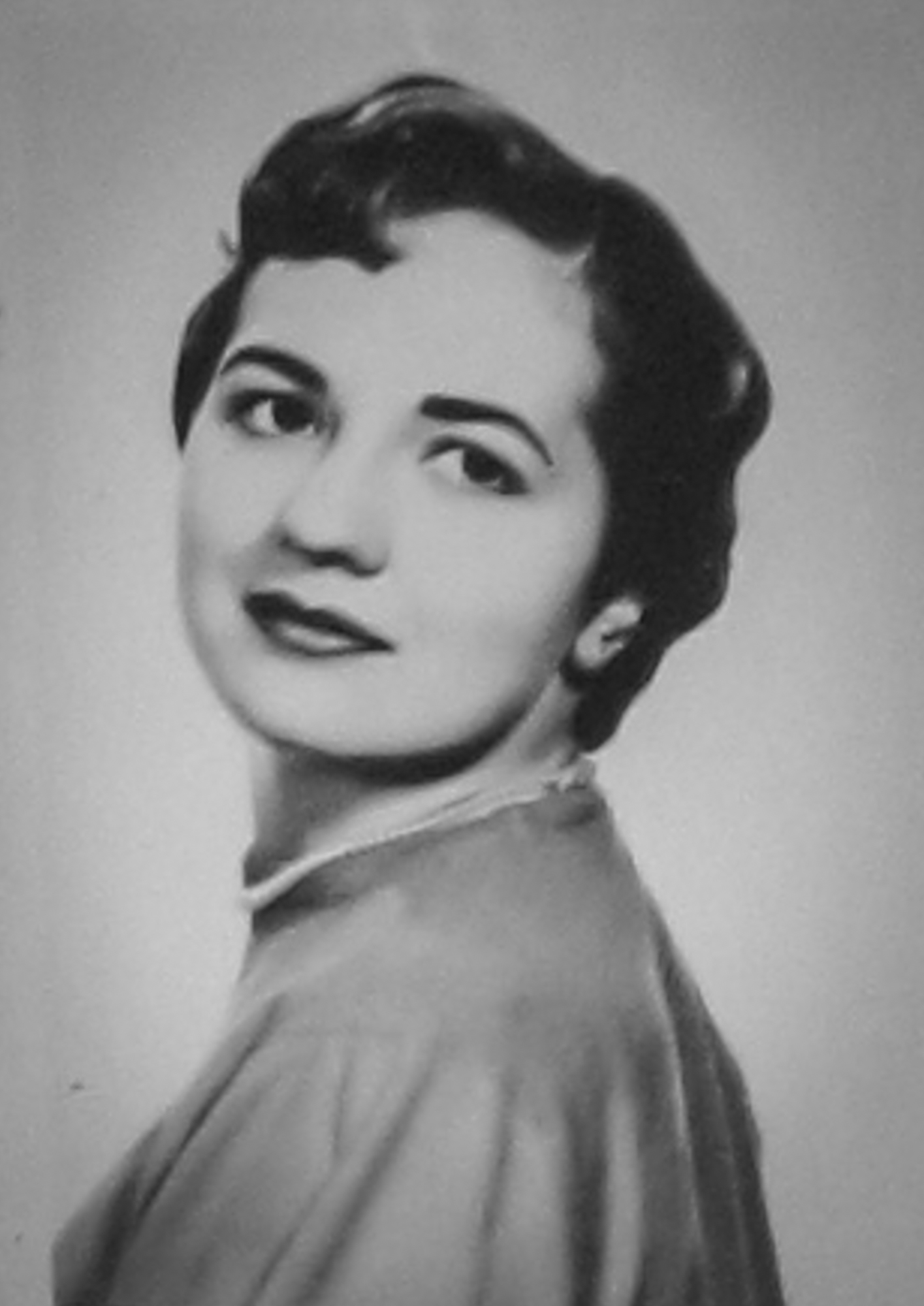
Mom, when she would turn heads during her college years in New York.

I don’t know the full story how Mom moved from greater New York to soggy Saginaw, MI in the mid-1950s. My guess is she needed work. When she had to work, she would always “crack on.” I learned this from her early on.

In 1958, she met her first husband. They moved to Detroit. They adopted my sister and I and raised a family. They moved to Boston for a spell in late 1965 and then to Clayton, Missouri, in late 1966. The pair divorced in 1973 and she re-entered the workforce as a teacher, eventually in the St. Louis Public School System and the University City Public Schools system.

She was a lifelong teacher, completing her career in University City Public Schools as a reading specialist. She devoted her professional life to the wellbeing of young people, many of whom were lower income, minority, and had higher needs.

Despite Mom’s great looks, she was remarkably grounded in the world around her, in people, her church, her community, and her family.

She was profoundly spiritual. She didn’t need to tell the world about her faith. It resided in her. She was devoted in the fullest Christian sense to her Christian identity and the congregations she belonged to. She dragged me and my sister to church. She knew better than we did why our nearby Lutheran church would be good for us. She was right. Her faith stayed with her to her last days.

Mom always had style. I never saw my mom look shabby. It’s the style the world saw on the show Mad Men, of women of that era. Mom always carried herself this way.

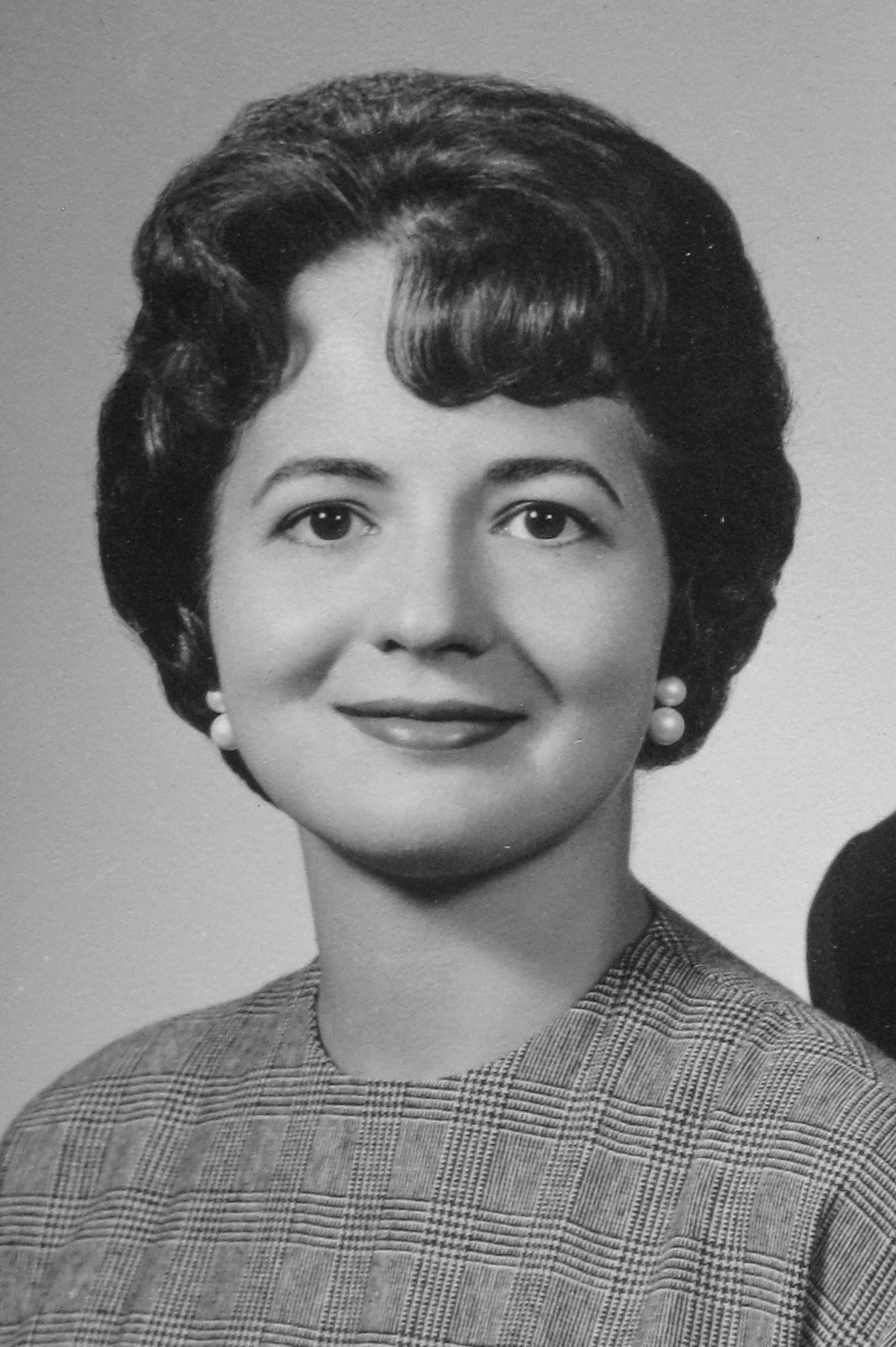
Mom had style, always

Mom also had an artistic side. Her creative outlets included fixing furniture, making beautiful outfits with her hands by sewing. She could throw herself into project and be unmoved by distractions. The house she purchased together with her second husband became an art gallery. They both loved great art and had impeccable taste.

Mom was very smart—like all her family members. She loved crossword puzzles, which she did for decades. I could never keep up with her when she’d work them out on the kitchen table.

Mom managed the impossible: navigating a divorce, reinventing herself, raising two kids, switching jobs, buying a home on a teacher’s salary without any help. And then, with two kids in tow, she found her lifelong soul mate, who she married in 1983.

Mom may have felt she didn’t see the world, but she did.

With her second husband, they travelled nearly everywhere in the United States and Canada. She even travelled nearly 50 miles up a dirt road outside of Cordova, Alaska, in the pouring rain, just to see a glacier and laugh at how beautiful and crazy that was.

Mom and her second husband lived for a short spell in England, where he had a position for a short term. They also travelled to multiple destinations in Europe together: England, Scotland, Ireland, France, Belgium, Italy, Greece (I believe a couple of times).  They always looked like there were glowing in their holiday pictures. Snap, here we are in Paris. Snap, here we are in in Florence. Snap, here we are in in Rhodes. Wait, here’s Thurso, Scotland and Bruges, Belgium.

Author, Rudy Owens, and Mom, about four months before she finally succombed to Alzheimer’s disease.

She was a great cook. I loved her Christmas stollen and cookies. She taught me this art. She kept learning new recipes and growing with her expanding love of food outside of her St. Louis world.

Through thick and thin, Mom was devoted to my sister and remained generous to her. Mom was always about doing.

Mom was tough. Her friend from college shared some stories about that with me, and I can see that throughout her long life. I call it grit. It’s the virtue I respect the most in people who matter.

I think all that she confronted in life–stuff that might bend or break others–did not push my mom down.

She could weather storms because she always knew something good was ahead.

Mom during one her several moves in the mid-1960s

Mom was right, of course, and her marriage to her second husband was the highlight of her life.

The thing she said the most to me, for the last seven years of her life, when her illness took hold, was, “I have the best husband in the whole world.” I would always say: “I know mom. He’s a great guy.” She was would always laugh and smile. We had this conversation literally hundreds of times. She last said it to me on Thanksgiving Day, on the phone. I said, “Yup, mom. You are a lucky woman.”

Mom was the best friend and loving wife of her second husband for 37 years. She welcomed his family as her own and devoted herself to their shared relations. In the end, her marriage was the enduring happiness and the good luck that came in her life. She earned it and knew how to live it well, only the way those who know the fickleness of fortuna can.

Mom, I salute your memory. Thanks for making us richer.