After three decades, and there was nothing

We all die some day. I too will pass away, and I hope my wishes are honored, and my ashes are scattered when I do.

I recently visited the tombstone of a man who died three decades ago and who I never really knew. It was the first time I stood over his bones.

He impacted my life and that of my family in ways that I never could control as a kid, but what I could do was determine how I wanted to live my life at a very, very young age.

I also  decided that I would not carry a name given that did not reflect who I was in any way, and instead I would choose my own name, which honored my past and ancestors.

Others will judge how well I succeeded in being better than the family name on this headstone. I have worked at this for decades, and every day I ask myself, how am I doing? Am I living the life I intended to live and not making the mistakes I have seen around me? No one will ever really understand this quest but me, and there will be no rewards for this quest, for that is called living your life.

I also continue to be questioned by many who will never understand why I made my choices to not bear this name when I part from this life to whatever awaits us all. I am comfortable with that. I have been questioned for decades about my choices, and anything worth doing will upset people who do not have the imagination to comprehend a world they do not live or understand.

The Man of Steel, an adult adoptee’s journey of discovery

I recently watched the 2013 blockbuster based on the prototypical American comic superhero, Superman, called Man of Steel. I was not expecting much. I hoped for mindless Hollywood entertainment.

This film adaptation of the 1930s original comic-book character took a new direction with a very overt narrative, amid the buildings falling down and space ships blowing up. In this rebooted franchise, the Superman tale is told as a story of a man’s—or rather, a Kryptonian’s—search for his identity.
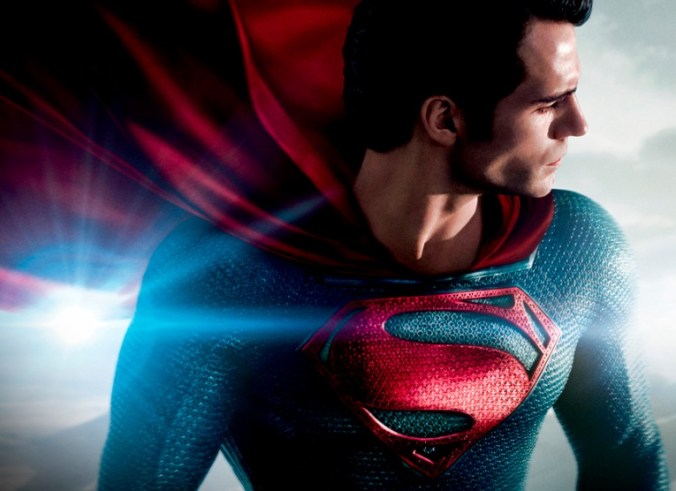
Super Adoptee, Superman

Superman, the adult adoptee on interplanetary steroids–beloved and feared by many.

The Man of Steel relies on one of the oldest mythological stories of human civilization, that of a hero’s search for himself by finding out his “true lineage.” This is the arc of great stories, from Moses to King Arthur. The Man of Steel also includes other classic mythological storytelling tropes, such as confronting a nemesis, the inevitable conflict, and the return from the journey as a hero. In this case, the hero happens to be born of one family and sent across the galaxy to be raised by another family in Kansas. He then must spend years figuring out who he really is.
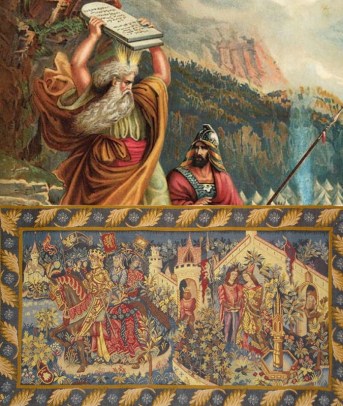
The Haywood Tapestries show King Arthur, a famous adoptee of noble lineage, like Moses, the greatest adoptee of the Bible and the Jewish and Christian traditions.

The Haywood Tapestries show King Arthur, a famous adoptee of noble lineage, like Moses, the greatest adoptee of the Bible and the Jewish and Christian traditions.

The hero’s journey

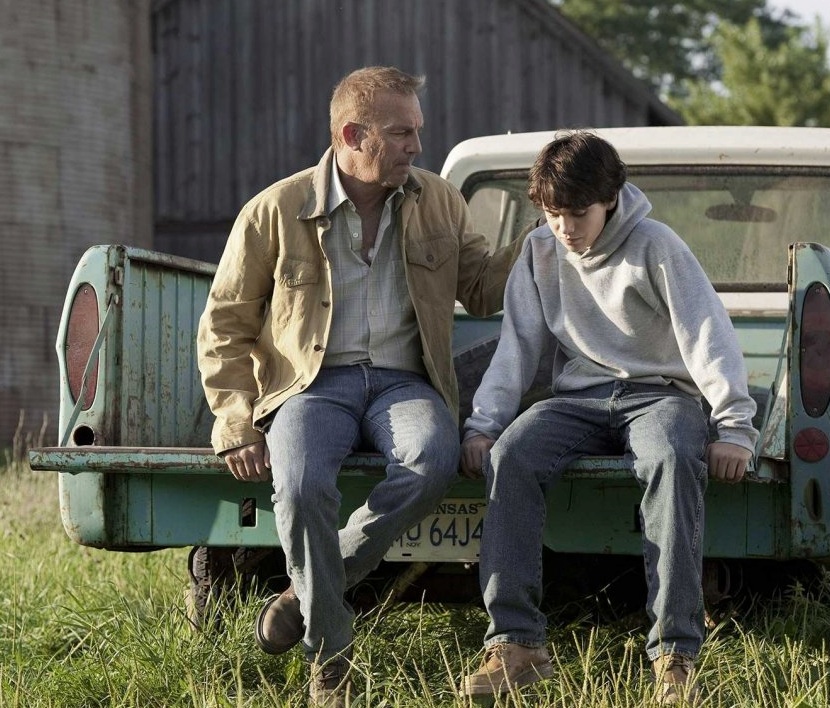
Minus the over-the-top special effects battles, this film is a basic tale a self-discovery. The most compelling moments in the film involve conversations the young Clark Kent has with his “adopted” father, Jonathan Kent, played by Kevin Costner. They discuss their ambiguous relations as non-biological father and adopted son. That tension bursts in a scene where the older Clark tells his father and mother, “You’re not my real parents.” Right on cue, following that conversation, Costner’s character dies in a tornado.

The adult Clark is left adrift not knowing who to call his parents or how to identify with his biological roots or his adoptive roots. So, the journey begins, and he wanders from the Bering Sea to the Canadian Arctic.

Clark Kent and Father in Superman Film

In this scene form the Warner Bros. film the Man of Steel, Kevin Costner’s Jonathan Kent talks to the younger Clark Kent, his adopted son from an alien race from the planet Krypton

This cinematic rendering of this rite of passage is nearly identical to what an adopted adult goes through when they have to decide for themselves if they wish to find out their history and biological roots, or accept the decisions institutions and others made for them.

A not-so-super real-life journey by adoptees

The actors who decided those adoptees’ fates are usually shielded by archaic adoption laws and the intransigent bureaucracies who supported the millions of adoptions, as was the case in the United States between the 1940s and 1970s. This adult adoptee decision is never easy, and is often costly. It can be very divisive and unpopular. Such a decision can forever change family relations and be condemned by people who know nothing about this desire to find the truth. It is at its core Superman’s tale.

In my case, I literally had to spend years, like Clark, on a pursuit that took me from state to state, bureaucracy to bureaucracy, until I finally solved the case and learned about the identity of my biological parents. I did not find a space ship buried in the Canadian ice like Clark, and my biological roots are not linked to Krypton. Nor did I meet my computer-generated father, Jor-El, played by Russell Crowe.
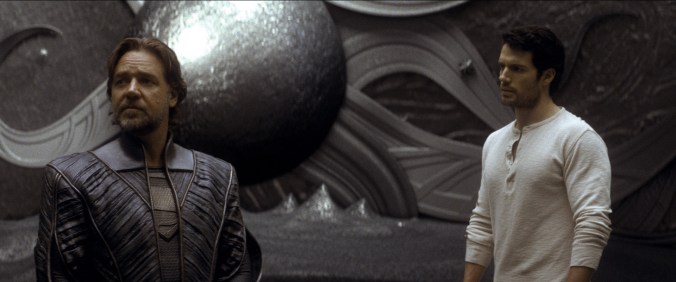
A scene from the Warner Bros. film, Man of Steel, showing Russell Crow as Jor-El, father of Kal-El, aka Clark Kent aka Superman.

A scene from the Warner Bros. film, Man of Steel, showing Russell Crow as Jor-El, father of Kal-El, aka Clark Kent aka Superman.

During their conversation, Crowe’s Jor-El tells Clark his “real name” is Kal-El. This is identical to what any adoptee experiences when he or she learns his or her “real name,” or the name at birth and on an original birth certificate. That document in most states is treated as a high-level state secret and never shared with adult adoptees unless they get waivers from surviving birth parents signed. This is the case with the state of Michigan for me, which still refuses to give me my original birth certificate, even though I have known my biological family history now for 26 years.

So Kal-El is also Clark Kent, much as I had another name for three and a half weeks until I was given a “new name.” It was a name I had until I changed it in 2009 to a name that incorporates parts of my birth and adoptive names.

In the fictional movie, Clark has all of his questions answered. His original Krypton father is a noble and great leader, as was his adoptive father, in Kansas. But in real life, how many people do you know have movie-style fathers? My biological father and my adoptive father clearly were not cut out for any story as formulaic as this film. They would never make it into a screenplay for the masses. I never had a conversation like our film hero did with his biological or adoptive fathers.

Finding your answers unleashes chaos, the not-so-subtle message of Superman

In the last act of the film, Superman is exposed as a space alien and chased by a rogue band of surviving criminals from Krypton, who force Superman to make a choice between his adoptive tribe or his biological tribe.

Superman must also tell his adoptive mother he found his “real parents,” watch her sadness, and then be redeemed for viewers by saving her life and calling her “my mother” while doing it. The rescue creates a comforting way we can have Superman be forgiven for being confused who is parents are or who is mother is, when such warm fuzzies may not be in abundance in the real world.

If you follow the narrative of the Man of Steel, these questions could lead you on a journey that threatens the very fate of the planet earth, or something equally dreaded.

If you follow the narrative of the Man of Steel, these questions could lead you on a journey that threatens the very fate of the planet earth, or something equally dreaded.

Ultimately, the film reveals that Superman’s activation of a beacon on the spaceship that he found brought the evil Kryptonites to earth, with the goal of total destruction of the planet. You cannot get more grandiose than the genocide of all of humanity as a penalty for discovering your identity and asking, who am I, and where did I come from. Once the chaos is unleashed by the bad invaders, only Superman, the misfit between both worlds and both families, can save the human race. That is a huge burden to lay on a guy who asked a very basic question.

In the end, Superman remains Clark Kent, not Kal-El. He retains his adoptive family loyalty. He will hide his biological self, except when needed, though he may never be trusted because he is “different.” He has solved his riddle, and the package is neatly tied as many Hollywood movies are.

Life does not follow this pattern. There are no heroic battles with invading aliens. Things are more messy.

But the journey of the real-life hero is no less epic than what the film Man of Steel shows. I  think the film resonated more deeply, more viscerally with those who have undertaken the quest of Clark/Kal-El/Superman. If you have never had to ask the question that confronted our hero, about who you are and where you came from, you may never understand his journey, and also the conflicts and rewards that must inevitably accompany such a quest.

‘Ideals are peaceful, history is violent’

About 15 years ago, a friend of mine told me a story that has stuck in my memory. It was not her story. Rather, it was the story of her husband’s father. Her husband is Jewish, and she is of Armenian descent. So both have a keen sense of history, and the consequences of history, including the crimes that occurred during war. So this is why I gave this story a lot of weight.

Her husband came from the city where I grew up, St. Louis. His father lived there most of his life. The father, I learned, was a veteran of World War II. He fought in Europe, with an armored division as it entered Germany in April 1945, just as the European conflict was ready to end.

The Tank Crew in the FIlm Fury

Above is a publicity shot of the WWII action film Fury, starring Brad Pitt (2014).

She told me about her father-in-law sharing war tales. They were not happy stories. There were stories of conflict and death. One story he shared was about his armored column’s capture of Nazi soldiers. The American soldiers chose not to take the surrendering soldiers into custody. Instead, they shot them down with their weapons, and kept their advance.

I had often wondered how much truth there was to that tale. I know war is pure hell, and soldiers on all sides do not allow their better angels to rule when their inner demons are unleashed in life and death combat. I just did not know what to think about U.S. GIs mowing down Nazis surrendering in the heat of battle.

I thought about that tale again while watching the 2014 film Fury, by writer and director David Ayer, starring Brad Pitt as the leader of a U.S. Sherman tank crew. In one scene, Pitt’s character, Don “Wardaddy” Collier, leads a team of tanks and soldiers in an attack on a German position. They overcome the Germans, and in the final moments of victory, slaughter them in brutal fashion. This was far less brutal than the Nazi were everywhere, when they pillaged and committed war atrocities on an unimaginable scale, especially in eastern Europe and the Soviet Union.

Brad Pitt as Don "Wardaddy" Collier

Above is a publicity shot from the WWII combat film Fury, with Brad Pitt.

One German soldier escapes the executions and is left at the mercy of the enraged American soldiers. Wardaddy picks out his newest team member, a teenager named Norman Ellison (played by Logan Lerman) and forces him to shoot the surviving German soldier with a pistol. It is a painful scene, because the elder Wardaddy is initiating his new “son” into the art of death to make him ready for combat and a better team player.

The film captured a fair bit of critical acclaim for its gritty realism of combat in the claustrophobic conditions of these metal boxes that were no match for Nazi Panzers. I kept thinking about my friend’s father-in-law as a young man, faced with a choice of capturing the enemy or killing them, so they could achieve their objectives more quickly, with less risk to their side. I now believe everything I heard was true.

It was war, and the most brutal war in human history. This was how the war was won. Fury holds back nothing. It is worth watching to appreciate what happened day in and day out, from Stalingrad to Warsaw to Anzio to the Ardennes to the fall of Berlin. Mercy was in short supply, and a whole lot of killing happened to bring the horrible mess to an end—a mess started by the Nazis and carried to an extreme. As Wardaddy told Ellison, before he died, “Ideals are peaceful. History is violent.”

My favorite holiday, and for great reasons

My friends prepared a phenomenal Thanksgiving dinner, yet again, in 2014.

My friends prepared a phenomenal Thanksgiving dinner, yet again, in 2014.

Thanksgiving approaches. By far it always has been and remains my favorite holiday.

For me it is the most genuine of our American celebrations. Commercial interests have not transformed it into a crass, commoditized event, though they try their hardest the day after we gather to give thanks with food, friends, and family.

It is seasonally specific. Thanksgiving dinners celebrate the North American harvest season, and with that, all of our land’s lovely fall foods. There are squashes, sweet potatoes, Brussel sprouts, potatoes, carrots, and cranberry sauce. These all taste better when blended and mixed on the plate with a big bird and gravy. Let’s not forget pumpkin and apple pie, layered with whip cream, and perhaps maybe wine or cider to add zest.

I have spent the last five Thanksgivings in Seattle with friends. It has always been a way I have let the world fall to the wayside, so I can focus on friendship, camaraderie, and celebrating all we have to give thanks for.

Two of those years were not my favorite periods, being back in graduate school and not feeling perfectly in tune with my program and the field I was studying at the time. I continue to live far from my family, so I have not been able to share it with them for decades, and during those two years, time with my family would have been nice. So for me, Thanksgiving has been about friends, actually for decades now.

Thanksgiving also celebrates a key moment in American history, marking the Union victories over the slave-holding Confederacy at Vicksburg and Gettysburg. The holiday, despite what you may have learned from myth and school, was first declared by Abraham Lincoln in October 1863, a dark year in American history when it was not clear if we would survive the storm of violent civil conflict, slavery, and division. Lincoln’s speech is a good one, even if he may not have written the whole thing (I do not know for sure).

I also have memories every late November of losing a good friend just before Thanksgiving in 2008.

So at this time of year, particularly on this great holiday, I think of what is good in my life and the good people in my life. I hope you do too, if you find yourself in the United States, with a home over your head, and friends and family to help you remember what is truly important.

Memory’s slight of hand and time

When I was young, between my ninth and 12th years, I spent time in Huntington, West Virginia. It remains a poor place today, and it was a much, much poorer place back in the 1970s. I mean it was really dirt poor.

I had no choice in the matter. I had to go there. I had to visit my father. It was bad to awful, and sometimes downright terrible. But when you are young, you are flexible and stronger than you think. You actually can do impossible things, and still come out at the end of the tunnel with a smile.

I did. Despite the odds, I really did.

One of the memories from this dark time were days I and my sister were left entirely without supervision at this old-fashioned amusement park, just outside of Huntington, called Camden Park. It is an old-school park, with a haunted house, dodge-em bumper cars, a wooden roller coaster called the Big Dipper, and many other rides found in the non-franchise amusement parks that still labor on in an era of corporate amusement. (I always thought these rides would collapse because the place was so rickety.)

My father would drop me and my sister off in the morning, buy us an all-day ticket, and we’d have the Camden Park wrist band on our arms for the day. We were free to run around like bandits. I have no recollection what we ate, and no one at the park cared if two juveniles were without parental supervision for hours. Trust me, it was low-brow then, so no one really cared about such things.

I suppose this place had both a blessing and a curse. It gave me temporary freedom from time with my father. And then it forced the bitter reality to crash down when he came to pick us up, in ways I will never describe here.

I recently went back to Huntington to see what I could remember, four decades on. It is funny how memory works. It shuts down what you do not need to know. It leaves you with enough to keep you going. Yet I still remember this horrible clown and the ambivalence of both the freedom of escape and dreading of when that freedom always came to an end.

Most of all I am glad I do not remember much. That is the sleight of hand our minds can pull, because our minds are awfully powerful tools that get us where we need to go, when we need to get there.

Knowing when it is time to make a change

In 1997, I began a photodocumentary project on genocide in Rwanda, visiting two infamous genocide sites and the Kigali area. I only spent two weeks in that central African nation, but the experience profoundly moved me and changed my life.

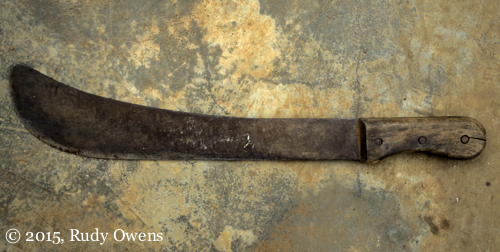
machete color

The machete, a common tool found in nearly every Rwanda household, was the principal murder tool of the 1994 genocide in Rwanda. I photographed this in the backyard of a Rwandan home in 1997.

In the spring and summer of 2000 and fall of 2001, I completed the second phase of my visual exploration of genocide in the 20th century by visiting Nazi camps and Holocaust sites in seven European countries. In October 2001, I completed the project by visiting historic sites associated with the genocide of the Armenian people by the Ottoman Turks during and after World War I.

My work on this difficult topic ended shortly after, in 2002. My photos have been published on my Web site and magazines, and they were displayed in numerous photo shows in the Seattle, Wash., area. My photos and stories continue to draw thousands of visitors every week to my Web site, which I will continue to publish as a free on-line resource for the public. I hope these images and stories will be useful for those who want to learn about crimes against humanity, how they occurred, and what forces motivated the perpetrators of these unspeakable acts.

As a photographer and documentarian, I moved on to other projects–focussing on the human potential for goodness. I am still keeping my content online to inform anyone who is doing online research. I still get notes from the public, around the world about this work. Images also can still be licensed to media organizations, publishers, and individuals.

Finally, I will make a personal note about this project. It began in a dark place, not long after the massacres of Hutu moderates and ethnic Tutsis in Rwanda. On that trip in June 1997, I developed malaria, which in part led to my decision to leave the country.

In November 2001, soon after my trip to Turkey photographing Armenian genocide and cultural sites, I visited Netherlands. I travelled to Camp Westerbork, the main deportation center for Jews in occupied Netherlands in World War II. The camp was the staging ground for the deportation of mostly Jewish civilians to death camps in Poland and other concentration camps in Nazi Europe.

I suffered a strange and painful relapse of malaria at the camp, and had to visit a hospital that night for care. This was not a coincidence, as I recently realized. The physical and psychic journeys had taken their toll, and it was clear I needed to put this project behind me.

In 2002, I tossed a small item, a piece of an electrical transformer I found at the death camp Birkenau, into the Puget Sound, as part of my ritual ending a stage of my creative life.

In 2002, I tossed a small item, a piece of an electrical transformer I found at the death camp Birkenau, into the Puget Sound, as part of my ritual ending a stage of my creative life.

In June 2002, I marked the end of this journey by donating my entire collection of more than 50 framed black and white and color framed photographs to the Washington State Holocaust Education Resource Center of Seattle, Wash (now called Holocaust Center for Humanity). My hope is that the pictures will continue to provide insight for the Holocaust studies and human rights education the center provides to residents of Washington state and the Pacific Northwest.

As I now look back on this project, from its start almost two decades ago, it is good to remember what I learned, and it also is valuable to realize when change is good and you need to move your creative energies in new, and also positive, directions. Always.

My ode to my former home, Alaska

In August 2010, I packed up everything I owned and headed south to my new life, back in the Lower 48. Leaving the Great Land (Alaska) was among the most bittersweet things I have ever done. I cried. I sighed. I thanked the fates for giving me such amazing experiences and friendships.

Rudy Owens Leaving Alaska

Taken in August 2010

Because of circumstance or design, I followed the exact same path returning to my old home in Seattle that I took coming up. I drove the Alcan Highway from Anchorage to the turnoff to Haines. At Haines I took the Alaska Marine Highway ferry to Prince Rupert, B.C. After being humiliated by some overzealous Canadian border officials (that was funny, since I personally knew the head of that border post from my last job), I drove to Prince George, B.C., on Highway 16, Yellowhead Highway. From that junction, I took the Highway 97 again south, back to the Canada Highway 1, and turned off for the border at Sumas, Washington.

Every place I passed brought back memories of my trip up in August 2004, when this adventure in my life began. It was pouring rain as I rolled back into the Ballard neighborhood of Seattle. And thus the new chapter in my life began, and I started a new journey.

I wrote this poem on the ferry ride. I still look at it from time to time when I want to connect with the feelings that only Alaska created in my heart. Thanks again, friend. I appreciate every moment we spent together.

Missing Alaska
Aug. 23, 2010

Waves of sadness, tears of sorrow
Emotions tapped, I fear tomorrow
Leaving Alaska, heart hangs low
A land of rawness, joy, and woe
Mountains strong and beauty sweeping
Oceans teaming, rivers streaming
The bears and wolves I loved the most
Cruelly hunted, I heard their ghosts
Ketchikan, Kodiak, Kaktovik
Kotzebue, Barrow, Anchorage
Skiing trails pure perfection
Running Arctic, path to heaven
Moose abounding, daily sitings
Ravens, eagles, seagulls fighting
Running races, feet alighting
Found my stride, crashed, time abiding
Then life aquatic, laps and polo
Westchester walks, though mostly solo
Missing dearly Chugach mountains
Always lovely, next to heaven
Sharp memories that still cut deep
I’ll guard them close, forever keep

Who is that kid in the photo

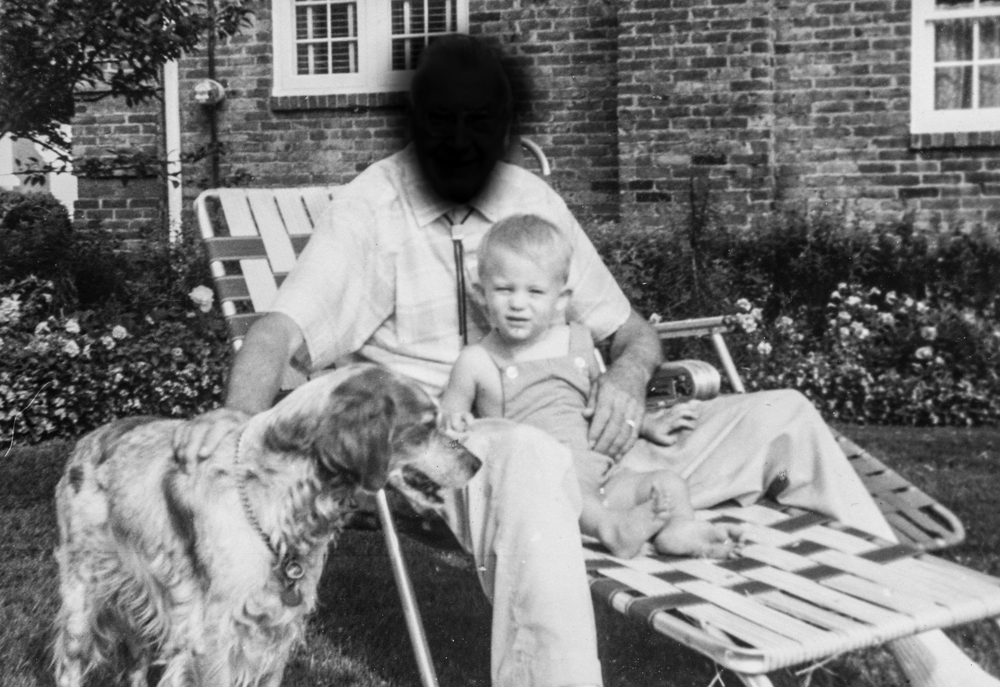
I recently obtained a childhood picture of me, dating from the time I was about 1.5 to 2  years old. I do not really know when it was taken, but I know where it was done, just outside of Cleveland.

From Long Time Ago-3

I had never seen this photo before. I do not have many pictures of that period of my life. That is because technology for consumer cameras was note widely dispersed. My family used Polaroids and a crappy Kodak Instamatic. My adoptive parents also were lousy photographers with no storytelling sensibilities. Mainly I think there was so much going in their lives that was sucking their time and energy that capturing “happy times” on film was a waste of time.

Half of the pictures from this time of me are in black and white. None are well composed. They exist as an afterthought. There was no clear intent to capture the story of my family or my childhood.

They were more holiday and event pictures. They likely were meant to be put in an album and provide a mirror to lives of what a middle-class American life should be like, not what it was actually like.

This one picture, however, was different. I am engaging the camera. I am wearing overalls, something that my adoptive parents liked to dress me in, maybe because they were German-Americans.

I have an innocence in this picture that I have never seen in other pictures. I actually have a decent haircut. About five years later I would go somewhat feral and wear long, unkempt hair, particularly after my parents divorced and things went amazingly sidewise. I looked a bit like a heavy metal rocker in a tiny body.

However in this shot, the hair is tidy. My ears stick out. And you can see my nose is big and will soon grow bigger. I have the physical traits that I carry with me today. However, I became a skinny kid and stayed thin my whole life, when it appears I could have gone a little chubby.

The man in whose lap I am sitting on an outdoor lawn chair is my adoptive father’s father. I never knew we were photographed together. My adoptive grandfather died in my childhood, when I was less than 4, and I have almost no memory of the man. The dog is his Brittany spaniel, who I remember more, actually.

This was about three years before things went truly off the tracks for my family, with my father at the center of the storm—the storm itself. I am left to wonder, what did my adoptive grandfather think of this child in her arms. Did he know who his son was, and what he had in store for his adoptive grandson, me, and his adoptive granddaughter. Did he really care about me, someone who was not related to him biologically.

I will never know the answers to these questions. All I can do is wonder and think about a moment in time I never knew happened until a few days ago.

Knowing who you are by your work

At this stage in my life, in my middle age, I am comfortable knowing who I am. I will not become a successful entrepreneur or highly paid technical specialist in any of the STEM fields (science, technology, engineering, math). Nor will I be a successful business person as measured by the size of my bank account or size of the last budget I managed. I have taken a different path. And it is a good path, and it is also a professional path too. Success has other metrics.

One thing that I am comfortable with is having been a laborer and blue collar worker. I wish I could have developed a start-up company instead of having some of my crummy jobs in my youth. But there were factors and my own choices, and being lower-middle-class, there are constraints that those who are wealthier will never understand. I did run my own lawn-mowing business, but it never really took flight as a true company.

This is how I looked after a summer of hot work outside.

This is how I looked after a summer of hot work outside.

As a result of my earliest jobs, every time I see someone who is using their body to do manual labor, I feel some connection, because I did those jobs at one point. I also now agree with what Karl Marx notes in his Communist Manifesto, which has some stinging truths to those of us who have worked: “In proportion therefore, as the repulsiveness of the work increases, the wage decreases.”

Today I work in an office, for a local government. I am separated by a sheet of glass where I see men and women, daily, fixing the exterior to my building lately. It is very odd to have that viewpoint, knowing I had held such jobs, but I am no longer exposed to the hot sun, laboring and sweating.

Here are just a few of my jobs, and many a more famous person had dirtier, harder, and more brutal jobs than me. There is no shame in having done work getting your hands and clothes dirty.

  • Babysitter (really was not suited for this, but few jobs exist when you are younger than 16)
  • Gardener/snow shoveller (self-employed, for years)
  • Fast food cook and kitchen worker
  • Dishwasher (quit almost immediately, and that was wise)
  • Retail store assistant and janitor (yes, I really did janitorial work)
  • Librarian assistant
  • Painter
  • Roofer (hottest job I ever had)
  • Construction worker
  • Chauffeur/bus driver/tour guide
  • English teacher

Some of these jobs paid minimum wage, and one paid below minimum wage. For two of them, I likely was in violation of some state labor code, either being too young to work or not being covered properly working off the books. A few of these jobs did pay well, and the ones that did were with independent contractors, who always were excellent mentors about business, working with clients, and customer service.

By the time I was in my 20s, I finally made a move to climb up the ladder in terms of pay scale and responsibility in an organizational setting. My college degrees helped.

But I never forget the path that led me to where I am. I think former President Theodore Roosevelt summed up work nicely: “No man needs sympathy because he has to work, because he has a burden to carry. Far and away the best prize that life offers is the chance to work hard at work worth doing.”

Rising above your workplace nemeses

I know of practically no one who does not have to use their social talents to excel at work. In that social environment, many forces are at play. There are expressions of power between management and labor. There are tensions among teams, departments, sexes, races, religions, groups and leaders. Succeeding for yourself requires more than just clocking in. It requires social intelligence and the ability to read your environment and the intentions and motives of your coworkers and bosses.

The drudgery of work can be challenging enough without the need to handle challenging personalities you will inevitably encounter, all your life.

The drudgery of work can be challenging enough without the need to handle challenging personalities you will inevitably encounter, all your life. (From Diego Rivera mural at the Detroit Institute of the Arts, of the Ford River Rouge factory)

I doubt there is anyone in a contemporary workplace in the United States who has not experienced frustration on the job linked to someone they work with. One of the most challenging obstacles to overcome is that of the passive-aggressive coworker.

You may know variations of this type of person. I think I must have encountered my first when I had my second job in high school. Despite our differences, we still had to work together, for two years in my case, and I had to develop methods to rise above their personality and actions. I learned a lot from that, and I built on that knowledge in my later jobs.

Such challenges have never really ended, because such personalities remain very common, more so in low-functioning work environments.

Managing Passive-Agressive ColleaguesRobert Greene, author of The 48 Laws of Power and Mastery, writes it is always best to steer your ship clear of their rocky shoals: “But there are people out there seething with insecurities who are veritable passive-aggressive warriors and can literally ruin your life. Your best defense is to recognize such types before you become embroiled in a battle, and avoid them like the plague. … At all cost, avoid entangling yourself emotionally in their dramas and battles. They are masters at controlling the dynamic, and you will almost lose in the end.”

Does that sound like a familiar situation to you?

The so-called Bible of mental health professionals, the Diagnostic and Statistical Manual of Mental Disorders: DSM-IV, describes what it calls passive-aggressive personality disorder as “a pervasive pattern of negativistic attitudes and passive resistance to demands for adequate performance.” It will be visible  when someone shows at least four of these traits:

  • passively resists doing routine social and occupational tasks;
  • complains of being misunderstood by others;
  • is sullen;
  • unreasonably scorns authority;
  • expresses envy to those apparently more fortunate;
  • voices persistent complaints of personal misfortune;
  • alternates between hostile defiance and contrition.

A variation of this type of warrior is one who has reached a high level of power, to become a right-hand to the one wearing the crown, or bearing the title of CEO or manager. In fact, it is the courtier who is often the real master.

Robert Greene describes such masters of deception this way: “Great courtiers throughout history have mastered the science of manipulating people. They make the king feel more kingly; they make everyone else fear their power. … Great courtiers are gracious and polite; their aggression is veiled and indirect.”

The courtier is always closest to the king and emperor and may even wield more power in that position.

The courtier is always closest to the king and emperor and may even wield more power in that position.

So what does one do? There are many strategies. I think we all of tend to use what we find works for the environment where we find ourselves and within our own comfort level. Succeeding with such people really is a test of life, and it can even be a fun challenge if you do not let such people master your emotions. If you can master your feelings, you are on very stable footing.

If you are not certain what may work, given the people around you, do as Greene suggests based on his study of people who were masters of their chosen work and of working with others. Hone your social intelligence. Above all excel at what your do, and make your value known.

“Work that is solid also protects you from the political conniving and malevolence of others—it is hard to argue with the results you produce,” writes Greene. “If you are experiencing the pressures of political maneuvering within the group, do not lose your head and become consumed with all of the pettiness. By remaining focused and speaking socially through your work, you will both continue to raise your skill level and stand out among all the others who make a lot of noise but produce nothing.”