When serendipity is not just an accident

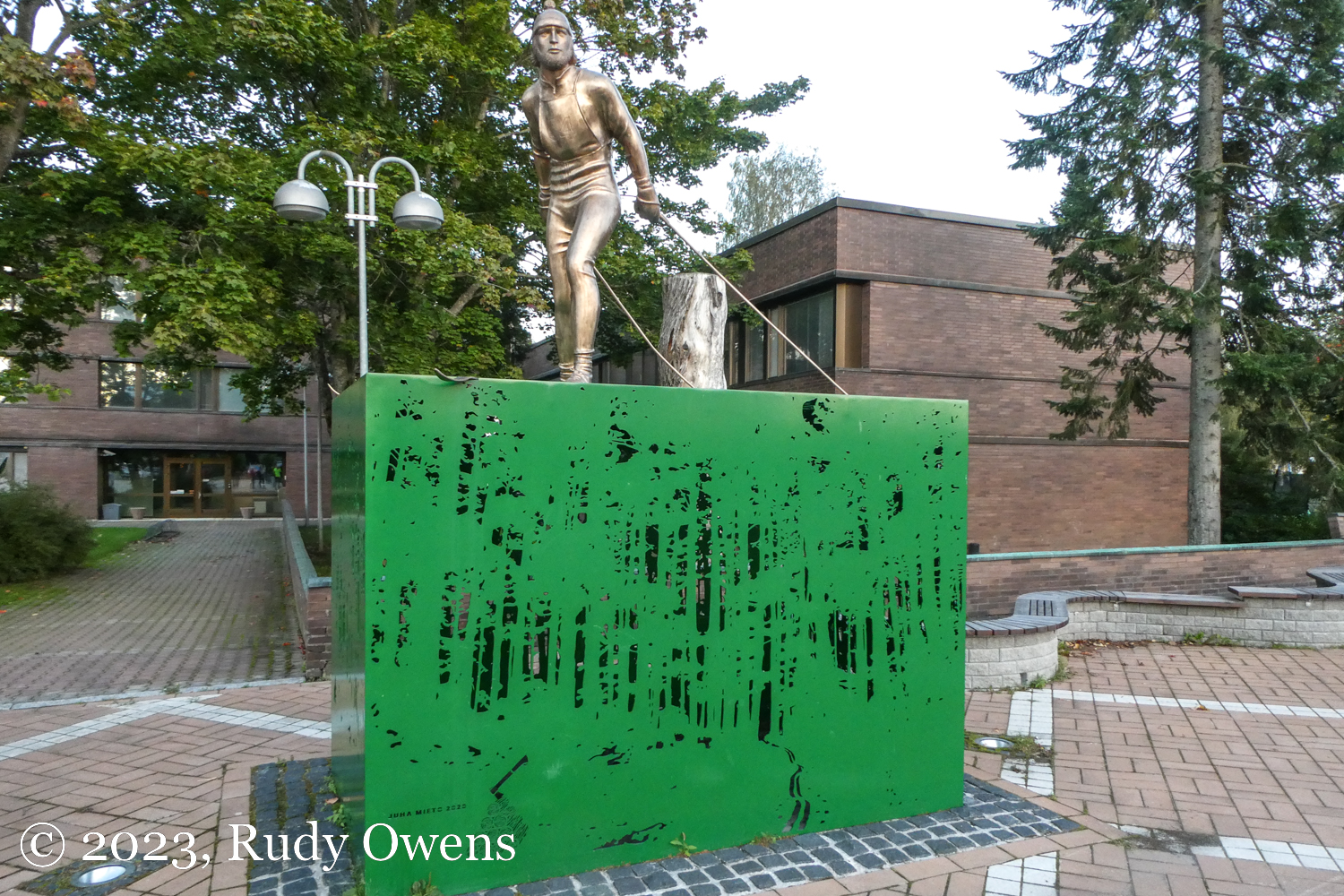
Olympic gold medalist and Finnish ski legend Juha Mieto is celebrated in his home city of Kurikka with this status in the city center.

In September 2023, I visited the 20,000-person community of Kurikka, Finland. Kurikka is the kind of place that will never go into any Finnish guidebook, but it’s where I had a lot of great moments in Finland for my first-ever visit to the Nordic nation.

At the center of the city I found this statue of a very famous Finnish skier, Juha Mieto. It turns out a completely unknown Finnish woman who connected me to my distant relatives in Finland this summer also has a connection to Kurikka and Mieto too, and I had no way of knowing that at the time I saw this statue.

Several months before I was standing in the Kurikka city center, I had been in touch with my “email friend” in Finland asking her for help. Our interaction was an entirely serendipitous human connection that tipped the scales of fate for me and had brought me to this very spot.

Today I learned she is a blood relative of this very famous Finnish national skier. The famous Mieto grabbed a gold medal a 1976 Winter Olympics in Lake Placid, New York, and also a silver medal, in the 1980 Winter Olympics in Innsbruck, Austria, finishing one one-hundredth of a second behind his Swedish rival, Thomas Wassberg.  

Kurikka is also the home city of Finnish relatives I found through my benefactor’s help.

When I visited one of my Finnish relatives in Kurikka in September 2023, I first saw this statue. I photographed it because it was distinct, but I didn’t fully appreciate who I was photographing at the time—a Finnish sports legend. I mentioned this visit in my story about my trip and seeing this statue. I shared the story with my benefactor as a late “thank you” gift to show how important her help was to me. And that’s when she mentioned her personal connection to Kurikka and the man turned into a bronze ski statue.

Talk about funny coincidences. Life is full of them. I have always found that the more you do things to go where your instincts are telling you to go, the more these things will happen. Perhaps good luck, my connection to friendly stranger, and maybe something more made all of this happen.

The famous Swiss psychiatrist Carl Jung created the term synchronicity to explain relationships between events that could not be explained by simple cause and effect logic.

Jung suggested that unique and synchronistic events had meaningful connections rooted in perceptions. He explained it this way: “I found where ‘coincidences’ which were connected so meaningfully that their ‘chance’ concurrence would represent a degree of improbability that would have to be expressed by an astronomical figure.”

I have long thought that synchronicity can be harnessed, especially when I felt it working in wonderous ways for me. I fortunately could tap into that for my trip to Finland.

I would not say that I’m “extraordinary.” I’m just me. And I felt synchronicity the entire time I was planning my trip and then having one of the most rewarding times of my life.

I also have a bit of advice. Trust the siren when you hear it. It calls for a reason.

Back to where it all began

In early June, I visited Michigan, my birth state. I made a four-day whirlwind visit to promote my new book and advocate for changes to Michigan’s outdated adoption laws that deny Michigan-born adoptees their original birth records.

Crittenton General Hospital in Detroit, taken in 1930 (from the National Florence Crittenton Mission).

During the two days I was in the Detroit and Ann Arbor area, I finally returned to the place of my birth: Crittenton General Hospital, the epicenter of adoption in Michigan for decades.

The building is now torn down. In its place is a large, boxy utilitarian set of buildings housing the Detroit Jobs Center and a nursing home, all surrounded by a gated steel fence. There is no plaque mentioning the hospital, how long it operated, and who it served. The surrounding area, just west of the John Lodge Freeway and at the intersections of Rosa Parks Boulevard and Tuxedo Street, is severely distressed.

Decay was visible everywhere near the old Crittenton General Hospital site, off of Rose Parks Boulevard.

Multiple houses a half a block from the old hospital site were in various states of collapsing. On Rosa Parks, by the rear entrance to the jobs center, a two-story apartment was slowly falling down—and no doubt would be destroyed one day or, sadly, torched by an arsonist.

The former Crittenton Maternity Home on Woodrow Wilson is now the home of Cass Community Social Services. The former home used to house single mothers before they gave birth next door at the former Crittenton General Hospital, from the the 1950s through the 1970s.

The former Crittenton Maternity Home, in a three-story brick building next to the old hospital site, is still standing. It is now run by Cass Community Social Services. I saw a young and I’m sure poor mother with her child entering the building. I realized how the story of single mothers continues today, but with different issues and without the full-throated promotion of adoption by nearly all major groups involved in social work and the care of children. I took some photos of the home and then went to the hospital site.

I took out my sign that I had quickly made in my car using a fat Sharpie. It simply said: “I was born here.”

I took multiple pictures, on a hot, muggy, and sunny day, but I could not manage a smile. I could not make light of my origins at this place, where so many mothers said goodbye, forever, to their children. It is not a happy story.

Rudy Owens at the site of the former Crittenton General Hospital, where he was born and relinquished into foster care in the mid-1960s, and then adopted at five and a half weeks after his birth.

Despite my stern appearance, I felt a sense of elation to have finally returned to my place of origin. It felt like closure. I accomplished what I set out to do decades earlier, for myself and on behalf of other adoptees denied knowledge of who they were and where they came from.

This time, I had controlled the story. This time, I was telling that to the world with my newly published book and public conversations that had been connecting with readers. This time, I owned the moment, unlike the one when I arrived as a nearly underweight baby, heading into the U.S. adoption system in Michigan and a new family.

And no one, not the state of Michigan or the groups who determined my life because of my status as an illegitimate child, could ever take that from me.

Yeah, it was worth it. That selfie and throwaway sign were my Trajan’s Column, as glorious as anything ever built by a conquering Roman emperor. The adoptee hero, as I frequently describe all adoptees searching for their past, had returned victorious to Rome (Detroit), even if there were no crowds throwing garlands upon me and no one to write poetry celebrating that victory. I had written that story already.

The Man of Steel, an adult adoptee’s journey of discovery

I recently watched the 2013 blockbuster based on the prototypical American comic superhero, Superman, called Man of Steel. I was not expecting much. I hoped for mindless Hollywood entertainment.

This film adaptation of the 1930s original comic-book character took a new direction with a very overt narrative, amid the buildings falling down and space ships blowing up. In this rebooted franchise, the Superman tale is told as a story of a man’s—or rather, a Kryptonian’s—search for his identity.

Super Adoptee, Superman

Superman, the adult adoptee on interplanetary steroids–beloved and feared by many.

The Man of Steel relies on one of the oldest mythological stories of human civilization, that of a hero’s search for himself by finding out his “true lineage.” This is the arc of great stories, from Moses to King Arthur. The Man of Steel also includes other classic mythological storytelling tropes, such as confronting a nemesis, the inevitable conflict, and the return from the journey as a hero. In this case, the hero happens to be born of one family and sent across the galaxy to be raised by another family in Kansas. He then must spend years figuring out who he really is.

The Haywood Tapestries show King Arthur, a famous adoptee of noble lineage, like Moses, the greatest adoptee of the Bible and the Jewish and Christian traditions.

The Haywood Tapestries show King Arthur, a famous adoptee of noble lineage, like Moses, the greatest adoptee of the Bible and the Jewish and Christian traditions.

The hero’s journey

Minus the over-the-top special effects battles, this film is a basic tale a self-discovery. The most compelling moments in the film involve conversations the young Clark Kent has with his “adopted” father, Jonathan Kent, played by Kevin Costner. They discuss their ambiguous relations as non-biological father and adopted son. That tension bursts in a scene where the older Clark tells his father and mother, “You’re not my real parents.” Right on cue, following that conversation, Costner’s character dies in a tornado.

The adult Clark is left adrift not knowing who to call his parents or how to identify with his biological roots or his adoptive roots. So, the journey begins, and he wanders from the Bering Sea to the Canadian Arctic.
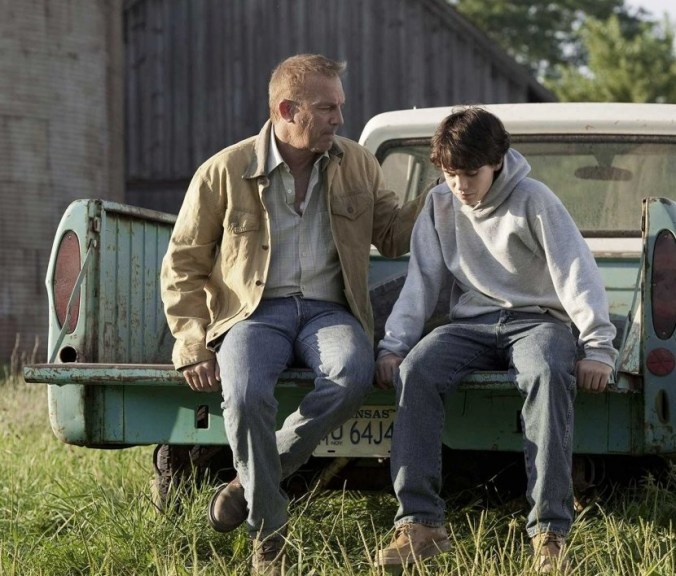
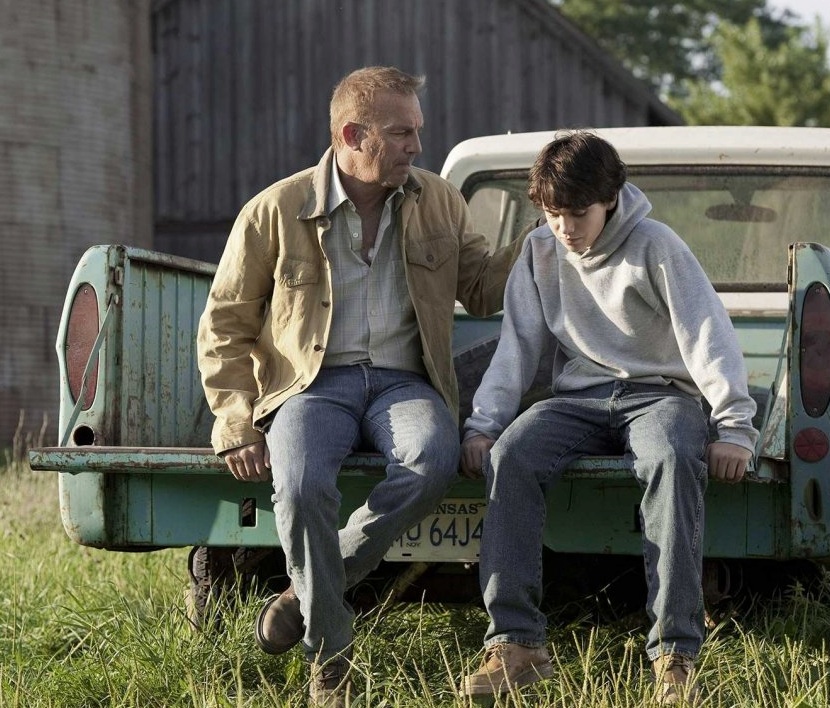
Clark Kent and Father in Superman Film

In this scene form the Warner Bros. film the Man of Steel, Kevin Costner’s Jonathan Kent talks to the younger Clark Kent, his adopted son from an alien race from the planet Krypton

This cinematic rendering of this rite of passage is nearly identical to what an adopted adult goes through when they have to decide for themselves if they wish to find out their history and biological roots, or accept the decisions institutions and others made for them.

A not-so-super real-life journey by adoptees

The actors who decided those adoptees’ fates are usually shielded by archaic adoption laws and the intransigent bureaucracies who supported the millions of adoptions, as was the case in the United States between the 1940s and 1970s. This adult adoptee decision is never easy, and is often costly. It can be very divisive and unpopular. Such a decision can forever change family relations and be condemned by people who know nothing about this desire to find the truth. It is at its core Superman’s tale.

In my case, I literally had to spend years, like Clark, on a pursuit that took me from state to state, bureaucracy to bureaucracy, until I finally solved the case and learned about the identity of my biological parents. I did not find a space ship buried in the Canadian ice like Clark, and my biological roots are not linked to Krypton. Nor did I meet my computer-generated father, Jor-El, played by Russell Crowe.
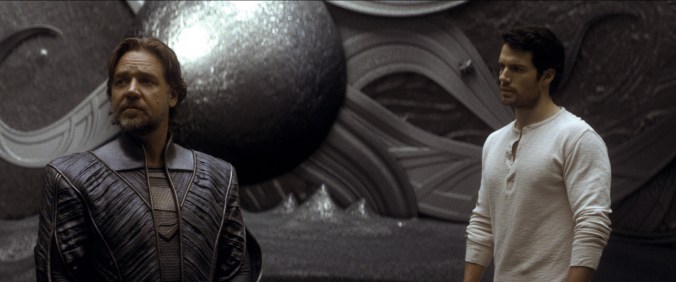
A scene from the Warner Bros. film, Man of Steel, showing Russell Crow as Jor-El, father of Kal-El, aka Clark Kent aka Superman.

A scene from the Warner Bros. film, Man of Steel, showing Russell Crow as Jor-El, father of Kal-El, aka Clark Kent aka Superman.

During their conversation, Crowe’s Jor-El tells Clark his “real name” is Kal-El. This is identical to what any adoptee experiences when he or she learns his or her “real name,” or the name at birth and on an original birth certificate. That document in most states is treated as a high-level state secret and never shared with adult adoptees unless they get waivers from surviving birth parents signed. This is the case with the state of Michigan for me, which still refuses to give me my original birth certificate, even though I have known my biological family history now for 26 years.

So Kal-El is also Clark Kent, much as I had another name for three and a half weeks until I was given a “new name.” It was a name I had until I changed it in 2009 to a name that incorporates parts of my birth and adoptive names.

In the fictional movie, Clark has all of his questions answered. His original Krypton father is a noble and great leader, as was his adoptive father, in Kansas. But in real life, how many people do you know have movie-style fathers? My biological father and my adoptive father clearly were not cut out for any story as formulaic as this film. They would never make it into a screenplay for the masses. I never had a conversation like our film hero did with his biological or adoptive fathers.

Finding your answers unleashes chaos, the not-so-subtle message of Superman

In the last act of the film, Superman is exposed as a space alien and chased by a rogue band of surviving criminals from Krypton, who force Superman to make a choice between his adoptive tribe or his biological tribe.

Superman must also tell his adoptive mother he found his “real parents,” watch her sadness, and then be redeemed for viewers by saving her life and calling her “my mother” while doing it. The rescue creates a comforting way we can have Superman be forgiven for being confused who is parents are or who is mother is, when such warm fuzzies may not be in abundance in the real world.

If you follow the narrative of the Man of Steel, these questions could lead you on a journey that threatens the very fate of the planet earth, or something equally dreaded.

If you follow the narrative of the Man of Steel, these questions could lead you on a journey that threatens the very fate of the planet earth, or something equally dreaded.

Ultimately, the film reveals that Superman’s activation of a beacon on the spaceship that he found brought the evil Kryptonites to earth, with the goal of total destruction of the planet. You cannot get more grandiose than the genocide of all of humanity as a penalty for discovering your identity and asking, who am I, and where did I come from. Once the chaos is unleashed by the bad invaders, only Superman, the misfit between both worlds and both families, can save the human race. That is a huge burden to lay on a guy who asked a very basic question.

In the end, Superman remains Clark Kent, not Kal-El. He retains his adoptive family loyalty. He will hide his biological self, except when needed, though he may never be trusted because he is “different.” He has solved his riddle, and the package is neatly tied as many Hollywood movies are.

Life does not follow this pattern. There are no heroic battles with invading aliens. Things are more messy.

But the journey of the real-life hero is no less epic than what the film Man of Steel shows. I  think the film resonated more deeply, more viscerally with those who have undertaken the quest of Clark/Kal-El/Superman. If you have never had to ask the question that confronted our hero, about who you are and where you came from, you may never understand his journey, and also the conflicts and rewards that must inevitably accompany such a quest.