My ode to my former home, Alaska

In August 2010, I packed up everything I owned and headed south to my new life, back in the Lower 48. Leaving the Great Land (Alaska) was among the most bittersweet things I have ever done. I cried. I sighed. I thanked the fates for giving me such amazing experiences and friendships.

Rudy Owens Leaving Alaska

Taken in August 2010

Because of circumstance or design, I followed the exact same path returning to my old home in Seattle that I took coming up. I drove the Alcan Highway from Anchorage to the turnoff to Haines. At Haines I took the Alaska Marine Highway ferry to Prince Rupert, B.C. After being humiliated by some overzealous Canadian border officials (that was funny, since I personally knew the head of that border post from my last job), I drove to Prince George, B.C., on Highway 16, Yellowhead Highway. From that junction, I took the Highway 97 again south, back to the Canada Highway 1, and turned off for the border at Sumas, Washington.

Every place I passed brought back memories of my trip up in August 2004, when this adventure in my life began. It was pouring rain as I rolled back into the Ballard neighborhood of Seattle. And thus the new chapter in my life began, and I started a new journey.

I wrote this poem on the ferry ride. I still look at it from time to time when I want to connect with the feelings that only Alaska created in my heart. Thanks again, friend. I appreciate every moment we spent together.

Missing Alaska
Aug. 23, 2010

Waves of sadness, tears of sorrow
Emotions tapped, I fear tomorrow
Leaving Alaska, heart hangs low
A land of rawness, joy, and woe
Mountains strong and beauty sweeping
Oceans teaming, rivers streaming
The bears and wolves I loved the most
Cruelly hunted, I heard their ghosts
Ketchikan, Kodiak, Kaktovik
Kotzebue, Barrow, Anchorage
Skiing trails pure perfection
Running Arctic, path to heaven
Moose abounding, daily sitings
Ravens, eagles, seagulls fighting
Running races, feet alighting
Found my stride, crashed, time abiding
Then life aquatic, laps and polo
Westchester walks, though mostly solo
Missing dearly Chugach mountains
Always lovely, next to heaven
Sharp memories that still cut deep
I’ll guard them close, forever keep

Who is that kid in the photo

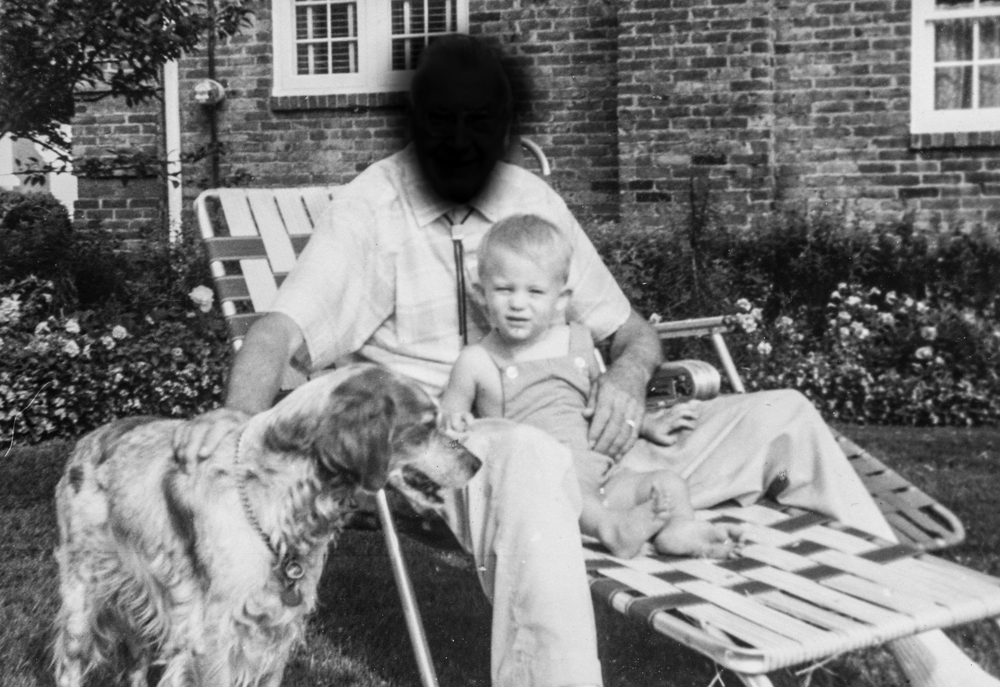
I recently obtained a childhood picture of me, dating from the time I was about 1.5 to 2  years old. I do not really know when it was taken, but I know where it was done, just outside of Cleveland.

From Long Time Ago-3

I had never seen this photo before. I do not have many pictures of that period of my life. That is because technology for consumer cameras was note widely dispersed. My family used Polaroids and a crappy Kodak Instamatic. My adoptive parents also were lousy photographers with no storytelling sensibilities. Mainly I think there was so much going in their lives that was sucking their time and energy that capturing “happy times” on film was a waste of time.

Half of the pictures from this time of me are in black and white. None are well composed. They exist as an afterthought. There was no clear intent to capture the story of my family or my childhood.

They were more holiday and event pictures. They likely were meant to be put in an album and provide a mirror to lives of what a middle-class American life should be like, not what it was actually like.

This one picture, however, was different. I am engaging the camera. I am wearing overalls, something that my adoptive parents liked to dress me in, maybe because they were German-Americans.

I have an innocence in this picture that I have never seen in other pictures. I actually have a decent haircut. About five years later I would go somewhat feral and wear long, unkempt hair, particularly after my parents divorced and things went amazingly sidewise. I looked a bit like a heavy metal rocker in a tiny body.

However in this shot, the hair is tidy. My ears stick out. And you can see my nose is big and will soon grow bigger. I have the physical traits that I carry with me today. However, I became a skinny kid and stayed thin my whole life, when it appears I could have gone a little chubby.

The man in whose lap I am sitting on an outdoor lawn chair is my adoptive father’s father. I never knew we were photographed together. My adoptive grandfather died in my childhood, when I was less than 4, and I have almost no memory of the man. The dog is his Brittany spaniel, who I remember more, actually.

This was about three years before things went truly off the tracks for my family, with my father at the center of the storm—the storm itself. I am left to wonder, what did my adoptive grandfather think of this child in her arms. Did he know who his son was, and what he had in store for his adoptive grandson, me, and his adoptive granddaughter. Did he really care about me, someone who was not related to him biologically.

I will never know the answers to these questions. All I can do is wonder and think about a moment in time I never knew happened until a few days ago.

A travel journal, from Tok to Whitehorse

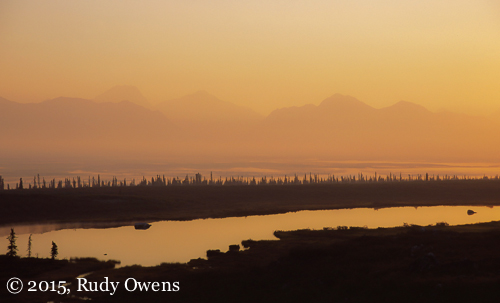
Sunset on the Alaska Range

The Alaska Range in the evening

In the summer of 1992, I worked as a newspaper reporter in Sitka, Alaska. It was one of the best experiences of my life. Just before I began that seasonal position, I was able to tour south central Alaska, all by, yes, hitchhiking. It was perhaps safer back in the day, though there was always a risk that the driver was a character with a dark past and a possibly psychotic future. I did meet some strange and colorful folks on the trip I took. In less than two weeks, I hitched from Haines, to Valdez, to Homer, to Anchorage, to Denali, to Fairbanks, to Tok, to Whitehorse, and finally to Skagway, where I caught the ferry back to Sitka.

I copied down a section of my travel journal from that adventure. What transpired is, to my best ability, faithfully captured. In Alaska and the Yukon, you just can’t make some things up. The people and place are just beyond the imagination. I begin my journal entry just after I was dropped off about 30 miles from Fairbanks, under the arctic evening light, surrounded by nothing but mosquitos and open sky and empty road.

Thursday May 28, 1992:
I spent 45 minutes waiting. At around 10:45 p.m., I was still hoping for yet another ride, with residual evening light still around me. It came in a Grateful Dead branded, red VW van. I said hello to Scott, a 21-year-old drug user and snowboarder and his mellow dog Wilson. Scott was leaving Alaska. He had enough of the work on a boat. He did the black cod run and quit. He had hated boat work. He said he threw up all over the place.

Scott had a few stories and was easy with his smiles. His ratty, shoulder-length brown hair and stubble made him look a bit like a Dharma bum. He said two wanted criminals, who supposedly had murdered three teens, almost killed him a few days back. He talked about the suicide of his friend too.

We drove past Delta Junction and started looking for campsites. He said he had to get back to the border crossing at Sweet Grass, Mont., to make a court date. He had paid $700 in bail after the border guards took apart his van and found 65 hits of acid in a deck of cards that came with the bus when he bought it, he claimed. The whole experience bummed him out, he said. Now he was smoking the last of his Alaska Thunderfuck weed and cleaning the van up. I didn’t want to hit the border with him.

We found a spot and set his van up for crashing. He stretched a cot across the front cab, where I crashed. He had the bed. Outside the van we could hear the hum of thousands of mossies. Some picked us off inside the van too. I slept roughly, waking at 3 a.m. with a chill and scrunched in my tiny compartment.

Friday, May 29, 1992

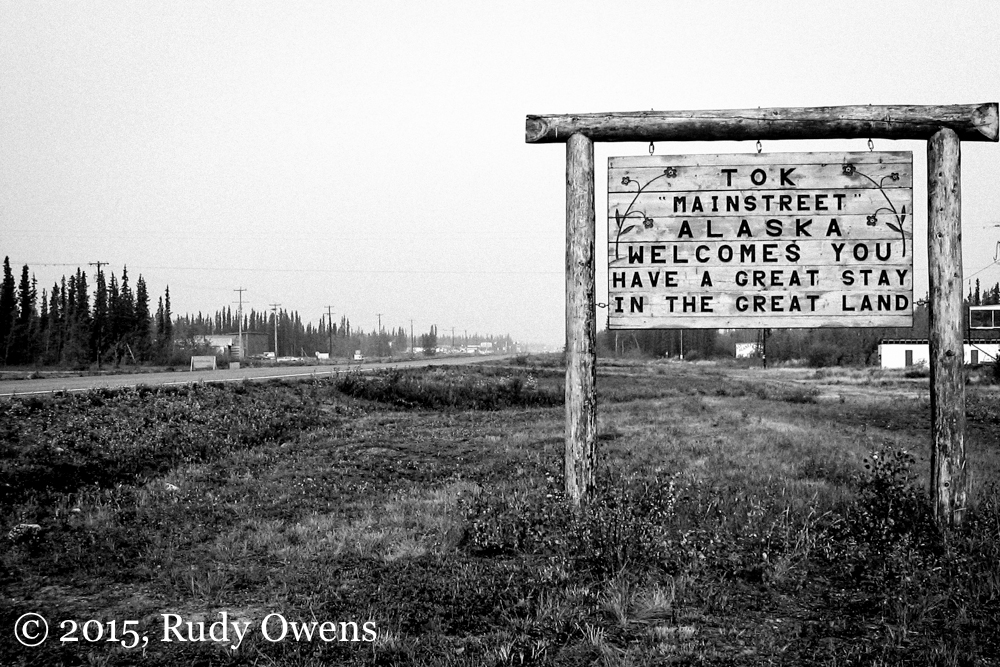
Tok Welcome Sign

Tok, Alaska, welcome sign

I awoke exhausted at 6 a.m. Scott made us pancakes and eggs. Delicious stuff. We hit the road at 7 a.m. and rolled into Tok. We stopped at the North Star restaurant, where I made my first stop crossing the border two weeks earlier. The woman at the counter remembered me. The hot shower was a delight, followed by hot coffee.

Scott was cleaning his van. He told me he planned to get to Beaver Creek by the end of the day. I told him I had more miles to cover. He promised he would pick me up if he saw me.

I was on the road by 10:30 a.m. A sky blue V-8, Ford F-150 pickup pulled over. The driver, Bill, said he was a geologist and miner from Whitehorse and offered me a ride all the way to his home. Score!

First we bummed around town looking for maps where he wanted to stake claims. He showed me a pure gold nugget hanging from his neck. We hit the road an hour later, with that F-150 cruising at high speed. He loved to floor that puppy, even after the State Troopers pulled him over and gave him a $60 ticket.

Bill was about 35. He studied mining formally for three years at a university. He loved his work, staking claims and prospecting with his father. He smiled and laughed a lot. His Canadian “ehs” rolled frequently from his lips.

We were searched by the Canadian border service guards and let through. Once in the Yukon Territory, we stopped at Beaver Creek to collect some “shit” that he and his dad had accumulated. This included a snowmobile and buckets of other gear for his prospecting work.

Off we went again. We travelled through Burwash Creek, Gold Nugget Creek—places where he had prospected and worked, he said. If was as if the entire Elias mountain range was his own private domain. He knew it well.

We stopped again at a restaurant of cranky, large female friend named Rebecca. She had acne. We ate date cake and drank coffee. That’s all I ever seemed to do up here: eat sweet food and drink cups of coffee to stay warm and awake.

It was a beautiful drive on a lovely day. We stopped again to pick up even more stuff at an abandoned miner’s cabin. This time torch rods, wood, tools, and lanterns. Off we sped again.

We rolled into Haine’s junction at 6 p.m., just in time to meet his cousin at a local bar. There were about eight guys drinking beer and smoking. They ranged between 35 and 60. They looked a bit unkempt, but tough. Not the kind of guys to tussle with in a bar fight.

His cousin was drunk. He slurred out curses in his greetings. What happened next was pure Canada. Drinks and bullshit and bushels of “ehs.” We got out of there in 45 minutes, only to spend another 15 minutes at the mobile home of still another cousin. Finally we headed to Whitehorse.

Bill’s Ford was leaving smoke in the road as we sped way over the speeding limit. We passed through magnificent scenery of soft mountains and spruce forests. It reminded me a lot of Montana. Bill thought the same.

A scene near White Pass, Alaska

Near White Pass, the high country

Whitehorse, the Yukon capital, has about 90 percent of the territory’s people. It is a semi-industrial town, lying at the col of the valley. Bill took me to a spot by a campground on the highway out of town. There I waited 20 minutes. Right when I wanted to bag it, a green truck stopped. I met Rudy of the Yukon Security Forces.

I asked Rudy about his accent. He said he originally came from Holland. We started talking, and Rudy began with his army service stories, when he was stationed in Indonesia on Java and Sumatra between 1945 and 1949. He described his army days like a Vietnam vet. He loved it there, eating native food and re-enlisting to serve in a company where he was the only European.

He talked about handguns, which he didn’t carry. He said he’d carry one if he can use it. Shoot first, ask questions later. That was the way it worked in Indonesia, he said. He had orders to clear villages, to stop enemy columns from entering an area. It left him changed.

He said his first wife couldn’t understand what he felt. He said in the early 1960s he knew America could not win the Vietnam War. He told me that he is never going back, even though it was his favorite place in the world. Now he lives in his second favorite place, the Yukon.

I got off at the campgrounds, which were swarmed. A bunch of yahoos played loud music and drank beer. Typical Canadian. I got to sleep at midnight.

Fast food lives and fast food memories

Tonight, I walked by two fast food franchises that were closing down for the night around 9:30 p.m. One was a subway sandwich place, the other an ice cream parlor. Their brand names are not important. Inside, shutting things down, three young workers in their teens were hard at work.

Behind the glass at the ice cream shop, I saw two young women wiping down the metal fixtures, sweeping, and ensuring it was sanitary and clean for the next day. One of the those women met my gaze and smiled. She was energetic, attractive, and positive. I smiled back. Next door, a young man, who I think was about 17, was mopping the linoleum floor with an old-fashion slop mop, like the ones I used to use when I was around his age. He looked up, but he went quickly back to his task at hand. He looked like he was ready to leave.

Wow, what a flood of memories that brought back to me. I cannot remember how many times I “closed down the shop,” when I worked in the early 1980s at a Kentucky Fried Chicken outlet just outside St. Louis.

I wore a hat like that, and apron like that, and likely had my hair even longer, and yes, I used to haul boxes of frozen chicken in and out of the giant freezer to prep the chicken for cooking.

I wore a hat like that, and shirt like that, and likely had my hair even longer. And, yes, I used to haul boxes of frozen chicken in and out of the giant freezer to prep the chicken for cooking.

I was 15 years old—at that time working illegally under the allowable 16 years of age minimum. My job involved cooking batches of factory raised chickens–or rather the edible parts of chickens, soaking them in “special sauces,” covering them special flour, and then deep-frying them in a giant vat of hot oil for the required time til the buzzer went off. That was the “extra crispy” chicken. The “Colonel’s Special Recipe” involved pressure cooking the bird pieces in a giant, and I thought, very dangerous machine. Or, worse, I had to do dishes, cleaning oil-slimed metal cooking ware and trays until my fingers puckered from the chemical cleaners.

Each night, the oil had to be drained and filtered to capture the chicken and fried coating bits, and, when the oil was too dirty to cook another batch, recycled. This meant hauling large metal containers of burning hot oil to a recycling container out back. Often hot oil burned my arms and face. I smelled like the Colonel’s recipes even the next day after a shower. I looked like hell coming home: greasy, physically exhausted, unable to think, and still with homework to do. Getting home was not easy either. I either biked home five to six miles in the dark on some pretty busy roads, or if I was lucky got rides some times from my mom, sister, or a co-worker. This sucked in the rain and cold.

The day after a night shift, I would be unable to think at school. I could not stay awake in classes. I literally zoned out and barely passed intro chemistry. The teacher, a good guy, suggested I might want to quit my job when he noticed me sleeping in class on the desk. I think I was working about 15-25 hours a week, depending on the schedule. Finally, after five months, I had to quit. I literally was going to start bombing my sophomore year classes, or keep up the routine. It was incredibly hard to give up my only source of income, as I had to rely entirely on my job to buy my own clothes and pay for all of my expenses outside of food my mom bought at home.

I hated, hated cooking this industrial food for this employer. To this day, I cannot eat fried chicken.

I hated, hated cooking this industrial food for this employer. To this day, I cannot eat fried chicken.

Making matters worse, during that point in my life, I was probably smoking a pack of cigarettes a day, and blowing up in smoke, literally, a chunk of my measly $3.15 an hour pay. (I quit for good later that year, and never looked back.)

I think I was smart enough to know that the second-degree burns that scarred my arm one night were the signal to escape the chicken shack as quickly as possible, which I did. Though my next job paid less, slightly below minimum wage, it at least gave me more stability, and I only had to work two or three nights a week, and all day Saturday. I at least could find the balance with crappy job and school without the risk of injury at the Colonel’s place, which I called K-Y Fry.

And all of this flashed through my head when I gazed into that young woman’s smiling face. I wondered where she was at in life. Finishing high school, or on track for a GED? She did not look older than 18. Did she have to work to help support her family? Did she envision a better next job, if she could get the skills she needed to move on from the world of dishing out ice cream cones and wiping down the bathroom? I do not know. But, I hope so.

I would never wish my own fast food experience on anyone. Even though I learned how to hold my own doing hard labor, I knew that I could get easily trapped and not move up the income ladder if I did not succeed in school. Maybe I did get lucky. Maybe I found just the right balance and was smart enough to know that this life in fast food America was a pit.

Still, I never forgot where I came from. That is why I always give anyone who works in these ubiquitous food sweat shops more than a little courtesy and respect. They earn it, every day.

The joys of a new bicycle

My new Surly Pacer

My new Surly Pacer in sparkleboogie blue

Buying a bike is always one of my rare guilty pleasures. I am not wealthy by American standards, nor do I have lots of disposable income to spare on an item that can range from $700 through several thousand dollars. So I have bought less than a half-dozen new bikes in my entire life. I have bought a couple of used bikes, but those lack the snap, crackle, and pop of a new bike.

Last Friday, I just picked up my new Surly Pacer road bike. It was the last 2014 model in the country, according to the store. The color is sparkleboogie blue. I like that name, but it is really like a baby or Carolina blue. The Pacer has a great reputation for being a no-nonsense machine that delivers a quality experience without the fru-fru and showiness of composite bikes or designer bikes that are all about displays of wealth and conspicuous consumption.

Surly understands the market I represent and, well, I might have fallen for some of their marketing language: “The current zeitgeist of road bicycles and road bicycling generally tends to overlook things that are not screaming for attention like a spoiled child, and the Pacer is a bit of a loner.  Pacer likes to put in the big miles and hang out in the country, way out in the country. Pacer cares not about the weather. It remains indifferent mile after mile, you just provide the propulsion and Pacer will handle the rest.”

1510_I-Love-BIKE-480-new

Yes indeed, I love to bike.

Yes, that is the kind of biker I am.

I also always feel like a kid when I ride a bike, so a new bike is having two kid pleasures at once. I feel particularly good about this bike because I delayed gratification for more than a year, as I debated the merits of spending $1,250 (bike alone) for a material object.

Really, this is about consumption. It is an absurd amount of money for a thing, which mainly is about exercise and fun. This amount of money is also equivalent to twice the annual income of a resident of Malawi or Afghanistan. For billions of people, literally, this type of object must seem like a frivolous waste. It does not generate income. It does not carry goods to the market. It cannot carry your family members like bikes in Africa and India I have seen.

Me and My Strada

That is me longing miles on my old Novara Strada, a very reliable bike that has brought me great pleasure.

But for the moment, I will let that all go, and just go for a ride.

This bike replaces a road bike I bought from REI in 1991. That was a Novara Strada, and at the time it cost me about $650. It still works just fine, though some parts are ready to collapse and die. Really, it was time to say adios to a good friend. It has logged thousands of wonderful miles in great places, from Alaska to North Carolina to California to Oregon and Washington.

I would say my new bike at best performs about 15 percent better. That is not a big margin, and it may not even justify the extravagance. But the bike for me represents a gift to myself for having completed some big life projects and tasks that took a number of years. I could not afford the reward when I wanted it the most. Rewards are critically important, to mark accomplishments and celebrate change. Hoping this change brings many great adventures with friends and celebrating the joys of being a kid, pedaling as fast as I can, smiling as wide as my mouth will allow.

The American ‘Philomena’ story that is also my own

I love great acting. A good actor or troupe of actors can make things accessible that are scary, complex, or just distant. They become real through good art.

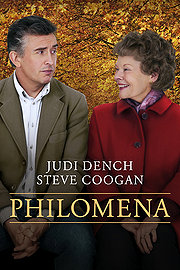
Dame Judi Dench stars as the main character, Philomena Lee, an Irish woman searching for her son giving up for adoption.

Dame Judi Dench stars as the main character, Philomena Lee, an Irish woman searching for her son given up for adoption.

I found this to be true with the highly acclaimed 2013 film Philomena, starring Dame Judi Dench and Steve Coogan. The film portrays, in brutally painful terms, how a Catholic-run adoption system in Ireland forced young pregnant girls, usually orphans or wards of Catholic homes, to give up their kids, who were sold to wealthy American parents. The film alludes to young mothers who died in childbirth, and their kids, at these places—a national scandal in Ireland to this day.

Watching the film, one really feels for these young girls and the heartache they had giving up their young children. The pain they feel is, as is the case of the main character, Philomena Lee, a lifelong loss. The film begins with her pain thinking of her son on his 50th birthday. Fate pairs her with a journalist, Coogan’s Martin Sixsmith character, and they embark on a journey of discovery.

As an adult adoptee, naturally I become curious, what was the “system” that my birth mother found herself in during the 1960s? Who was helping her? What were her support networks? Who were all these other actors who made this work? I started Googling the name of my birthplace, Crittenton General Hospital in Detroit, Mich. This hospital apparently has been torn down and moved. I also discovered it was part of a national philanthropic organization started in the late 1800s to help unwed mothers, known by many as the Florence Crittenton Home for Unwed Mothers.

Dr. Kate Waller Barrret is one of the co-founders of the Florence Crittendon Homes for Unwed Mothers (courtesy of Wikipedia).

Dr. Kate Waller Barrret is one of the co-founders of the Florence Crittenton Homes for Unwed Mothers (courtesy of Wikipedia).

In 1976, the Florence Crittenton Association of America merged with the Child Welfare League of America (CWLA), and the Florence Crittenton Division of the Child Welfare League of America was established. In 2006, the National Florence Crittenton Mission became the National Crittenton Foundation and broke with Child Welfare League of America and returned to being a stand-alone organization that is linked with dozens of Crittenton-affiliated agences around the country. Oddly enough, the National Crittenton Foundation‘s headquarters are in my current home town, Portland, Ore. I find this coincidence fascinating.

How the Philomena system worked in the United States

A number of online bulletin boards have allowed adult adoptees to swap information, including for this organization and the hospital where I was born. These queries stretch over many years, and it appears there were many of us.

A Facebook page was created that is devoted to these homes nationally and larger issues of accessing records. Comments on that Facebook page call these homes the American equivalent of the one portrayed in Philomena.

The creator of that page also created the Florence Crittenton Home Reunion Registry, and I found her story touching.

The “about us” page for the registry notes: “Before society had accepted pregnancy outside of marriage, my birth mother age 18, became pregnant while in nursing school. Her mother was not around and had left the family to get jobs where ever she could to live. Part of my Birth Mother’s life was raised in an orphanage after her father had died in the coal mines. Times were extremely hard and she had no place to turn.”

As an adult adoptee who has now known about his birth ancestry more than 25 years, I continue to discover new things about the past. Today’s discovery illuminated just how many people came together as part of these hard stories, particularly for birth mothers. There were doctors, nurses, social workers (in a weird role as baby brokers), families, and the mostly hidden and also central figures, the father of “illegitimate” children.

Like the system portrayed in the film Philomena, this country had social and child adoption networks and maternal care systems operating largely under the radar because of social norms around illegitimacy, sex, birth control, and more. All of these people operated with the prevailing culture and social values of the time, which promoted secrecy and, for many, shame. A major outcome of this shame-based system was having multiple parties, from the state of Michigan to social service agencies, deny giving identity information to adult adoptees like me. I, like many others, had to spend years and many resources tracking down information to what we are entitled to as a human right—to know who we are.

Years later, the mothers and kids have revisited these past times and the systems with different values, and the story looks vastly different. In the end, this is a story that matters not just for those who were a part of this large and nationwide network. The film Philomena shows that these stories are tales about love, about loss, about life, about connection, and about identity. These are universal stories, accessible to all of us.

Turning off everything except your mind


Tonight, the rains returned to Portland. That dark winter gloom fell on cue just after 5 p.m., and I took to the streets of Portland’s so-called Alphabet District to experience this dense neighborhood.

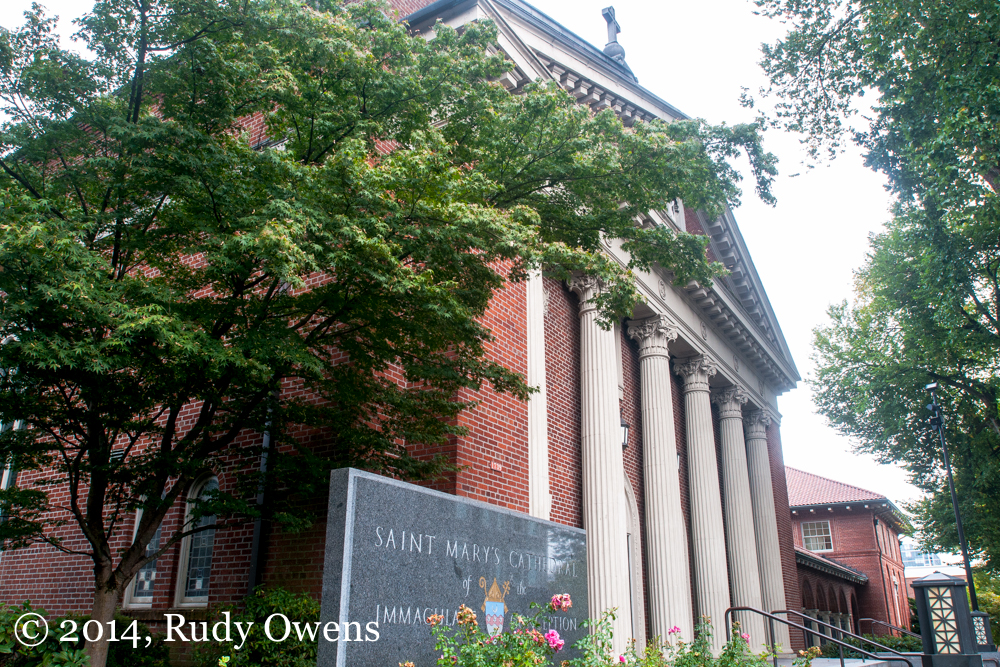
St. Mary's Cathedral Photograph

St. Mary’s Cathedral of the Immaculate Conception.

It is easy to feel isolation and gloom in this weather. People in Portland tend to avert their gaze like urban dwellers in many cities and walk purposefully.

I stumbled on one of the prettiest religious building complexes in the city, St. Mary’s Cathedral. As I noted on my photo blog, the cathedral sits in a five-block area that also includes Temple Beth Israel and Trinity Episcopal Cathedral. I like this part of town a lot.

I stepped inside as the 5:30 p.m. mass was beginning. It felt warm and cozy. I decided tonight was not the night to sit, but I thought about the need to do that more frequently.

I am not a religious person, but I like that houses of worship are one of the last remaining places in our country where people intentionally turn off their cell phones, disconnect from the media and the material world, and perhaps connect with something beyond themselves. That is what I like about them. I am not a fan of charismatic churches that are full-on multimedia spectacles that turn on media to prevent contemplative thought.

When I was a kid, I was forced to sit in church nearly every Sunday for years, until I was 18. I initially I could not stand it because I did not and do not adhere to the tenets of any organized religion. But as the years came and went, I realized I had learned a great deal sitting in the wooden church pew, gazing at beautiful stained glass windows at Bethel Lutheran Church in University City, Mo. Sitting for a forced period of time stilled my mind and my generally active body.

Bethel Lutheran Church Photograph

The place where I spent many an hour contemplating things in a quiet, peaceful place–Bethel Lutheran Church.

To this day, nothing else will quiet my mind like a church pew. Though churches are not my house of worship, they still remain my quiet place. I think all of us could benefit from turning it all off for at least an hour regularly and contemplating things bigger and more important than our small, insignificant selves. For me the place is a church pew. What is it for you? If you have not gone to that place for while, maybe you should pay it a visit.

Trusted by a stranger, in a strange town, in the middle of the night

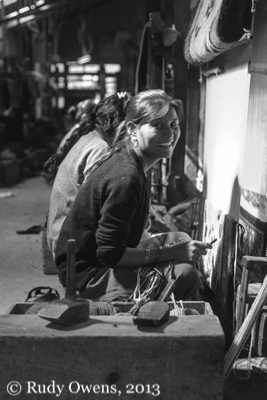
Tibetan Refugee Carpet Maker Photo

This contagiously positive carpet weaver is among the many Tibetan refugees I met in India at Dharamsala and Darjeeling, two hill stations.

Recently, I had two experiences over a couple of days during which I realized I was not trusted. It saddened me. Trust is almost always earned, but it also is very dependent on one’s own life’s story and circumstance, so some do not give it easily. Trust is one of the greatest treasures. It is a gift we give to young people to show we believe in them. It is also something that one has to demonstrate in life, and not be afraid of the consequences.

My experiences made me think of times I relied on blind trust. One of the most vulnerable moments I had traveling in India in 1989 took place in the middle of a late November night, in Dharamsala, the Indian hill town that is also refuge to the Dalai Lama and many Tibetan refugees. I had arrived very late at the lower city of McLeod Ganj after 12 hours of bus rides. As there were no taxis, I walked up the hill, in the dark, having no reservations. It was 1:45 a.m. when I finally arrived sweaty on the cold hill city, but found all the hotels were shuttered. It was not particularly safe to be on the streets, and I had to find shelter.

So, I visited a tea stall restaurant, owned by a Tibetan man in his 50s. He was awake, making bread and cooking. I motioned I needed a place to sleep in his restaurant. I was likely dirty, a bit smelly, carrying a big backpack, and not the most welcoming of sights. He did not know me. Here’s what I wrote in my journal: “Imagine this. A total stranger appears at his doorstep at 2 a.m. and he lets him in to sleep at no cost. I pulled out my sleeping bag and crashed for 4.5 hours. I woke up to the sounds of my friendly patron saint bustling in the kitchen. I wonder if he sleeps. He smiled at me and gave me a cup of tea.”

A memory from the end of the earth, in Ushuaia, Argentina

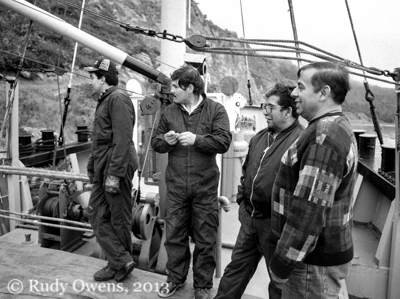
Chilean Sailors

Sailors on the vessel Navarino in the Beagle Channel, in February 1996.

On Feb. 7, 1996, I arrived at the city at the edge of the world, the coastal city of Ushuaia, Argentina. I came here first by cargo container to Puerto Williams, Chile, from Punta Arenas, Chile. I secured a passage on the cargo vessel Navarino. From Puerto Williams I literally hitched a ride on a sailboat owned by a transplanted French sailor and his wife, who gave me and my traveling companion a lift across the Beagle Channel from Chile to Argentina, at Ushuaia.

Here is what I wrote in my journal abut the lovely morning, which really was an all-night adventure: “I remember most the cold breeze, the clouds lit by the moon, and the sights of Ushuaia, glowing in the distance as we approached. I got about 1.5 hours of sleep until I woke up again at 6:30, just as we were pulling into the harbor. It was a beautiful morning with a frontal system lit a milky red. The town was set against a backdrop of severe mountains.”

That was one of the most lovely days of my life. I can still remember the smells, the cold air, the feeling of wonder.